Want to buy or sell something? Check the classifieds
  • The Fedora Lounge is supported in part by commission earning affiliate links sitewide. Please support us by using them. You may learn more here.

The wrist watch.

Peacoat

•
Bartender
Messages
7,133
Location
South of Nashville
@T. Rayville Excellent job on the watch. While the repros, as well as the original watches, had subtle variations, they all followed the same basic script. For me, to look authentic, the SOG watch must have about a 38 mm case, the Arabic numeral 5 just below "SEIKO" at the top of face, minimal text on the face, Day/Date window on the right side of the face, recessed stem at 4:00, and hands (including a second hand) that follow the same configuration as yours. Your watch ticks all of the boxes.

Also for authenticity, the watch must have an OD fabric band to which is often attached a rudimentary compass. Often the compass was worn an a separate strap. This type of compass was ok for keeping them headed in the right direction, but for pinpoint navigation, they would use a military lensatic compass.

Accuracy was necessary when calling in artillery (if in range) or bombers on known targets. They also needed pinpoint accuracy when calling in the coordinates of their NDP (night defensive position). We had to know exactly where they were (within a few meters) in the event they needed an emergency first light extraction. And, unfortunately, that would occasionally happen.

I don't remember Roger Smith from my time at FOB II (CCC), but then this picture is dated several years after I left. I do remember the names of, Snake, Squirrel and Jerry Mad Dog Shriver. Shriver was legendary among the special operations community. Unfortunately, he disappeared during a mission into Cambodia out of Ban Me Thuot (CCS). His body was never recovered.

Below is a stock photo of my reproduction SOG watch. For accuracy, I replaced the bracelet band with an OD fabric band. I believe the stock number is SNK381K1, which is the most accurate off the shelf version I could find.
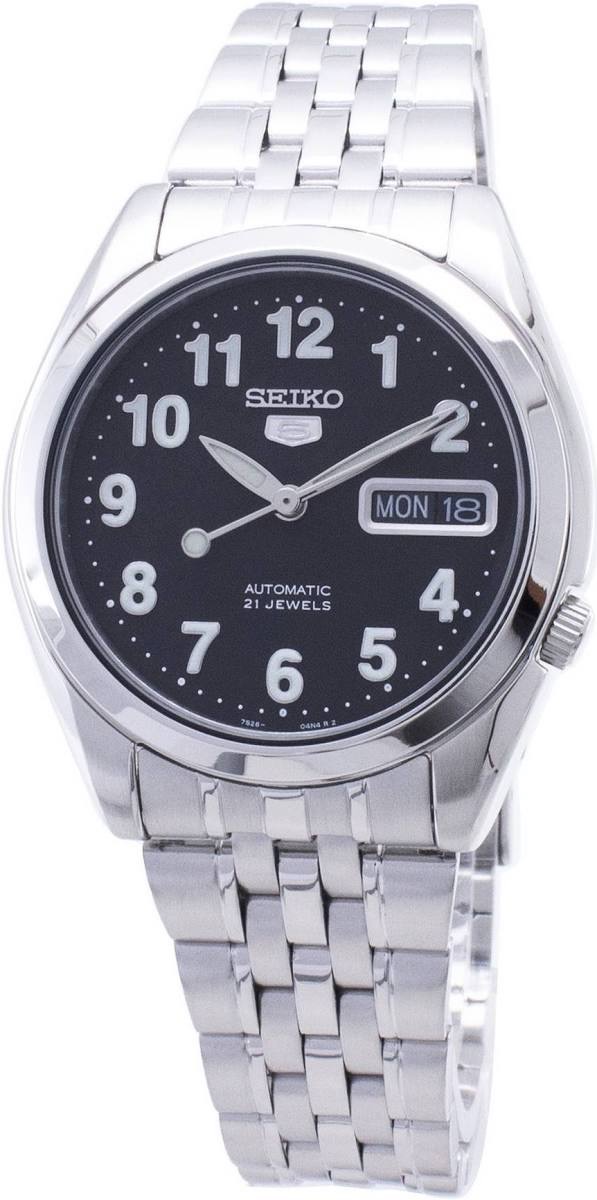
Image-4.jpeg
 

T. Rayville

New in Town
Messages
5
Location
Italy
@T. Rayville Ottimo lavoro sull'orologio. Sebbene le riproduzioni, così come gli orologi originali, presentassero sottili variazioni, seguivano tutti lo stesso schema di base. Per me, per sembrare autentico, l'orologio SOG deve avere una cassa di circa 38 mm, il numero arabo 5 appena sotto "SEIKO" nella parte superiore del quadrante, testo minimo sul quadrante, finestrella giorno/data sul lato destro del quadrante, corona incassata a ore 4 e lancette (inclusa la lancetta dei secondi) che seguono la stessa configurazione del tuo. Il tuo orologio soddisfa tutti i requisiti.

Inoltre, per essere autentico, l'orologio deve avere un cinturino in tessuto verde oliva al quale è spesso fissata una bussola rudimentale. Spesso la bussola veniva portata su un cinturino separato. Questo tipo di bussola era sufficiente per mantenere la rotta, ma per una navigazione di precisione si utilizzava una bussola a lente di tipo militare.

La precisione era fondamentale quando si richiedeva il supporto dell'artiglieria (se a tiro) o dei bombardieri su obiettivi noti. Era inoltre necessaria una precisione millimetrica nel comunicare le coordinate della loro posizione difensiva notturna (NDP). Dovevamo sapere esattamente dove si trovassero (entro pochi metri) nel caso in cui avessero bisogno di un'estrazione d'emergenza alle prime luci dell'alba. E, sfortunatamente, questo accadeva occasionalmente.

Non ricordo Roger Smith del periodo in cui ero alla FOB II (CCC), ma questa foto risale a diversi anni dopo la mia partenza. Ricordo però i nomi di Snake, Squirrel e Jerry Mad Dog Shriver. Shriver era una figura leggendaria nella comunità delle forze speciali. Purtroppo, scomparve durante una missione in Cambogia, partendo da Ban Me Thuot (CCS). Il suo corpo non fu mai ritrovato.

Di seguito è riportata una foto di repertorio del mio orologio SOG di riproduzione. Per una maggiore fedeltà all'originale, ho sostituito il cinturino in bracciale con un cinturino in tessuto verde oliva. Credo che il codice del modello sia SNK381K1, che è la versione più fedele all'originale che sono riuscito a trovare.

View attachment 817048
Mi piace, ben fatto!

Alcuni sostengono che Jerry Shriver sia sopravvissuto, riuscendo semplicemente a mettersi in salvo e a rimanere, in silenzio, nel Sud-est asiatico. Dopotutto, aveva portato a termine 93 missioni SOG, un record a cui nessun altro si era avvicinato. Se qualcuno poteva farcela, dicono, quello era "Mad Dog".
 

Edward

Bartender
Messages
26,498
Location
London, UK
Just a small input on the quartz battery thing - I am old enough to have tried a mk1 Cassio g shock with the 5 year battery-
After about 2 months it died on me so expecting a faulty battery I got it changed on warranty and bang 3 months later same ! Tried again and again it failed - turns out that genuinely some people have a stronger EM fired around their bodies that can mess with electronics ! Who knew - but it paid me back as in my military career many units went back to mechanical as mechanicals can’t run out of battery at a critical moment or when the re is no resupply - so there you go

Eeps, that's a new one on me! Another good reason to default to mechanical, though. While I've never been anti-tech per se, as I get older I find I do increasingly question whether any new tech is something I actually need; I've never been afflicted with the fear of being 'left behind' in that respect.
 

JonS1967

Practically Family
Messages
797
Location
San Diego
I doubt most people *generally* notice what watch someone else is wearing - unless (as below) they're young enough now for the practiced of wearing a watch to be seen as an active choice rather than an assumed / default norm.

It really all depends what you want. My daily driver is a Vostok Mrs Marlowe bought me for Christmas a few years ago. Has the look of an early 60s diver, but it's its own thing at the same time; it's in the same ballpark, looks-wise, as a Submariner or a Seamaster, but it's not trying to clone either, which I like. I do have a couple of older watches that have been handed down through the family, though those are of too much sentimental value to wear out with regularity.

As a rule, for heavily used stuff I prefer recent manufacture in an older style; my one dealbreaker is it has to be mechanical. I fully accept that a mechanical automatic will never be as accurate as a quartz, but they're close enough for me. I have an entirely a-rational attachment to the fact my watch depends on neither a battery nor tech, that's it's a small, physical machine that could be taken apart and repaired. So any things these days depend on batteries and electricity, I like not needing those things here and there.Nearest I had to Quartz in the last couple of decades was a Citizen EcoDrive. Nice watch, effectively a solar-powered quartz type of thing. Still have it (it was a fortieth birthday present some years ago), but unfortunately it stopped working for reasons I couldn't figure out. Not enough sun when tucked up my sleeve all the time? Alas, nothing seems to revive it...

Of course, my watch won't do anything other than tell the time in two timezones. My wife likes having her step-counter and all the rest, so she has one of these smart watches. Horses for courses and all that. These days my undergraduate charges, all children of the twenty-first century (most this year born in 2006 or 2007), find it quaint and charming that the Old Man actually wears a watch. (They typically notice this because I tend to remove it and sit it on the desk beside my notes while I teach, for an easy eye on the time.... a habit I picked up many years ago during exams). Aside from the handful who use a smart watch, most ofc them view a watch as a non-essential, using their phones for the time on the go. Which, I suppose, isn't all that dissimilar to the practice of a pocket watch back when. Pocket watches I do wear on occasion, but without the regularity some of my friends do, several of whom wear them daily in preference over a wristwatch. I enjoy them for the sort of event where I don't need to keep a regular eye on the time, though having it on my wrist most working days, at least, is very much a convenience.
Always nice to hear there are other Vostok fans out there. I remember getting my first one in the late 1980’s just after the Berlin Wall fell. It was expensive back then ($270 USD if memory serves) because they were new in the US market.

I have several Vostok Amphibias. They are special and unique watches, despite being affordable. The engineering behind them is fascinating and quite brilliant (IMO. I’m surprised more dive watches don’t use this concept.

Here’s a summary (I relied on a Google search rather than trying to type this all from memory) below:

“The engineering behind the Vostok Amphibia—designed in 1967 by Mikhail Novikov and Vera Belova at the Chistopol Watch Factory—is celebrated as a masterclass in the "Keep It Simple, Stupid" (KISS) design methodology.

Tasked with building a 200-meter dive watch for the Soviet military without access to proprietary Swiss patents or high-precision manufacturing equipment, the engineers chose an elegant workaround: instead of creating a rigid structure that fights water pressure, they designed a dynamic case that uses water pressure to tighten its own seals.

1. The Self-Sealing Acrylic Crystal


While modern dive watches rely on flat, ultra-rigid sapphire glass held by stiff nylon gaskets, the Amphibia uses a thick dome-shaped polymethyl methacrylate (PMMA) acrylic crystal.

  • The Principle: Under high underwater pressure, a rigid crystal risks cracking or popping out if the case flexes. The Amphibia's acrylic crystal is engineered to deform minutely under pressure.
  • The Mechanism: As water pressure increases, it flattens the dome slightly, causing its outer circumference to expand. This forces the edges of the crystal harder into the stainless steel walls of the watch case, creating a tighter seal the deeper the diver descends.
  • Precision Clearance: At 200 meters, the water pressure forces the crystal inward by roughly 0.5 mm. The engineers precisely calculated the internal curve and height of the dome so that even at maximum deformation, the glass never comes into contact with the watch hands.
2. The Two-Piece Compression Caseback

Traditional dive watches feature a single-piece caseback with an embedded rubber O-ring that screws directly into the case. This design forces the rubber gasket to endure extreme shear stress (torsion) and friction as the back is threaded down, which can warp, tear, or wear out the gasket over time.

  • The Principle: The Soviet solution completely separates the downward sealing force from the rotational threading force.
  • The Mechanism: The Amphibia utilizes a flat, non-rotating caseback with two alignment keys that slot directly into matching grooves in the watch case. A separate threaded locking ring is then screwed down over the top of it.
  • Pure Compression: Because the actual caseback never spins, it applies a purely vertical, uniform compression load onto a massive, flat rubber gasket. This design allows for a much wider gasket surface area than Swiss watches of the era, completely eliminating friction wear on the rubber.
3. Space-Grade Sintered Rubber Gaskets

The massive flat gasket used under the caseback had to resist extreme pressure changes without permanently deforming or losing elasticity. Because standard commercial rubber of the era failed under these demands, the engineers sourced an advanced sintered rubber compound originally developed for the Soviet space program. This material retains its shape and seals reliably across vast temperature swings and deep-sea environments.

4. The "Wobbly" Clutch Crown

First-time owners often think a Vostok is broken because the crown feels completely detached and "wobbly" when unscrewed. This is a deliberate, highly reliable stress-mitigation feature.

  • The Principle: In standard watches, a rigid crown stem transfers any accidental side-impact or drop directly into the delicate internal movement.
  • The Mechanism: The Amphibia features an internal springless clutch mechanism. When unscrewed, the outer crown completely disengages from the winding stem, hanging loosely on a joint.
  • Impact Isolation: If the watch bumps against a hard surface while the crown is out, the wobble absorbs the lateral force rather than snapping or bending the internal stem. When pushed in and screwed down, the crown re-engages the clutch to wind the watch or set the time, while simultaneously compressing an internal crown gasket to seal the case. “
And here are a few of my Vostoks.

The original one from the late 1980s:
IMG_9118.jpeg


More recent versions from 2015 to 2020 or so:
IMG_0569.jpeg


IMG_2377.jpeg
IMG_0709.jpeg
IMG_4856.jpeg
IMG_2564.jpeg


And lastly, my favorite, a rare second generation NVCH 300M version from the early 1970s.
IMG_3020.jpeg
 
Last edited:
Messages
14,593
Location
Germany
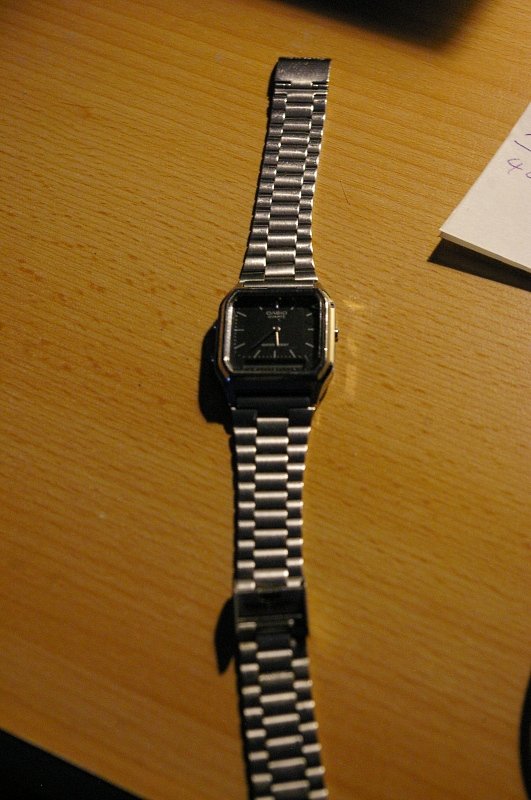
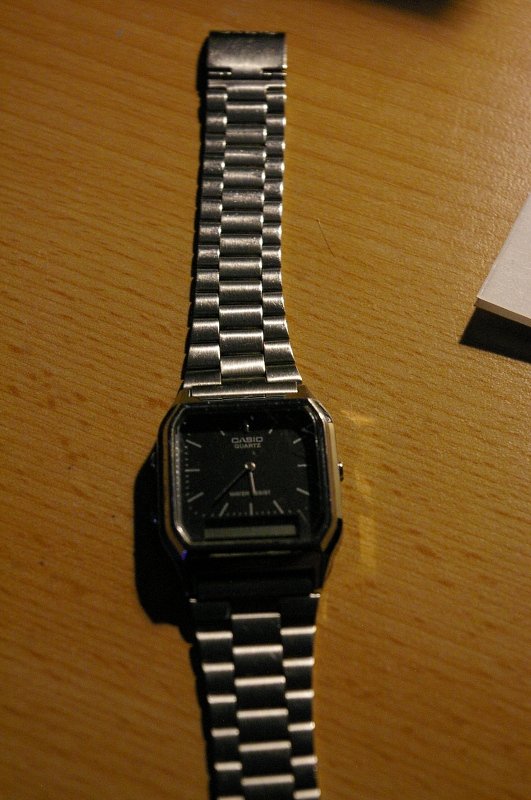
I will get a new Casio AQ-230, the next days. Yes, I know about the Resin cases, but I just want a new. If the new straps are worse, I will just attach the old one, ha!
 

Attachments

  • IMGP8227.JPG
    IMGP8227.JPG
    229.3 KB · Views: 2
  • IMGP8228.JPG
    IMGP8228.JPG
    233.9 KB · Views: 1
Last edited:

Forum statistics

Threads
115,501
Messages
3,195,134
Members
59,142
Latest member
Stay Gold Pony
Top