Derick_leather
New in Town
- Messages
- 41
Hello everyone,
This is my first post on The Fedora Lounge. Please feel free to let me know if anything in this post goes against the forum rules or seems out of place.
English is not my first language, so some of the wording may sound a little awkward. I would also appreciate any corrections if I have misunderstood any of the historical or technical details.
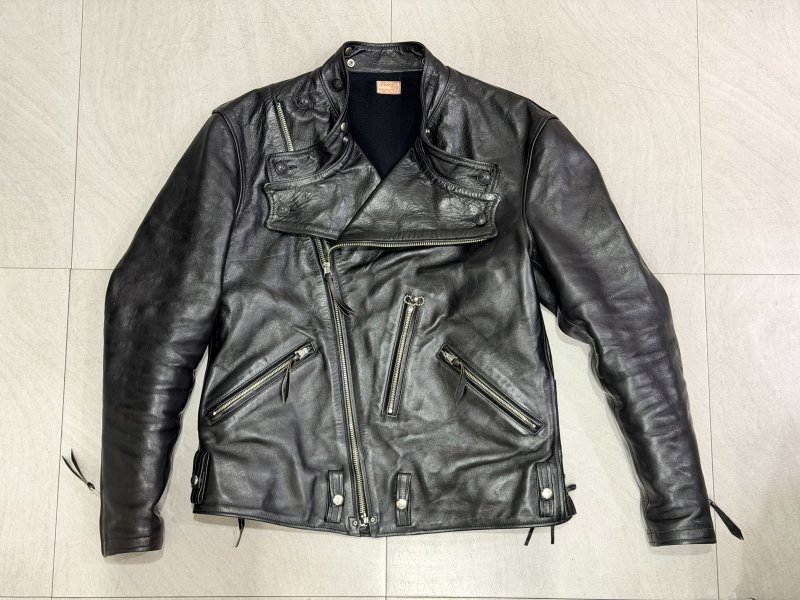
I am hoping to introduce some of the leather jackets in my collection one by one, and I thought I would begin with one of the more unusual pieces: the 2019 Freewheelers San Mateo in Rude Black.
The retailer-listed measurements for a size 44 were:
These are retailer measurements, so there may be some variation depending on the individual jacket and the method of measurement.
For reference, I am approximately 184 cm tall and around 100 kg. I generally wear sizes 44–46 in Japanese leather jackets and prefer a fairly fitted look over a T-shirt or lightweight shirt.
Freewheelers has produced several well-known motorcycle jackets, including the La Brea, Centinela and Mulholland. Among them, however, I think the San Mateo has one of the most distinctive front designs.
The model was inspired by 1930s motorcycle jackets made by Peter’s Tailor Made of San Francisco. Surviving vintage Peter’s jackets seem to vary in their measurements, hardware and smaller construction details, so the San Mateo feels less like a direct copy of one particular jacket and more like Freewheelers’ interpretation of the overall Peter’s design language.
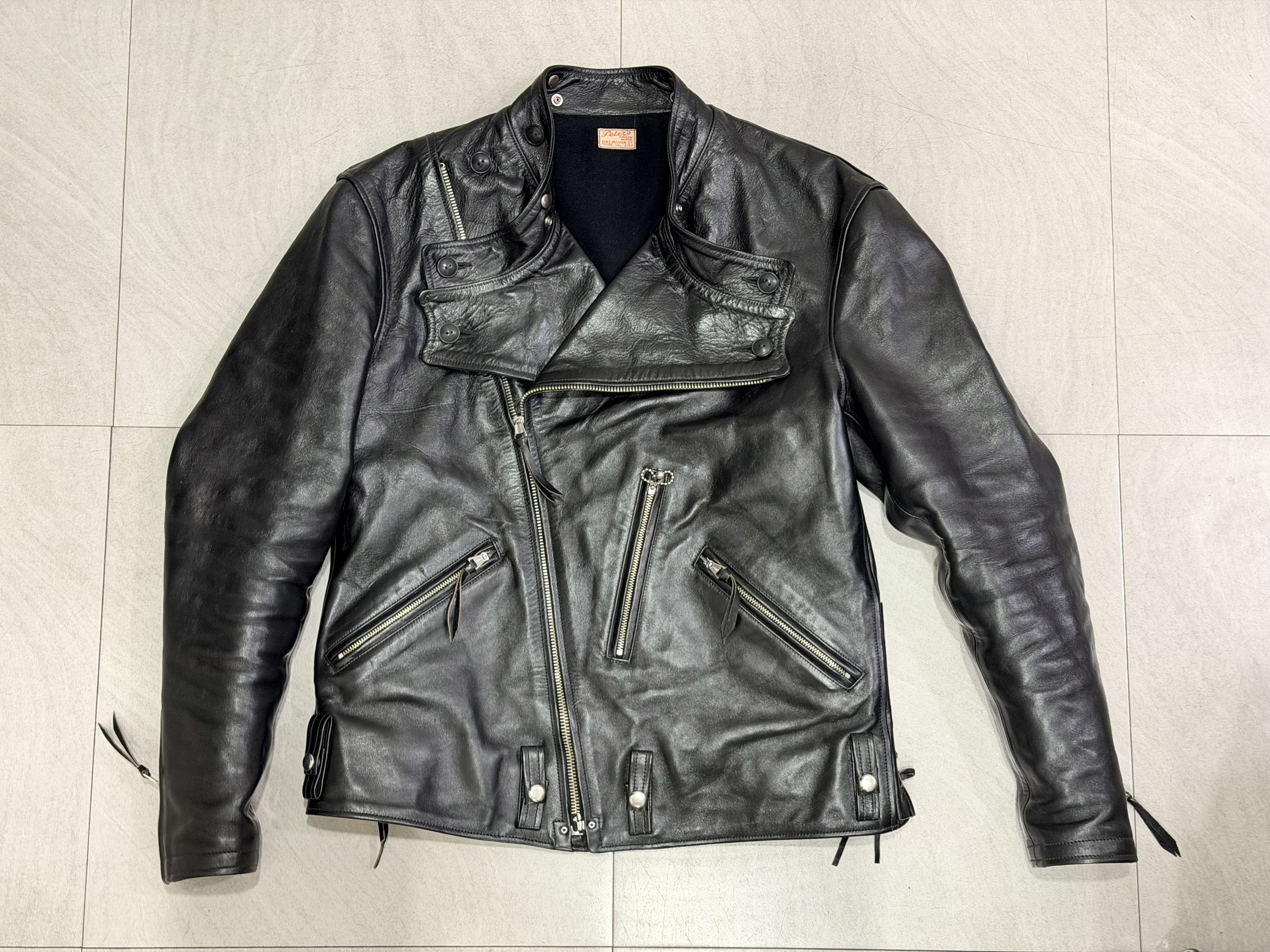
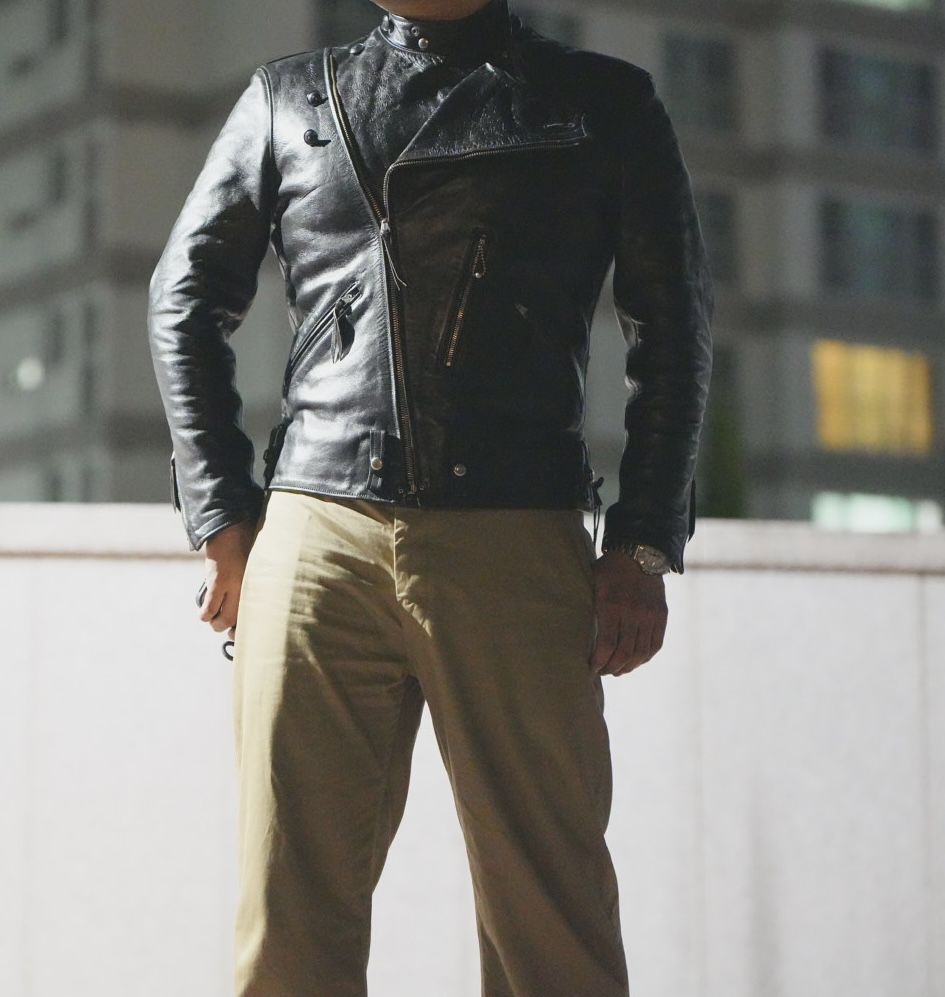
The most obvious feature is the deeply overlapping double-******ed front and the unusually large collar arrangement.
With the main zipper fully closed and the upper buttons fastened, it becomes a high-necked and fairly protective motorcycle jacket. With the upper section opened, the large lapels and asymmetrical construction become much more visible, giving the jacket a completely different appearance.
When laid flat, the combination of overlapping panels, buttons, zippers and side lacing can look almost overly complicated. Once worn, however, the wide shoulders, high waist and tapered hem bring all of those details together into a coherent silhouette.
In my opinion, the San Mateo makes much more sense on the body than it does on a hanger.
I like wearing it open, but I think the design looks most complete when at least partially zipped. The angled main zipper and upper front panels visually broaden the chest, while the high collar gives the jacket its particularly strong character.
The front has three zippered pockets: two angled hand pockets and one vertical pocket near the center. Rather than using a traditional D-pocket or coin pocket, the pocket arrangement follows the asymmetrical lines of the jacket.
The reproduction WHIZZER pin-lock zipper and the eyelet-style zipper attachment at the hem also contribute to its early motorcycle-jacket appearance.
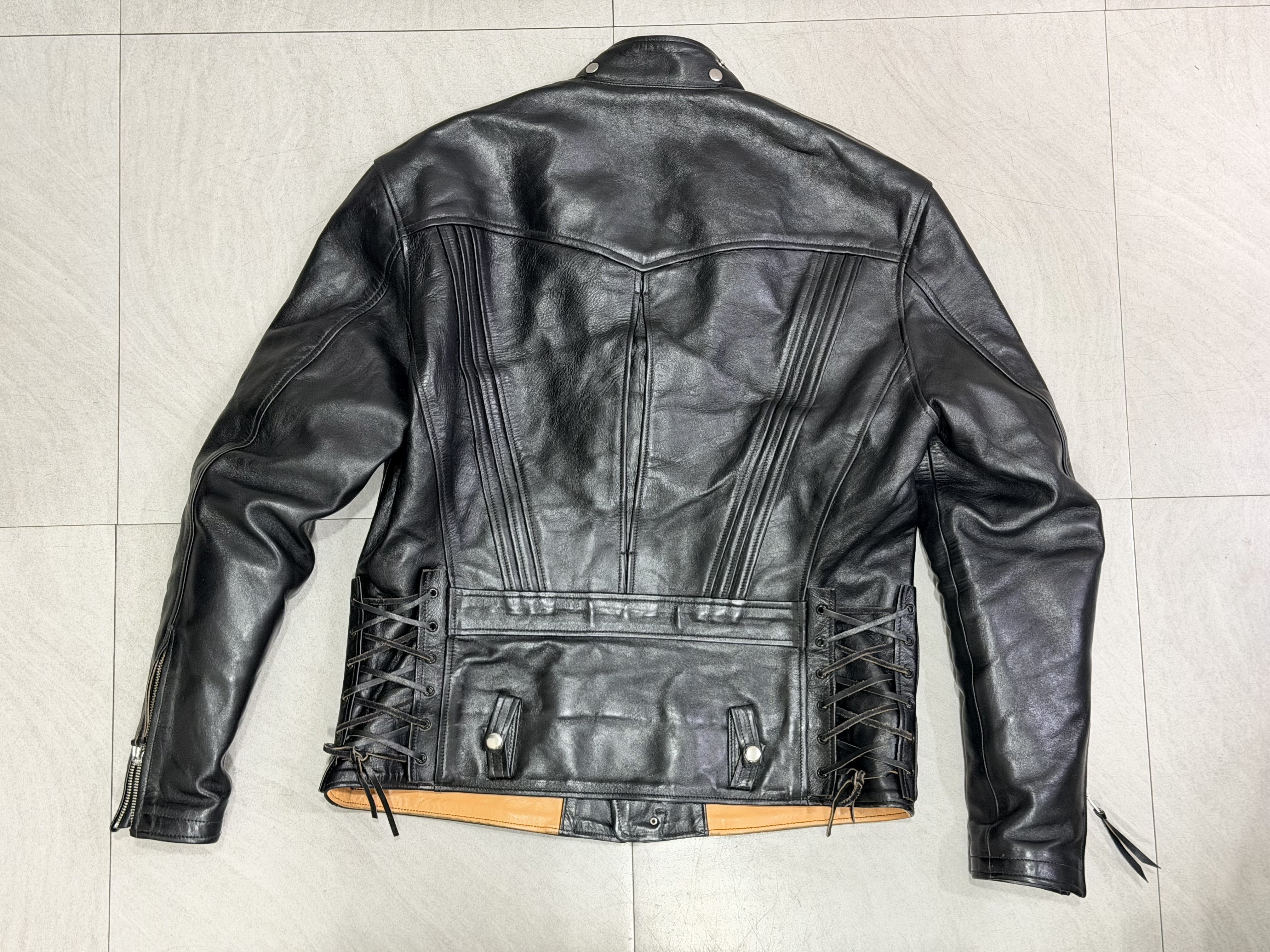
The front receives most of the attention, but I find the back construction just as interesting.
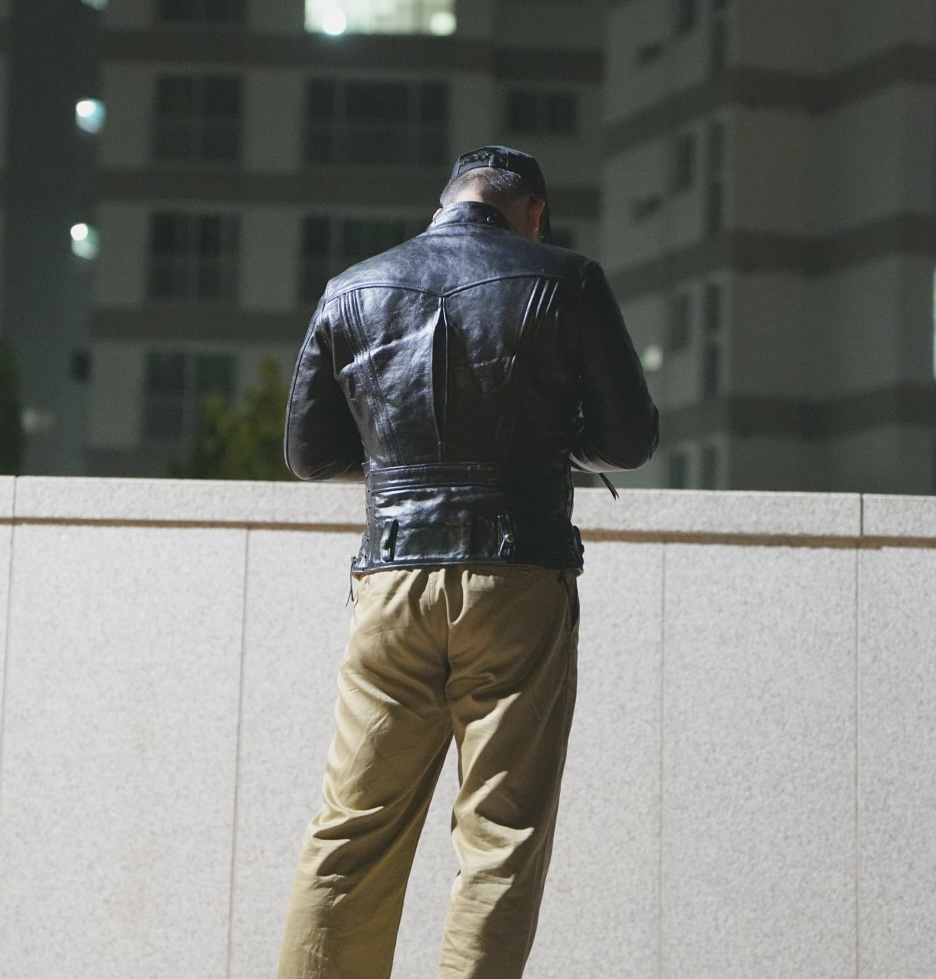
There is a gently shaped V-style western yoke across the upper back. Beneath it are long action pleats, emphasized by multiple rows of stitching. A central pleat also provides additional room when the arms are moved forward.
When standing still, the back creates a narrow and sharply defined waist. When moving, however, the pleats open and provide more mobility than the fitted silhouette might suggest.
The corset-style side lacing allows some adjustment around the waist and hem. This makes it possible to retain space through the shoulders and chest while keeping the lower part of the jacket relatively trim.
From the front it looks like a complicated early motorcycle jacket, but the back also has elements that remind me of western tailoring and corset construction. That contrast between the front and rear views is one of my favorite aspects of the San Mateo.
My jacket is the 2019 Rude Black version with a black core.
This leather is widely understood to be Shinki horsehide, although the original product tag itself simply identifies it as horsehide. I would be interested to hear from anyone who has more definitive information about the tannery.
Unlike the more familiar brown teacore leathers, this version was dyed black through the leather. It is therefore unlikely to develop dramatic brown undertones as the surface wears away.
Instead, the aging appears mainly through changes in sheen, grain and texture. The creases become deeper, and different areas begin to reflect light in noticeably different ways while the jacket continues to retain an overall black appearance.
As seen in the photos, the chest and lower body have developed broader and softer creases, while the sleeves show tighter folds created by the movement of the arms.
The changes are less dramatic than those of brown teacore leather, but I like the way the jacket develops more depth while remaining unmistakably black. It reminds me of an old black motorcycle jacket that has gradually acquired its character through wear rather than through a strong change in color.
The horsehide is not especially light or soft from the beginning. It feels thick and dense, and the complicated panel construction combined with the cotton-wool lining makes the entire jacket fairly substantial.
When new, it felt less like a jacket draping naturally over the body and more like a structured shell sitting on top of it.
The leather is not completely smooth or uniform. Different sections have their own grain and slightly different ways of creasing. With wear, the sleeves and body have gradually folded around my shape and become considerably more comfortable.
Even after breaking in, however, this is not a lightweight fashion jacket. It still has considerable weight and presence, which I consider part of the San Mateo’s personality.
My jacket is tagged size 44, and I am approximately 184 cm tall and around 100 kg.
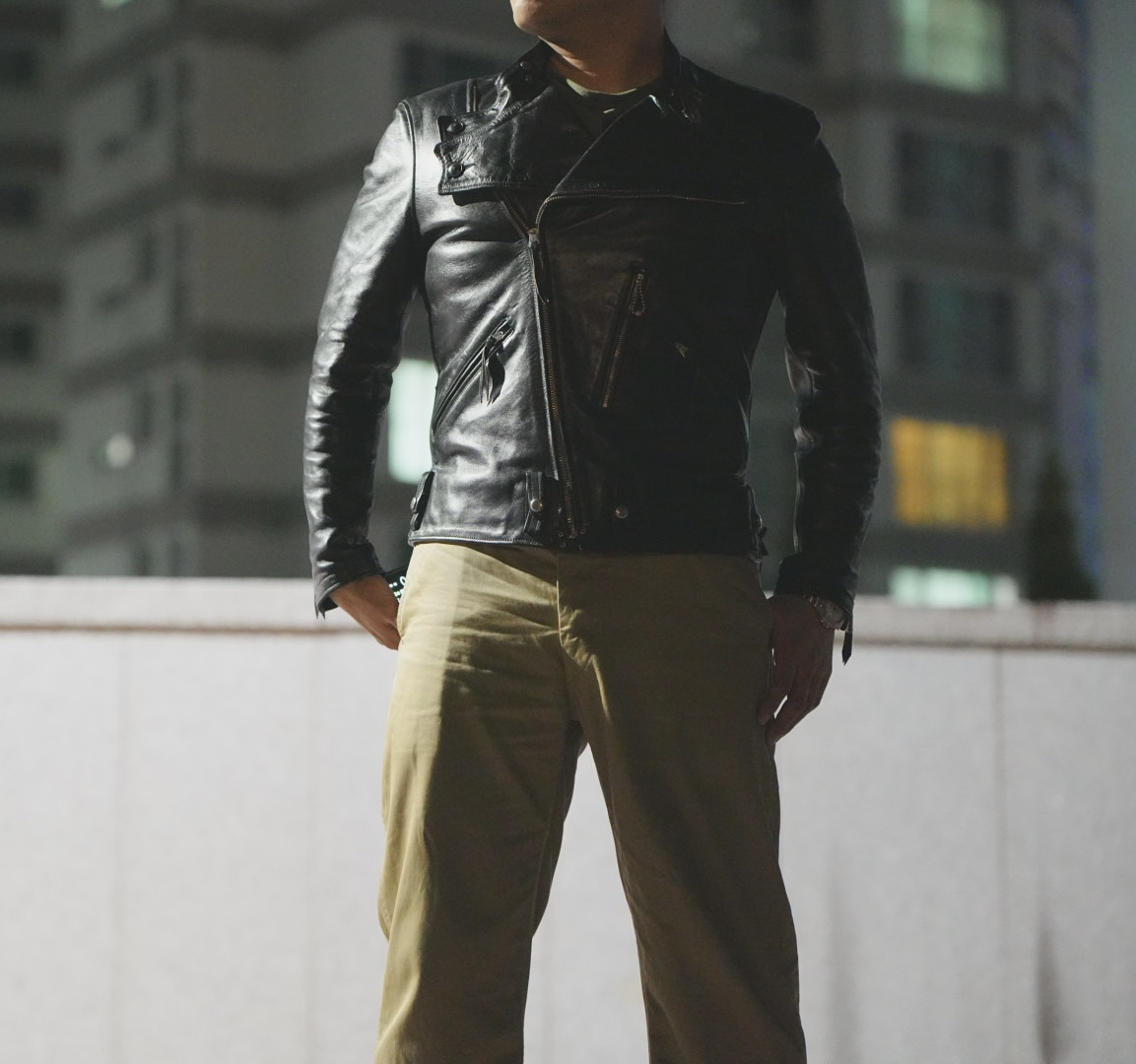
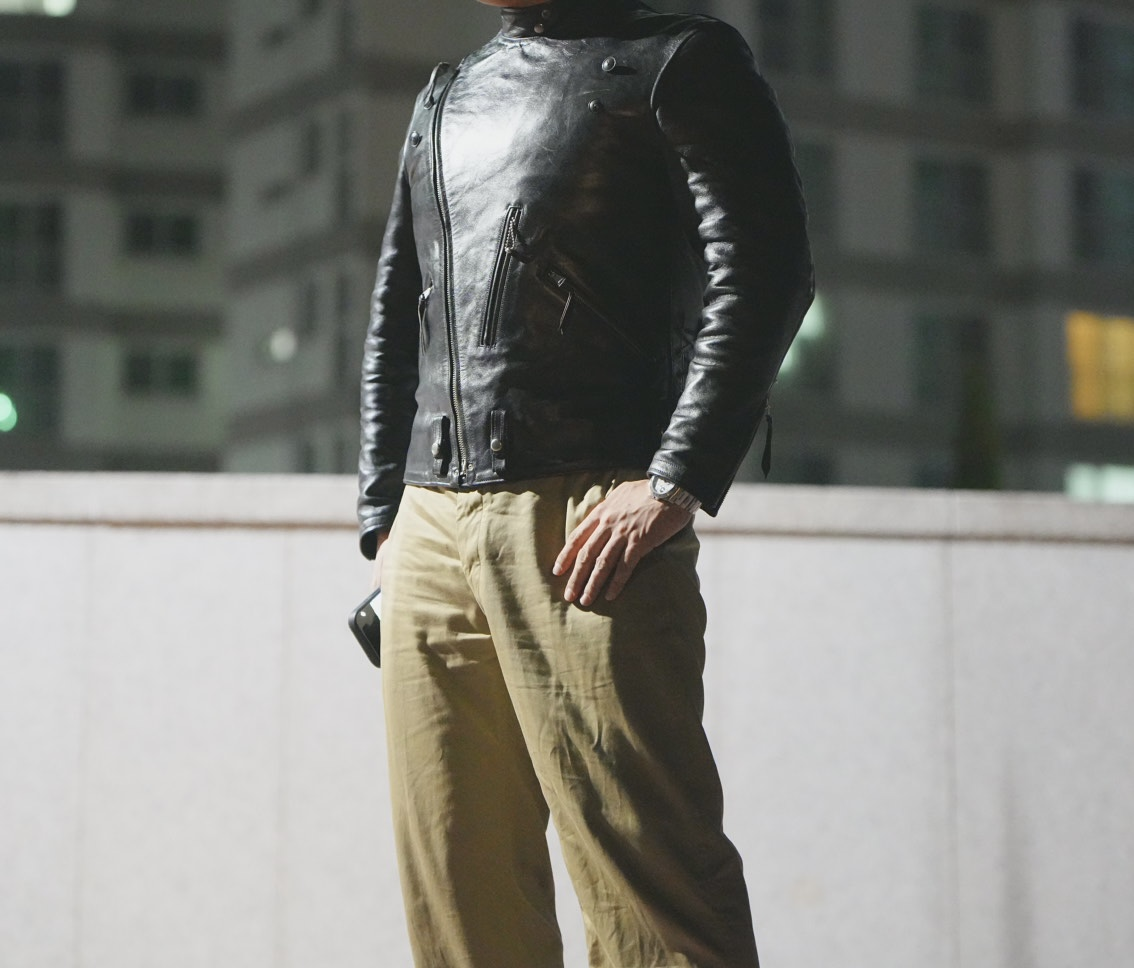
I usually wear leather jackets fairly fitted over a T-shirt or thin shirt rather than leaving a lot of room for heavy layering. For me, the size 44 provides enough space through the shoulders and chest, while the side lacing helps keep the waist and hem from appearing too loose.
The sleeves finish around my wrists when my arms are relaxed. When the jacket is zipped, I do not experience excessive pulling across the chest or shoulders.
The action back also makes it more comfortable than expected when reaching forward. The jacket looks quite fitted from behind, but the pleats allow a useful amount of movement.
The San Mateo does have a relatively short body and a high waist compared with many modern motorcycle jackets. Because of that, I think it works much better with higher-rise trousers than with low-rise jeans.
In the fit photos, I am wearing it with khaki chinos. Honest opinions about the fit are very welcome.
The San Mateo is not necessarily a light or convenient jacket.
It is heavy, the front construction is more complicated than that of a conventional rider jacket, and the short length means that the choice of trousers matters. The design also has enough presence that I usually prefer to keep the rest of the outfit fairly simple.
However, those are also the qualities that distinguish it from more familiar double riders.
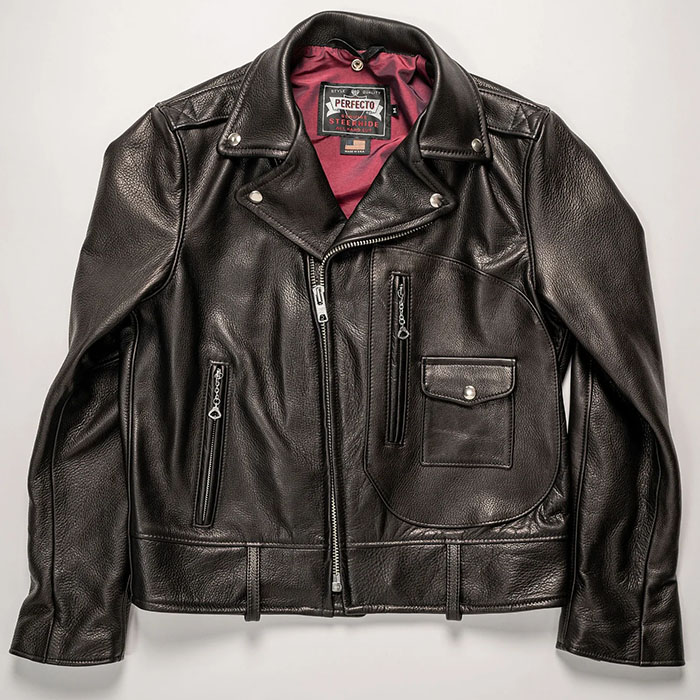
Its overlapping front, large collar, action back and side lacing are completely different from the usual Perfecto or D-pocket formula. All of these elements work together to create a silhouette that is immediately recognizable as the San Mateo.
The Rude Black leather does not develop the dramatic contrast of brown teacore horsehide, but it has its own appeal. It retains its black appearance while the grain, creases and shine slowly become more pronounced.
To me, the San Mateo feels less like a straightforward vintage reproduction and more like Freewheelers’ interpretation of a 1930s Peter’s motorcycle jacket.
Thank you for reading my first post. Please feel free to correct any inaccurate information or historical details. I would also be glad to hear your thoughts about the fit and how this Rude Black leather may continue to age.
I post more photos and fit pictures of my leather jackets on Instagram:
https://www.instagram.com/derrick_leather
This is my first post on The Fedora Lounge. Please feel free to let me know if anything in this post goes against the forum rules or seems out of place.
English is not my first language, so some of the wording may sound a little awkward. I would also appreciate any corrections if I have misunderstood any of the historical or technical details.
I am hoping to introduce some of the leather jackets in my collection one by one, and I thought I would begin with one of the more unusual pieces: the 2019 Freewheelers San Mateo in Rude Black.
Basic Specifications
- Brand: Freewheelers & Company
- Label: Peter’s Tailor Made
- Model: San Mateo
- Lot number: #1931005
- Year: 2019
- Style: 1930s-style double-******ed motorcycle jacket
- Color: Rude Black
- Leather: Horsehide, black core
- Body lining: Cotton-wool
- Sleeve lining: Cotton flannel
- Main zipper: Reproduction WHIZZER pin-lock zipper
- Tagged size: 44
- Original Japanese retail price: ¥308,000
The retailer-listed measurements for a size 44 were:
- Back length: 65 cm / 25.6 in
- Pit to pit: 57 cm / 22.4 in
- Shoulders: 51 cm / 20.1 in
- Sleeves: 67 cm / 26.4 in
These are retailer measurements, so there may be some variation depending on the individual jacket and the method of measurement.
For reference, I am approximately 184 cm tall and around 100 kg. I generally wear sizes 44–46 in Japanese leather jackets and prefer a fairly fitted look over a T-shirt or lightweight shirt.
The San Mateo Design
Freewheelers has produced several well-known motorcycle jackets, including the La Brea, Centinela and Mulholland. Among them, however, I think the San Mateo has one of the most distinctive front designs.
The model was inspired by 1930s motorcycle jackets made by Peter’s Tailor Made of San Francisco. Surviving vintage Peter’s jackets seem to vary in their measurements, hardware and smaller construction details, so the San Mateo feels less like a direct copy of one particular jacket and more like Freewheelers’ interpretation of the overall Peter’s design language.
The most obvious feature is the deeply overlapping double-******ed front and the unusually large collar arrangement.
With the main zipper fully closed and the upper buttons fastened, it becomes a high-necked and fairly protective motorcycle jacket. With the upper section opened, the large lapels and asymmetrical construction become much more visible, giving the jacket a completely different appearance.
When laid flat, the combination of overlapping panels, buttons, zippers and side lacing can look almost overly complicated. Once worn, however, the wide shoulders, high waist and tapered hem bring all of those details together into a coherent silhouette.
In my opinion, the San Mateo makes much more sense on the body than it does on a hanger.
I like wearing it open, but I think the design looks most complete when at least partially zipped. The angled main zipper and upper front panels visually broaden the chest, while the high collar gives the jacket its particularly strong character.
The front has three zippered pockets: two angled hand pockets and one vertical pocket near the center. Rather than using a traditional D-pocket or coin pocket, the pocket arrangement follows the asymmetrical lines of the jacket.
The reproduction WHIZZER pin-lock zipper and the eyelet-style zipper attachment at the hem also contribute to its early motorcycle-jacket appearance.
Back Construction and Mobility
The front receives most of the attention, but I find the back construction just as interesting.
There is a gently shaped V-style western yoke across the upper back. Beneath it are long action pleats, emphasized by multiple rows of stitching. A central pleat also provides additional room when the arms are moved forward.
When standing still, the back creates a narrow and sharply defined waist. When moving, however, the pleats open and provide more mobility than the fitted silhouette might suggest.
The corset-style side lacing allows some adjustment around the waist and hem. This makes it possible to retain space through the shoulders and chest while keeping the lower part of the jacket relatively trim.
From the front it looks like a complicated early motorcycle jacket, but the back also has elements that remind me of western tailoring and corset construction. That contrast between the front and rear views is one of my favorite aspects of the San Mateo.
2019 Rude Black Horsehide
My jacket is the 2019 Rude Black version with a black core.
This leather is widely understood to be Shinki horsehide, although the original product tag itself simply identifies it as horsehide. I would be interested to hear from anyone who has more definitive information about the tannery.
Unlike the more familiar brown teacore leathers, this version was dyed black through the leather. It is therefore unlikely to develop dramatic brown undertones as the surface wears away.
Instead, the aging appears mainly through changes in sheen, grain and texture. The creases become deeper, and different areas begin to reflect light in noticeably different ways while the jacket continues to retain an overall black appearance.
As seen in the photos, the chest and lower body have developed broader and softer creases, while the sleeves show tighter folds created by the movement of the arms.
The changes are less dramatic than those of brown teacore leather, but I like the way the jacket develops more depth while remaining unmistakably black. It reminds me of an old black motorcycle jacket that has gradually acquired its character through wear rather than through a strong change in color.
The horsehide is not especially light or soft from the beginning. It feels thick and dense, and the complicated panel construction combined with the cotton-wool lining makes the entire jacket fairly substantial.
When new, it felt less like a jacket draping naturally over the body and more like a structured shell sitting on top of it.
The leather is not completely smooth or uniform. Different sections have their own grain and slightly different ways of creasing. With wear, the sleeves and body have gradually folded around my shape and become considerably more comfortable.
Even after breaking in, however, this is not a lightweight fashion jacket. It still has considerable weight and presence, which I consider part of the San Mateo’s personality.
Fit and Wear
My jacket is tagged size 44, and I am approximately 184 cm tall and around 100 kg.
I usually wear leather jackets fairly fitted over a T-shirt or thin shirt rather than leaving a lot of room for heavy layering. For me, the size 44 provides enough space through the shoulders and chest, while the side lacing helps keep the waist and hem from appearing too loose.
The sleeves finish around my wrists when my arms are relaxed. When the jacket is zipped, I do not experience excessive pulling across the chest or shoulders.
The action back also makes it more comfortable than expected when reaching forward. The jacket looks quite fitted from behind, but the pleats allow a useful amount of movement.
The San Mateo does have a relatively short body and a high waist compared with many modern motorcycle jackets. Because of that, I think it works much better with higher-rise trousers than with low-rise jeans.
In the fit photos, I am wearing it with khaki chinos. Honest opinions about the fit are very welcome.
Final Thoughts
The San Mateo is not necessarily a light or convenient jacket.
It is heavy, the front construction is more complicated than that of a conventional rider jacket, and the short length means that the choice of trousers matters. The design also has enough presence that I usually prefer to keep the rest of the outfit fairly simple.
However, those are also the qualities that distinguish it from more familiar double riders.
Its overlapping front, large collar, action back and side lacing are completely different from the usual Perfecto or D-pocket formula. All of these elements work together to create a silhouette that is immediately recognizable as the San Mateo.
The Rude Black leather does not develop the dramatic contrast of brown teacore horsehide, but it has its own appeal. It retains its black appearance while the grain, creases and shine slowly become more pronounced.
To me, the San Mateo feels less like a straightforward vintage reproduction and more like Freewheelers’ interpretation of a 1930s Peter’s motorcycle jacket.
Thank you for reading my first post. Please feel free to correct any inaccurate information or historical details. I would also be glad to hear your thoughts about the fit and how this Rude Black leather may continue to age.
I post more photos and fit pictures of my leather jackets on Instagram:
https://www.instagram.com/derrick_leather