Want to buy or sell something? Check the classifieds
  • The Fedora Lounge is supported in part by commission earning affiliate links sitewide. Please support us by using them. You may learn more here.

Berets, Anyone?

Babbo Philipe

A-List Customer
Messages
351
Location
San Pedro
Good afternoon everyone,

Who can advise me? I am looking for a beret similar to the one Leonard Cohen wore during his photoshoot in Paris in the 1970s (see photos, brand and model unknown). It could even be a little bit bigger.


My first instinct is that I want to buy a beret from Laulhère. After doing some research, I found that their webshop only sells berets with a 28” plate. I think I may need a larger diameter. Can anyone clarify this? Or should we actually be talking about centimeters?


Additionally, I have read some critical comments about the current quality of Laulhère. Based on the above, would it be advisable to look for a second-hand model with, for example, an 11” plate? Or perhaps a shop that still has some older stock with an 11” option?


I am undecided between the Basque and Campan models. What are the differences between them? Unfortunately, I am not getting satisfactory answers from Laulhère.


For context: I currently wear a Closequi Impermeabilizada Super Lujo size 57, which I have had for 20 years. It has become too small, and I therefore want something with more fabric. I am now considering size 58.


I would appreciate any advice and tips. Have a nice day,

Bert-jan
Manufacture de Bérets or elosegui are both great and are both made in countries near you , ,,laulhere in my opinion has gone down in quality in the past years,
 

Daan

Vendor
Messages
983
Location
Wellington, Aotearoa
For many people (boineros included), the beret is synonymous with the generously draped tarte or txapela of the Pyrenean shepherd and large 11p models typically associated with the arts. Yet for much of the late nineteenth and early twentieth centuries, the most common berets worn across France and northern Spain were considerably smaller.
Untitled - July 23, 2026 at 13.18.02.png
france-8b.jpg

Practical, elegant and deeply rooted in local tradition, these compact berets were everyday headwear for generations. Throughout much of France - particularly north of Béarn and the Basque Country - modest-diameter berets were the norm long before larger styles became fashionable in the mid-twentieth century. In the Spanish regions of Galicia and Asturias, the small black beret was an essential part of daily dress, worn by fishermen, farmers, craftsmen and labourers alike. It provided protection from the elements while maintaining a neat, understated appearance.
An old fisherman from Cassis wearing a beret..jpg

The appeal of the small beret extended well beyond France and Spain. In Italy, the compact Basco Roma remains a classic to this day, while in the Czech Republic the distinctive Rádiovka - even smaller than most traditional Basque berets - became a favourite among workers, students and outdoor enthusiasts. Each country adapted the beret to its own tastes, while preserving the practicality and quiet elegance that define these smaller styles.
image.png

The attraction of the small-diameter beret has never really disappeared. Sitting close to the head, it is comfortable, practical and remarkably versatile. It speaks of authenticity rather than fashion, of tradition rather than passing trends.
Coca Coke comes to France.jpg

In recent years, interest in these classic forms has grown steadily, prompting several manufacturers to revive small-diameter models. Wearers can once again choose from an impressive variety of sizes, colours, materials and finishes, rediscovering a style that was once the everyday face of the European beret.
Bois 2.JPG

While fashions come and go, the small beret proves that style has little to do with size. It remains a symbol of craftsmanship, heritage and understated elegance.
IMG_20250226_154657159.png IMG_20250226_154714003.png
One of the finest examples currently available is the Foulard Universel Orthez in 9P (25.2 cm): a beautifully made, traditionally made Basque beret that perfectly captures the character of these historic small-diameter classics. From today, a small number available in natural merino wool.
Untitled - July 22, 2026 at 16.18.25.png Untitled - July 22, 2026 at 16.19.00.png
 

Daan

Vendor
Messages
983
Location
Wellington, Aotearoa
On Green berets
The history of the green beret in the military begins with the Belgian Chasseurs Ardennais ("Hunters of the Ardennes"), a legendary elite light infantry formation that occupies a unique place in the history of the green beret.
1786914280898.png 1786914327931.png
Long before it became synonymous with commandos and special forces, these elite troops wore a large emerald-green Basque-style beret adorned with the distinctive wild boar badge—the enduring symbol of Belgium's rugged Ardennes region.
Remarkable is that the Chasseurs Ardennais adopted this striking combination almost a decade before the green beret became internationally associated with elite military units. Their distinctive appearance predates the British Commandos, whose adoption of the green beret during the Second World War later made it famous around the world.
1786914373688.png 1786914497491.png
The British Army and Royal Marines Commandos chose the green beret because it was practical in the field and instantly identified its wearer as a member of an elite force. Their example inspired a host of post-war units. French Foreign Legion Commando and Marine Commando formations adopted their own shades of green from 1949.
During WWII U.S. Army Rangers trained alongside British Commandos in Scotland, becoming familiar with the tradition. Colonel Aaron Bank's newly formed 10th Special Forces Group began wearing green berets unofficially in 1954, before President John F. Kennedy formally recognized the green beret in 1962 as the exclusive symbol of the U.S. Army Special Forces.
1786914547553.png 1786914561679.png
Today, green berets are worn by elite units across Europe, the Americas, Asia and beyond. Yet the Belgian Chasseurs Ardennais deserve recognition as true pioneers, having established the green beret as a symbol of elite soldiers years before it became an international military icon.
 
  • Like
Reactions: ADK

Daan

Vendor
Messages
983
Location
Wellington, Aotearoa
On Special This Week: Warszawski Berety Szyty 'EXCLUSIVES'

Warszawski Berety Szyty 'EXCLUSIVES' are custom made by Sterkowski in Warsaw for South Pacific Berets.
1787017031524.png 1787017050856.jpeg
1787017071126.jpeg
1787017103187.jpeg
Three colours [Brown, Hunter-Green and Maroon] that are not available anywhere else in an expanded range of sizes (56 - 64) - all 29.5cm diameter, fitted with a comfortable leather headband and embroidered Warszawa label.
1787017147045.jpeg 1787017164268.jpeg 1787017225168.jpeg 1787017250186.jpeg
From $49.50 on Special @ $37.50 (as long as stock lasts).
 

Babbo Philipe

A-List Customer
Messages
351
Location
San Pedro
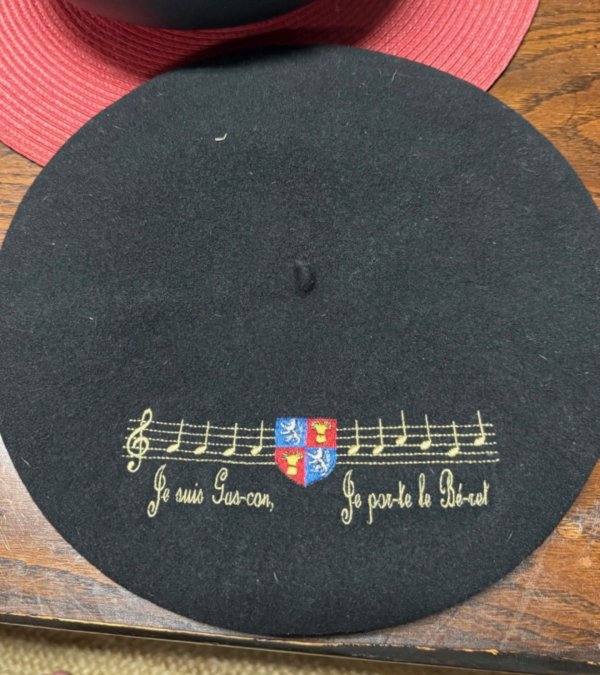
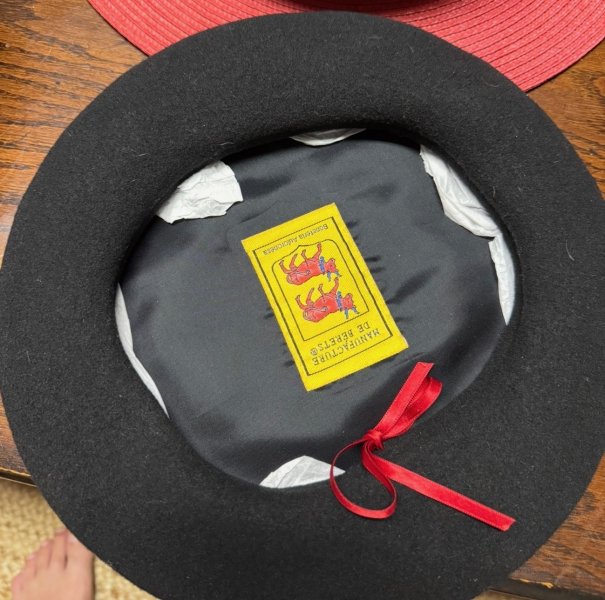
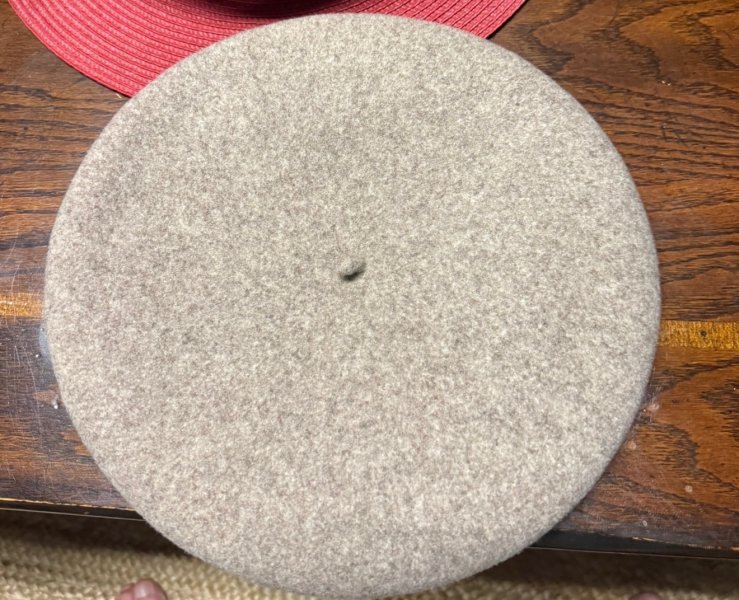
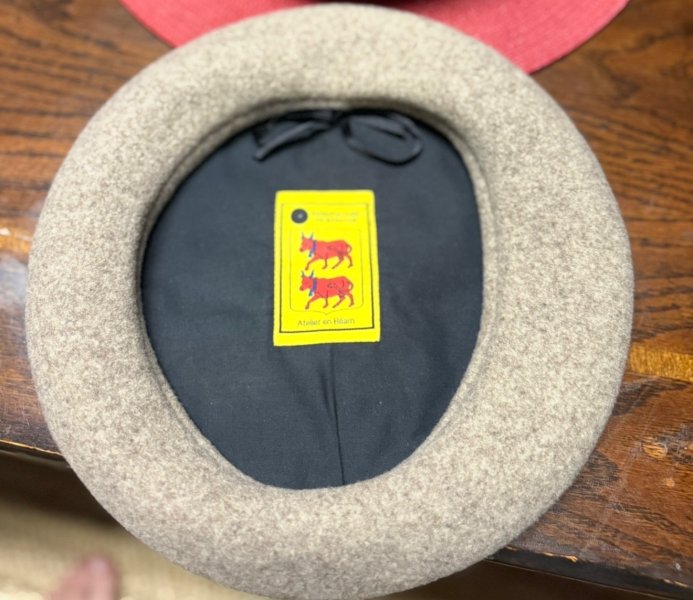
i am selling these and more if this goes well, first one is made by denis quedon about 15 plus years ago the merino by Sara goupy maybe 5 years ago
 

Attachments

  • IMG_7202.jpeg
    IMG_7202.jpeg
    478.9 KB · Views: 24
  • IMG_7203.jpeg
    IMG_7203.jpeg
    508.9 KB · Views: 22
  • IMG_7204.jpeg
    IMG_7204.jpeg
    463.9 KB · Views: 26
  • IMG_7205.jpeg
    IMG_7205.jpeg
    303.7 KB · Views: 26

Edward

Bartender
Messages
26,498
Location
London, UK
Most of my berets are in the 10-11" diameter bracket, a fairly 'average' size in my experience. I do have one smaller one from Laulhere, though, which has a great beatnik look to it. Almost like a smoking cap of sorts, in a way. It reminds me a lot of my first beret, which I dearly wish I still had. It was made for me by my late paternal grandmother, back in the eighties. I was off to the annual district Cub Scout camp one year - I'd have been about eight or nine at the time. The big Saturday afternoon activity was themed around an international sports event, and every Pack in the district had been given a country they were to represent. We got France. I wore a stripy t-shirt and a bunch of cut-out onions, and a little black beret Nana Marlowe sewed for me out of an old black towell. I think photos exist somewhere. It had a similar shape to those small, close-fitting berets I associate with 50s European beatniks. I dread to think what some other packs turned out in... but it was all in the past, and the past is, as they say, a foreign country... I still have fond memories of my first beret, though.
 
Last edited:

Daan

Vendor
Messages
983
Location
Wellington, Aotearoa
While the classic Basque beret is famous in black, the heart of the Pyrenees tells a different story. In the rugged Ossau Valley of Béarn, the true mark of a boinero is an earthy brown beret.
1789338463540.png

This distinct colour holds a deep connection to regional heritage, starting with the land itself. Originally, Pyrenean shepherds knitted their headwear using undyed local wool, yielding natural shades of chocolate, tan, and grey. While other regions turned to dark dyes, Ossau proudly kept its earthy palette.
1789338485435.png

Today, the brown beret remains the ultimate badge of pastoral pride and rustic authenticity. It is a vital centerpiece of the traditional Ossalois festive attire worn during village celebrations in Laruns and Bielle. Intriguingly, local custom dictates that a brown beret adorned with a small tassel traditionally signals a single man. When modern commercial factories, like Laulhère, threatened to phase out the shade, local outcry kept the tradition alive.
1789338514712.png
1789338531809.png

The decorative item pinned under or near the beret, just in front of the right ear, is called a flòc, a traditional decorative rosette made of silk or cotton ribbons bundled into a small tassel or bouquet. It is attached directly to the fold of the brown festive beret (lo bonet).
1789338560186.png

For the discerning boinero, wearing an Ossau brown isn't just a style choice, it is a proud nod to centuries of mountain history and independence.

South Pacific Berets stocks the world's largest selection of brown berets. Our collection features a diverse range of materials like merino wool, cotton, washi, onibegie, and straw, with diameters ranging from small, traditional fits to the large Chasseur Alpin models.
We offer options for every budget, from affordable everyday wear to premium French foulards.
1789338677007.png
1789338793941.png
Our finest pieces include the foulards naturel by MdB/Barnabé, crafted from untreated, undyed French merino wool, alongside classic brown universel models under the Auloronesa, Orthez, and Luxe labels.
1789338843616.png 1789338888494.png
Spanish boinas vasca come in a variety of qualities and diameters, or vuelos. From the basic unlined Femina, via the boina Clásica to the top range of boinas Super Lujo.
Some of the most affordable berets in brown are the Serbian Grof models and the Czech Classics. "Alternative" materials like straw, washi (Japanese paper), onibegie and cotton of course, are also available. Click on the images for more information.
Some of the most affordable berets in brown are the Serbian Grof and UČA models and the Czech Classics.
1789339302771.png
"Alternative" materials like straw, washi (Japanese paper), Onibegie and cotton of course, are also available. Click on the images for more information.
 

Daan

Vendor
Messages
983
Location
Wellington, Aotearoa
People new to beret-wearing often ask me similar questions, re sizes, diameters, materials, looks, etc. Below is a guideline, in 2 posts, to choosing a (1st) beret:

Choosing a beret is one of the more personal choices you can make when it comes to headwear. On paper, a beret is a remarkably simple thing: essentially a circular piece of felted or knitted material with a cabillou or txortena—the little "wick" on top. Yet two berets that look broadly similar can feel, fit and behave completely differently.
There is the size of the beret, the size of your head, the diameter or plateau, the amount of flight or overhang, the weight and density of the wool, the choice of merino, cotton or other fibres, and whether the beret is lined with satin, cotton or linen - or left unlined.

Then there is the more important question: what do you actually want the beret to do? Do you live somewhere warm or cold? Do you need protection from rain or sun? Are you looking for a practical everyday hat that can be stuffed into a pocket, or something with a little more elegance and presence? Are you a bricklayer looking for something that works, an outdoor enthusiast wanting weather protection, or an executive who wants to make a statement? There is a lot to consider.
The good news is that there is no single "correct" beret. The best beret is the one that suits your head, your climate, your use and your personal taste.

Finding Your Way Around South Pacific Berets
Our berets are organized primarily by country and manufacturer. There is some logic to this—an Italian beret can be quite different from a French or Spanish one—but it also gives us a manageable way of organizing a rather large collection.
Don't be afraid to explore. Compare the diameters, sizes, materials, colours, weights and prices, and look at the photographs. A beret that looks modest on the screen can be surprisingly substantial when worn, while a small-diameter beret can be considerably more discreet. If you're new to berets, the following guide should help narrow things down.

Which Beret Should I Choose?
At the top end are the artisan-made berets from Boneteria Auloronesa/BarNaBé, the Spanish Boinas Elósegui Super Lujo, and the Japanese-made Flamingo berets. These are particularly good choices if you appreciate fine materials, careful manufacture and the distinctive character of a genuinely well-made beret.
For a practical everyday beret, look at our own South Pacific Berets, the Italian Bascos Roma, Argentinean boinas by Arandú, and some of the vintage Etchea, Chirola and Rafale models. The Czech Classic is another good choice. These are the sort of berets that can simply become part of your daily wardrobe rather than something reserved for special occasions.
If you want a beret that sits relatively close to the head and doesn't have a great deal of overhang, look at the smaller-diameter models. The Orthez 9P by BarNaBé, Czech-made Radiovka, Italian Roma, and New Zealand Qui-Oui are all good examples.
These can be particularly comfortable around the house or for anyone who prefers a less conspicuous silhouette.
If subtlety isn't your principal concern, there are considerably larger berets.
The Spanish Txapeldun, the Grand Foulards Alpin by BarNaBé, and the larger Flamingo Basques offer considerably more material and a much more pronounced silhouette.
A large beret can look spectacular. It can also attract attention - not necessarily a disadvantage.

Beret Diameter and Flight

One of the most important things to understand when choosing a beret is diameter.
The flight, sometimes called the plateau, is the surplus material extending beyond the head. It is what allows a beret to be shaped and worn tilted to one side, towards the back, or in other styles.
In general, the larger the diameter, the more material there is to work with.
These berets sit relatively close to the head, with little overhang. Examples include the French Orthez 9P, Italian Roma, and Czech Radiovka.
They are a good choice if you prefer a compact, discreet beret.
This is where you find many traditional everyday Basque berets. Examples include BarNaBé/Auloronesa models and the Boinas Elósegui Super Lujo in 11P/31 cm.
There is enough material to shape the beret in different ways without it becoming excessively large.
Larger berets provide considerably more flight and allow a more pronounced Basque or French-style silhouette. These are particularly worth considering if you like a generous amount of material around the head or want greater protection from sun and weather - the typical outdoors beret.
This is beret territory for the committed. The large Alpin, Txapela and Plato Grande models can reach around 37 cm in diameter. They provide a great deal of material to work with and excellent protection from sun and weather. They can also be, well, large.
If you're not accustomed to a grand beret, wearing a 37 cm model for the first time may require a little courage - particularly if your surroundings are not accustomed to people wearing grand berets. But, that is also rather the point.
1791323144200.png


What Size Beret Should I Buy?
Diameter and head size are two different measurements. Your head size determines whether the beret fits around your head. The diameter determines how much material there is beyond your head and therefore how much flight or overhang you have.
A larger-diameter beret does not mean you need a larger head size. When choosing your size, measure around your head where you intend to wear the beret, normally approximately 1 cm above your eyebrows and ears. Use that measurement to select the appropriate size offered for the particular beret. Different manufacturers can size their berets slightly differently, so always check the individual product's sizing information rather than assuming that the same nominal size will fit identically across every manufacturer.
If you're unsure, contact us. After more than 15 years of specializing in berets, we've had to think about this rather more than most people.
1791322963671.png


What Material Should I Choose?
Most of our traditional wool berets are made from fine wool, particularly merino wool. Merino wool provides excellent insulation while remaining breathable, and wool naturally absorbs moisture and odours. It is also exceptionally well suited to the dense felting process used to make traditional berets. The resulting felt is naturally water-resistant. In general, a denser and heavier wool beret will resist rain for longer than a very light one.
Several of the French BarNaBé/Auloronesa berets have particularly high water resistance as a result of their manufacturing process, while some higher-end Spanish berets receive additional waterproofing treatments. A wool beret is therefore a particularly good choice if you want one beret that can handle changing weather and be worn throughout much of the year.
Cotton
Cotton berets are generally lighter than their wool equivalents and are particularly comfortable in warmer weather. They breathe well and can be an excellent summer alternative, although some customers become sufficiently attached to cotton that they wear their cotton berets throughout the year. Our cotton berets are knitted from a single thread in much the same basic construction as a wool beret, and finished with the traditional txortena on top.
Other materials
You'll also find berets made from linen, hemp and other fibres. These can have quite different characteristics from traditional wool and are worth considering if you're looking for something particularly lightweight, breathable or unusual.
 

Daan

Vendor
Messages
983
Location
Wellington, Aotearoa
Lining
The lining is partly a matter of taste, but it also affects how a beret feels and behaves. A lined beret generally feels smoother against the head and can help the beret retain its shape. Satin, cotton and linen are among the materials used for linings. An unlined beret has a more direct contact with the wool and can feel lighter and more breathable. Some traditionalists particularly like the simplicity of an unlined beret.

There is also a little piece of beret folklore attached to linings. French farmers and labourers were traditionally known to keep paper money between the beret and its lining. A few centimeters of the stitching would be opened to make a convenient little hiding place.

Which Beret Is Best for Warm Weather?
For hot or humid climates, look first at:

  • lightweight cotton berets
  • lightweight wool berets or the top quality merino berets
  • unlined berets
  • smaller-diameter models
A larger, heavy wool beret provides excellent protection in cold and wet weather but may be more than you want in midsummer. That said, climate isn't everything. Some people happily wear substantial wool berets throughout the year, while others prefer cotton as soon as the temperature rises.
Which Beret Is Best for Rain?
A densely felted wool beret provides excellent protection from rain. For particularly wet conditions, look at the heavier and denser wool berets and models specifically treated for water resistance. A larger beret also provides more protection from sun and rain simply because there is more material extending beyond the head. The traditional Basque beret was, after all, not designed merely to look good.

Which Beret Is Best for Everyday Wear?
If you're buying your first beret, don't necessarily start with the largest or most exotic model.
A medium-diameter wool beret around 28–31 cm is a good starting point for many people. It provides enough material to shape and wear in different ways without becoming overwhelming.
If you want something particularly refined, look at the higher-end Spanish, French and Japanese makers.
And if you already know that you want a large, dramatic beret, there is no reason to work your way gradually towards it. Go straight to the Txapeldun.
 

Daan

Vendor
Messages
983
Location
Wellington, Aotearoa
A Final Word on Choosing a Beret
There is no universally "best" beret.
A 25 cm Italian Roma may be perfect for one person and hopelessly small for another. A 37 cm Txapeldun may be ridiculous on one head and magnificent on another.
The right beret depends on your head, your climate, your intended use and, ultimately, what you like looking at in the mirror. Our advice is to explore the range, compare the specifications and photographs, and don't be afraid to try something different. And if you're still unsure, ask us.
We have been specializing in berets since 2009 and have spent a disproportionate amount of time thinking about such things. We'll be happy to help.

Guarantees, Exchanges & Returns
All berets we sell are fully guaranteed against material or manufacturing faults.
Because berets are worn directly on the head, we cannot exchange or refund a beret for reasons of fit, size or preference once it has been worn or tried on. Please check the sizing information carefully before trying your beret on, and contact us if you are uncertain about which size or model to choose.

Size

To determine your head size, measure around your head where the beret would sit, then convert to a hat size using the following chart:

Inches21 1/2 21 7/822 1/422 5/8 23 23 3/823 3/4 24 24 1/22525 1/2
Hat Sizes6 3/46 7/877 1/87 1/47 3/87 1/27 5/87 3/47 7/88
Hat SizesSMSMMEDMEDLGLGXLXL2XL2XL3XL
Metric5455565758596061626364
 

Daan

Vendor
Messages
983
Location
Wellington, Aotearoa
Les Rebelles is the new line of super-foulards from BarNaBé / Manufacture de Bérets — 10P/28 cm plateau berets with a solid black cotton lining and the new Les Rebelles label.
32c5ace2-3a74-4af8-b850-ec40e03d66ea1.png
A beret for those who like to do things a little differently.
1792457248021.png 1792457263991.png
Made from 100% French Merino wool from Arles, Les Rebelles are presently available in black, navy, anthracite grey, French khaki and jeans - the latter four in shades slightly different from the regular BarNaBé Universels.
1792457334092.png 1792457349818.png
And fitted with a liguette, of course, the traditional drawstring that makes these berets properly adjustable. Pull it in, let it out, and forget about sizing. Worn by workers, artists, revolutionaries, style-conscious eccentrics and other rebels, it has travelled well beyond its origins. Les Rebelles continues that spirit; wear it your way, tilt it, straighten it, make it yours. No uniform. No rules. Just an incredibly good beret.
1792457213248.png
Make a stand. Stand apart - Another world is possible.
 

Attachments

  • 32c5ace2-3a74-4af8-b850-ec40e03d66ea (2).png
    32c5ace2-3a74-4af8-b850-ec40e03d66ea (2).png
    1.1 MB · Views: 2

Forum statistics

Threads
115,522
Messages
3,195,524
Members
59,162
Latest member
OJHymoid
Top