Daan
Vendor
- Messages
- 983
- Location
- Wellington, Aotearoa
Spotlight on Boineros from Ukraine
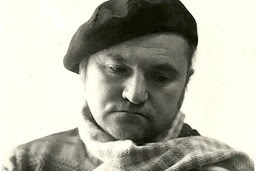
Erikas Varnas (1924 – 2011) was a Ukraine born Lithuanian artist; a sculptor, medalist, portraitist, who devoted his whole life to the idea of peace, to conveying pacifist views in sheets of paper, canvas, bronze, marble, granite.
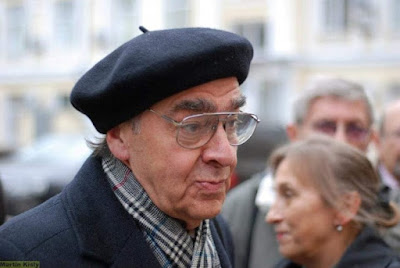
Valériy Khmelkó (1939 –2021) was a Ukrainian sociologist, Professor at the Sociology Department of the National University of Kiev-Mohyla Academy, and President of the Kyiv International Institute of Sociology. He was a visiting scholar in 1992, 2000 and 2001 at the Sociology Department of Johns Hopkins University (United States).
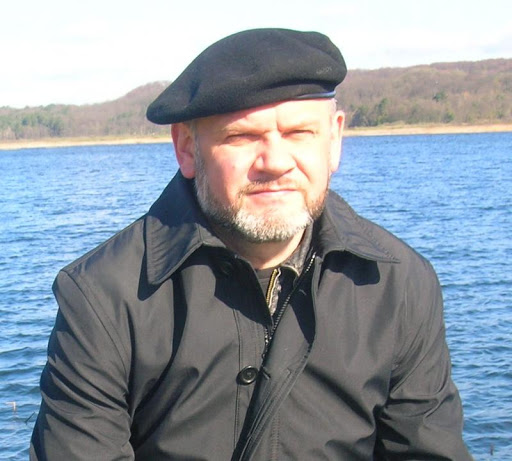
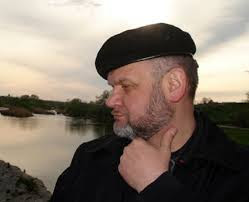
Viktor Neborak, a tall imposing figure with a booming voice that makes a microphone come to life when he performs his poetry, was born in 1961 and is one of the leading representatives of the mid-to-late 1980s cultural revival in Ukraine. He is best known as a poet and founding member (along with Yuri Andrukhovych and Oleksander Irvanets) of the Bu-Ba-Bu literary performance group that gained enormous popularity in the late 1980s and 1990s in Ukraine. The syllables of the group\'s name stand for burlesque (burlesk), a puppet show or farce (balahan), and buffoonery (bufonada).
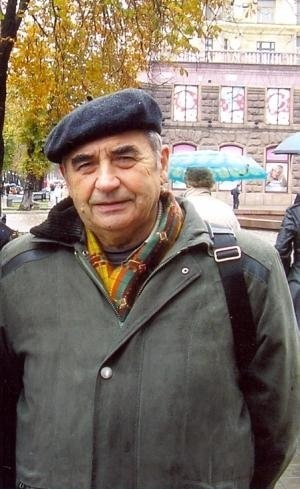
Yosyp Georgiyovych Strutsyuk (1934) is a Ukrainian writer and poet of the Sixties. The Sixtiers ("People of the 60s") were representatives of а new generation of the Soviet Intelligentsia, who entered the cultural and political life of the USSR during the late 1950s and 1960s, after the Khrushchev Thaw.
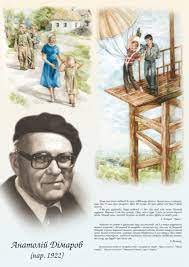
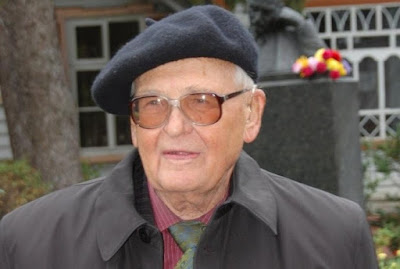
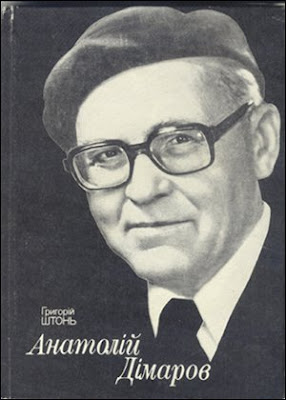
Dimarov (born Anatoly Andronikovych Harasyuta, 1922—2014) was a Ukrainian writer.
His father was married to a priest's daughter and was later declared a Kulak. Dimarov later said "My path to the world was completely closed to me. And my unfortunate mother for the sake of us, two children, gave up her personal life. She went to Myrhorod, found her friends, and begged them to testify in the Myrhorod court that she had lost her children's metrics and that we were the children of teacher Dimarov, who died. Since then, I became Dimarov, not Garasyuta”.
"I couldn't go anywhere, not even to the Komsomol, I was afraid that they would start studying my biography and find out that I was the son of a kulak." As a child, Anatoliy survived the Holodomor in Ukraine in 1932-1933. At the beginning of World War II, he fought on the Southwestern Frontand in 1941, was seriously injured. After recovery he found himself in the occupied territories. He became the commander of a partisan detachment, had several injuries and contusions, and became disabled at a young age. He was awarded orders and medals. In 1944 he came to Lutsk, where he lived for six years. And it was there, as the writer admitted, that the national consciousness awoke in him. "It never occurred to me that I was Ukrainian!"
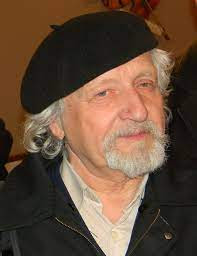
Mykola Ivanovich Stratilat (1942 —2023) was a graphic artist, a member of the National Academy of Arts and Sciences (1980), Honored Artist of Ukraine (1996) and People's Artist of Ukraine (2008).
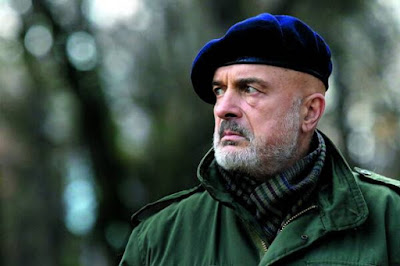
Publicist, writer, scientist and teacher Oleg K. Romanchuk carried out a thorough analysis of the reasons for Ukraine’s victories and defeats, successes and failures.
His new book "Don't be afraid. Don't betray. Do not be silent" carries the clarifying title: "Wartime Journalism. Selected texts 2014–2019: articles, essays".
Erikas Varnas (1924 – 2011) was a Ukraine born Lithuanian artist; a sculptor, medalist, portraitist, who devoted his whole life to the idea of peace, to conveying pacifist views in sheets of paper, canvas, bronze, marble, granite.
Valériy Khmelkó (1939 –2021) was a Ukrainian sociologist, Professor at the Sociology Department of the National University of Kiev-Mohyla Academy, and President of the Kyiv International Institute of Sociology. He was a visiting scholar in 1992, 2000 and 2001 at the Sociology Department of Johns Hopkins University (United States).
Viktor Neborak, a tall imposing figure with a booming voice that makes a microphone come to life when he performs his poetry, was born in 1961 and is one of the leading representatives of the mid-to-late 1980s cultural revival in Ukraine. He is best known as a poet and founding member (along with Yuri Andrukhovych and Oleksander Irvanets) of the Bu-Ba-Bu literary performance group that gained enormous popularity in the late 1980s and 1990s in Ukraine. The syllables of the group\'s name stand for burlesque (burlesk), a puppet show or farce (balahan), and buffoonery (bufonada).
Yosyp Georgiyovych Strutsyuk (1934) is a Ukrainian writer and poet of the Sixties. The Sixtiers ("People of the 60s") were representatives of а new generation of the Soviet Intelligentsia, who entered the cultural and political life of the USSR during the late 1950s and 1960s, after the Khrushchev Thaw.
Dimarov (born Anatoly Andronikovych Harasyuta, 1922—2014) was a Ukrainian writer.
His father was married to a priest's daughter and was later declared a Kulak. Dimarov later said "My path to the world was completely closed to me. And my unfortunate mother for the sake of us, two children, gave up her personal life. She went to Myrhorod, found her friends, and begged them to testify in the Myrhorod court that she had lost her children's metrics and that we were the children of teacher Dimarov, who died. Since then, I became Dimarov, not Garasyuta”.
"I couldn't go anywhere, not even to the Komsomol, I was afraid that they would start studying my biography and find out that I was the son of a kulak." As a child, Anatoliy survived the Holodomor in Ukraine in 1932-1933. At the beginning of World War II, he fought on the Southwestern Frontand in 1941, was seriously injured. After recovery he found himself in the occupied territories. He became the commander of a partisan detachment, had several injuries and contusions, and became disabled at a young age. He was awarded orders and medals. In 1944 he came to Lutsk, where he lived for six years. And it was there, as the writer admitted, that the national consciousness awoke in him. "It never occurred to me that I was Ukrainian!"
Mykola Ivanovich Stratilat (1942 —2023) was a graphic artist, a member of the National Academy of Arts and Sciences (1980), Honored Artist of Ukraine (1996) and People's Artist of Ukraine (2008).
Publicist, writer, scientist and teacher Oleg K. Romanchuk carried out a thorough analysis of the reasons for Ukraine’s victories and defeats, successes and failures.
His new book "Don't be afraid. Don't betray. Do not be silent" carries the clarifying title: "Wartime Journalism. Selected texts 2014–2019: articles, essays".