PatinaLounge
New in Town
- Messages
- 8
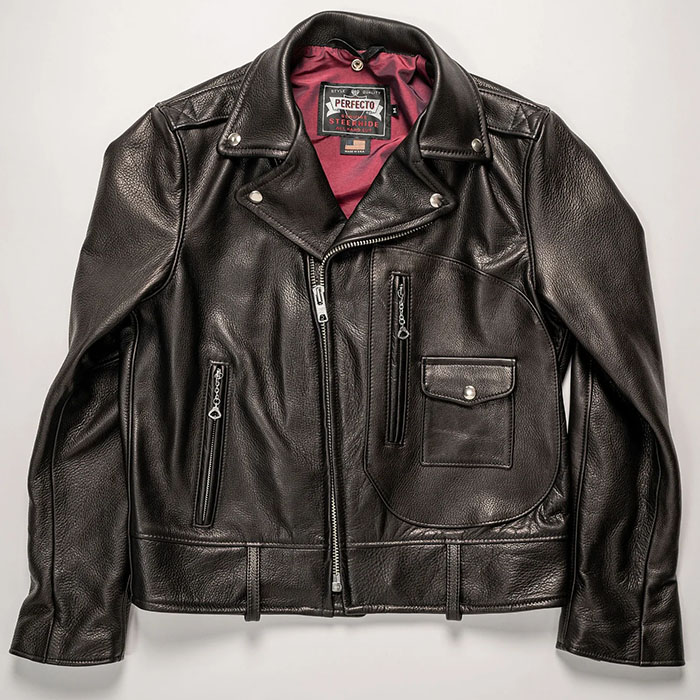
Look familiar? If you trace back the roots of iconic designs like the Buco J-21 or Freewheelers’ Centinela, you inevitably land right here: the legendary Leather Tog motorcycle jacket.
Originally introduced in the 1930s, this piece heavily influenced later classics from brands like Buco. And this very jacket served as the blueprint for the Chevalier in my collection. (While "Chevalier" translates to "knight," it was also used as old-school slang for an automobile.)
Though it was only produced for a very brief period, vintage enthusiasts praise it to this day for its outstanding pattern, construction, and materials. Himel Bros took this vintage icon and faithfully reinterpreted it into absolute perfection.
At this level, leather quality is a given, so I won't bore you with the usual specs—except to say this Italian horsehide is uniquely characterful in a very Western way. It features rich grain, tea-core (teacore) that reveals itself quickly, and a subtle luster that makes it a real joy to wear. Truly a masterpiece.
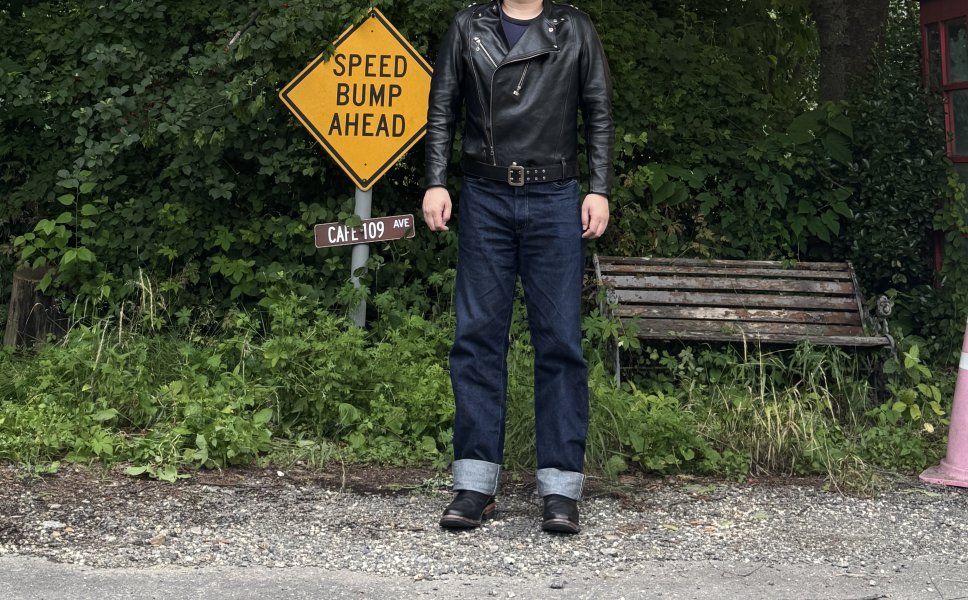
I’ve been wearing this jacket a lot lately, and it fits like a dream.
View attachment 1785656124.268592.jpeg
First off, one of its most defining features is the aggressive taper on the sleeves—almost like a cone shape. Is it just for looks? Not at all. A strong taper or V-shape in the sleeves keeps them from riding up your arms when reaching for the handlebars on a motorcycle. Exposed skin means less protection, plain and simple. Unsurprisingly, whenever I ride in this piece, the sleeves stay right where they belong. The tapering is just unreal...
Plus, there’s extra volume around the upper sleeve for better mobility, making arm movements feel completely natural and comfortable. Naturally, this leads to another clever detail: the wrist zippers don't need to be long. They're kept short and clean right at the cuffs.
And man, the tea-core coming through on the worn areas is just beautiful.
There's a removable snap cover (circled in the photo) that you can reposition to keep the cuff zipper neatly fixed, whether you keep it open or zipped up. Personally, I just leave mine snapped in one place so I don't lose it... Dave Himel suggests tucking it into a pocket, but honestly, who has time for that? Haha.
View attachment 1785656123.446803.jpeg
“Unique, West Coast ‘Cathedral,’ back design reminiscent of vintage Trojan-brand jackets.”
There are also a few details here that weren't on the original 1930s piece: the epaulets, the pocket arrangement, and the back design. The two large chest pockets on the front are incredibly useful. The silver studs on the pocket corners aren't just decorative either—they were designed to reflect light for better visibility during night rides.
Notice the curved panels on the front? I hear making curved patterns like this is a nightmare, but there’s a solid reason behind it. Since our torsos are naturally curved, cutting the panels on a curve allows the jacket to lay straight and flush against the body when worn.
Behind the main zip, there’s an extra piece of leather—a wind flap—which adds a serious layer of windproofing.
Moving to the back, it features a tiny half-belt paired with a sunburst detail. Since there are no action pleats on the back, this design adds just enough give for comfort while serving as a stunning visual element.
As the official site puts it, you can think of it as a recreation of that Western grandeur seen in vintage Trojan jackets. (Even Lost Worlds, a brand I absolutely love, uses a very similar back design on their Trojan model.)
Now, let's talk thread.
They use Gütermann 100% cotton thread (16/4 gauge), made by one of the last remaining historic thread mills in New Bedford. Man... that is just cool. It speaks volumes about their authenticity. Leather gets all the spotlight, but thread matters just as much.
Using 100% cotton thread is a classic Himel signature. The 16/4 spec means four strands of size 16 thread twisted together—the lower the number, the thicker the thread. This one leans on the heavy side. Knowing it comes from a mill preserving true tradition makes it all the more meaningful.
Lastly, the belt.
You’ll notice it’s not uniform in width; it’s thicker toward the center. Was it a manufacturing flaw? Far from it. That central thickness prevents the belt from constantly sliding side-to-side.
When you start noticing details at this level, you realize Himel operates at the absolute pinnacle of craftsmanship.
To me, a Himel jacket isn't just clothing—it’s a work of art. The director takes classic vintage motifs, subtly weaves in elements he loves, and balances them with pure functionality and creativity.
Ordering one new right now will set you back around $2,980 before tax and shipping. Some might call that crazy, but once you understand the small-batch production and the sheer level of detail engineered into a piece like this, the price tag makes complete sense. The more you learn about it, the more you appreciate it. If you ever come across one on the second-hand market or get a chance to pick one up—don't hesitate. Experience it for yourself.