Caber
One of the Regulars
- Messages
- 191
- Location
- North of the Hanging judge
If one is found but needs a new liner or a seam repair, Is there someone around the forum that can do this or is it just something a local tailor can do.

And if he could handle a new liner, where would you find a new liner for him to install?I would assume a local tailor could handle a seam repair. I'm not so sure about a new liner.

Both are Real McCoys repros… the CPO is their reproduction CPO and the Peacoat is their 1913 as well. I have seen original 1913s floating around online for like $4000 which isn’t worth it imo not to mention finding the right size.One comment and two questions.
First to define terms. A "chest measurement" only properly refers to the circumference of one's chest–such as 43". Coat measurements are made pit to pit, such as 24.4" or 25.6". The distinction may sound pedantic, but it isn't. It keeps us from becoming confused when discussing chest size, versus peacoat size.
Where did you find a 1913 peacoat, and are you sure it is an issue coat? I have never seen a 1913 coat.
And finally, what is a CPO shirt? Is it thicker than a standard navy shirt?
I know, it’s a bummer. But where am I going to find an original 1913 Peacoat that fits someone who is 6’4” and 200 lbs?This coat has much to recommend it, but it has one major problem: It doesn't have a Kersey shell. It probably has some form of the Melton wool that was substituted for the Kersey in 1980.
Real McCoys will probably tell you it has the same material throughout that the original had, but it doesn't.
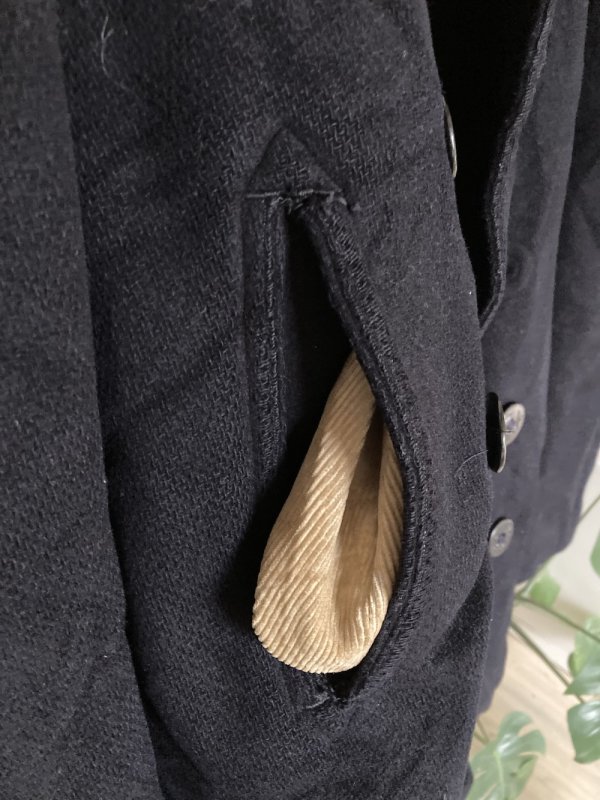
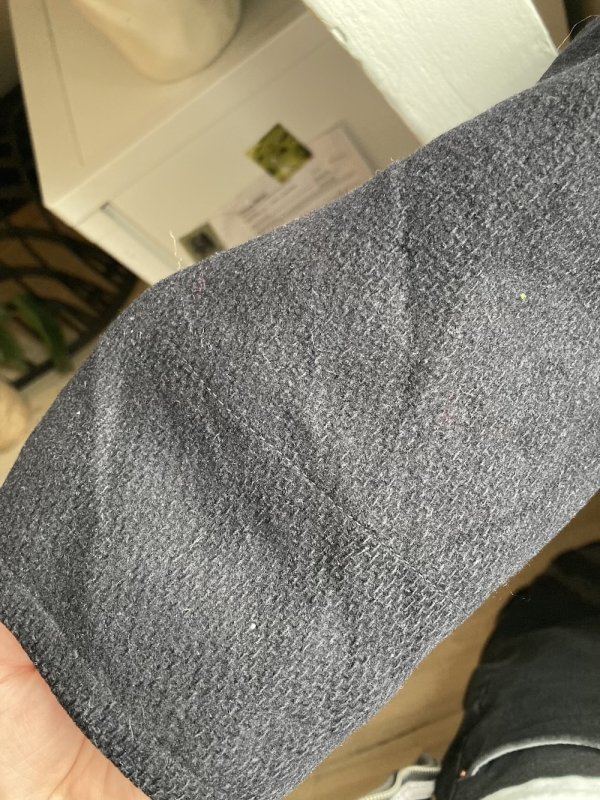
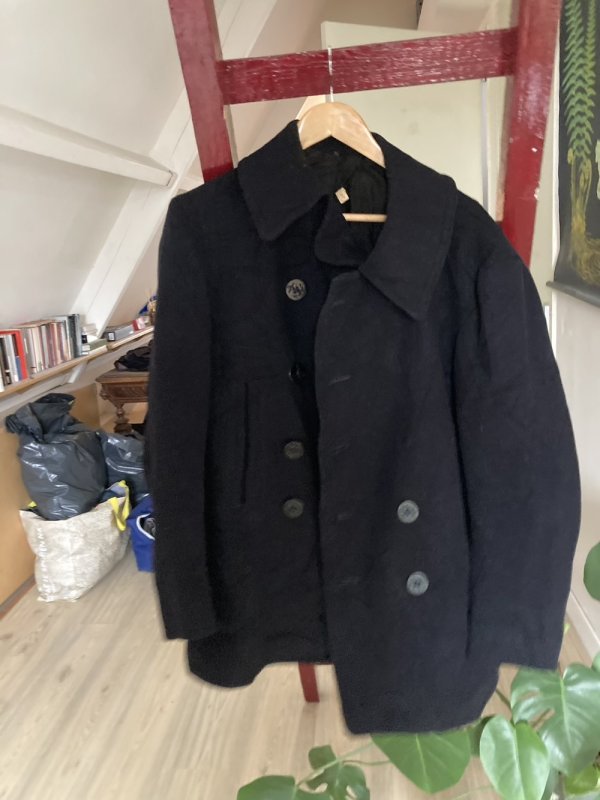
Imitation? If it fits still a keeper.Hi everyone. I recently found this peacoat at a local market with an interesting weave pattern that I haven't found before on these vintage US navy peacoats. It has no tags inside.
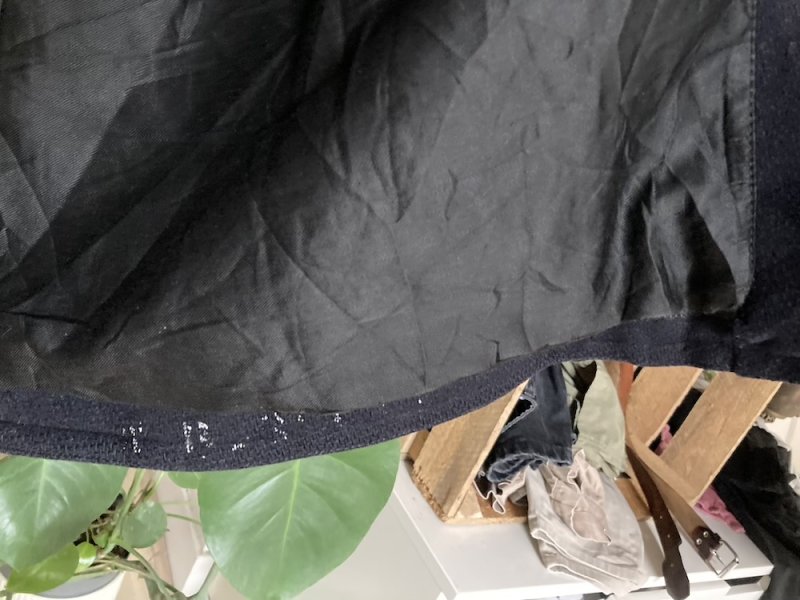
Now I'm usually pretty good at identifying original ones based on tags and/or stitching (thanks to the PEACOAT thread on this site). But this one got me a bit off guard.
Notice (i) the weave pattern is quite visible, (ii) it has a corduroy lining pocket, but (iii) a single line of stitching on sleeves (instead of 2).
Thoughts on this? Imitation or real?
I'm mainly curious on the weird weave pattern. Can wool actually do that? It looks more like cotton.Imitation? If it fits still a keeper.
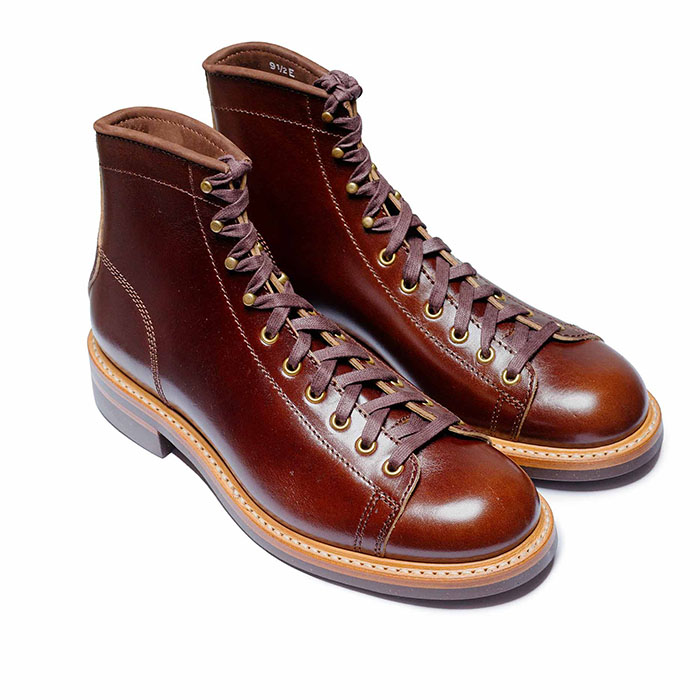 John Lofgren Monkey Boots Shinki Horsebuttt - $1,136 The classic monkey boot silhouette in an incredibly rich Shinki russet horse leather.
 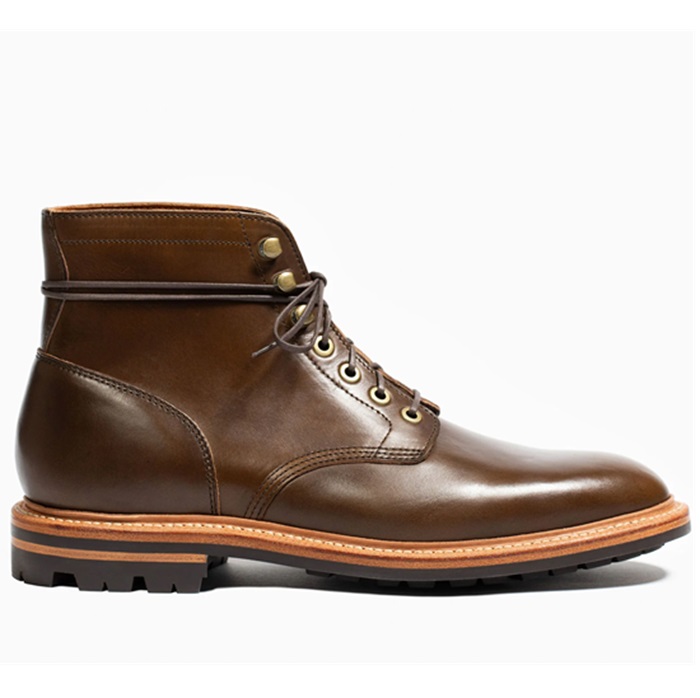 Grant Stone Diesel Boot Dark Olive Chromexcel - $395 Goodyear welted, Horween Chromexcel, classic good looks.
 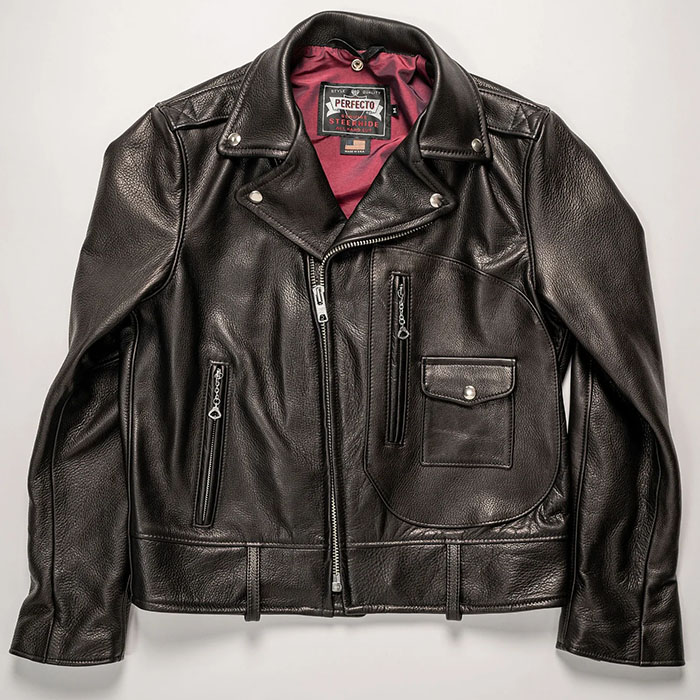 Schott 568 Vandals Jacket - $1,250 The classic Perfecto motorcycle jacket, in a very special limited-edition Schott double rider style.
You can do a twill weave with wool. Does it feel smooth and silky or more like a slight Velcro/static feel. If it itches slightly… it’s wool. Unlikely to be wool.I'm mainly curious on the weird weave pattern. Can wool actually do that? It looks more like cotton.
Apparently I did a wool test. Cut a tiny piece of fabric and dipped it in bleach for 2 hours. It dissolved completely so it's 100% wool. My thinking is that it was washed incorrectly hence the weave became more visible from shrinkage.You can do a twill weave with wool. Does it feel smooth and silky or more like a slight Velcro/static feel. If it itches slightly… it’s wool. Unlikely to be wool.
Apparently I did a wool test. Cut a tiny piece of fabric and dipped it in bleach for 2 hours. It dissolved completely so it's 100% wool. My thinking is that it was washed incorrectly hence the weave became more visible from shrinkage.
I'm starting to think it's from ww2 given the slightly more cropped and single-line stitching on the cuffs. Also the 8 buttons showing (instead of 6). The inner lining stitching also looks identical to ww2 pictures I have found.
I think it is because the Kersey is no longer available.Apparently Real McCoys treats their wool with resin to mimic the water repellency of Kersey wool. I wonder why no one does Kersey wool repros?

I think it is because the Kersey is no longer available.
And I think you are exactly right.There are reproductions of historical cloths used for reenactment military uniforms, and for general uses, but I never found anything in the weights used for the Peacoats.
I can guarantee that if there was a viable source of quality Kersey that resembled the kind used in the real Navy Peacoat, there would be many brands already using it for their versions.

I've seen that weave pattern on wool that has had the knap* worn off, but only in small patches of maximum wear like around cuffs etc. It looks like this entire coat is like that, which is weird. As someone else said, if it fits keep it and wear it, it looks like a well-made coat regardless of "authenticity."Hi everyone. I recently found this peacoat at a local market with an interesting weave pattern that I haven't found before on these vintage US navy peacoats. It has no tags inside.
Now I'm usually pretty good at identifying original ones based on tags and/or stitching (thanks to the PEACOAT thread on this site). But this one got me a bit off guard.
Notice (i) the weave pattern is quite visible, (ii) it has a corduroy lining pocket, but (iii) a single line of stitching on sleeves (instead of 2).
Thoughts on this? Imitation or real?