Want to buy or sell something? Check the classifieds
-
The Fedora Lounge is supported in part by commission earning affiliate links sitewide. Please support us by using them. You may learn more here.
You are using an out of date browser. It may not display this or other websites correctly.
You should upgrade or use an alternative browser.
You should upgrade or use an alternative browser.
What Hat Are You Wearing Today ?
- Thread starter AbbaDatDeHat
- Start date


jeffgarf
One Too Many
- Messages
- 1,728
- Location
- Jerusalem, Israel
Take a look, I think there is a whole thread here.Portis stingy from the late 1940's or early 50's, but I havent researched Portis history yet. I believe it used to have an oilskin liner that disintegrated. Silver Beaver 3X blend. I dig the hat box.
Thanks Jeff, I'm checking it out now. Looks like I have some reading to do. I didn't realize they closed down so long ago. I really like the quality felt on this hat.Take a look, I think there is a whole thread here.
jeffgarf
One Too Many
- Messages
- 1,728
- Location
- Jerusalem, Israel
They are great hats.Thanks Jeff, I'm checking it out now. Looks like I have some reading to do. I didn't realize they closed down so long ago. I really like the quality felt on this hat.

更陈王奋起挥黄鉞
New in Town
- Messages
- 2
It’s reproduction, haha. You’re absolutely right to ask that. There’s an interesting piece of history behind this.Cool. However, I'm unclear - is this vintage from the Ming Dynasty or a reproduction?
Either way, way to mix it up.
Genuine vintage clothing from the Ming Dynasty is extremely rare. One reason is that it dates back more than 400 years. The other reason is a major historical event in Chinese history: the Qing Dynasty — the last feudal imperial dynasty in China — was founded by the Manchu people.
The Manchus were a nomadic and hunting ethnic group. To maintain stable rule, they ordered Han Chinese people to shave their heads and change their clothing. The Manchu hairstyle required a braid less than one centimeter thick; all other hair had to be shaved off (similar to the hairstyle of the Cossacks in Eastern Europe).
By contrast, traditional Han people never shaved any hair. They kept it long and tied it up on top of their heads. In ancient China, people believed that the body, skin, and hair were gifts from one’s parents, so they had to be cherished and not easily damaged. Hair was seen as something dignified and meaningful.
When the Manchu order was issued, it triggered resistance among nearly all Han people. But the Manchus enforced a brutal rule: if you wanted to keep your hair, you would lose your head; if you wanted to keep your head, you had to give up your hair. Millions of people were killed for refusing to change their hairstyle or wear Manchu clothing.
In the end, the resistance was suppressed, and most pre‑Qing clothing was destroyed. That’s why almost no genuine vintage Ming Dynasty clothing survives today.
However, there are countless portraits and unearthed artifacts from the Ming Dynasty. Modern reproductions are mainly based on these portraits and relics.
Photos 1 and 2 show traditional Han hairstyles.
Photo 3 is a Terracotta Warrior from the Qin Dynasty, dating back 2,246 years ago.
Photos 3 and 4 show Ming Dynasty gentlemen and soldiers wearing damao(traditional Ming hats).
Photos 5 and 6 show Qing Dynasty officials and merchants who were forced to wear Manchu clothing and wear Manchu-style braids.
jeffgarf
One Too Many
- Messages
- 1,728
- Location
- Jerusalem, Israel
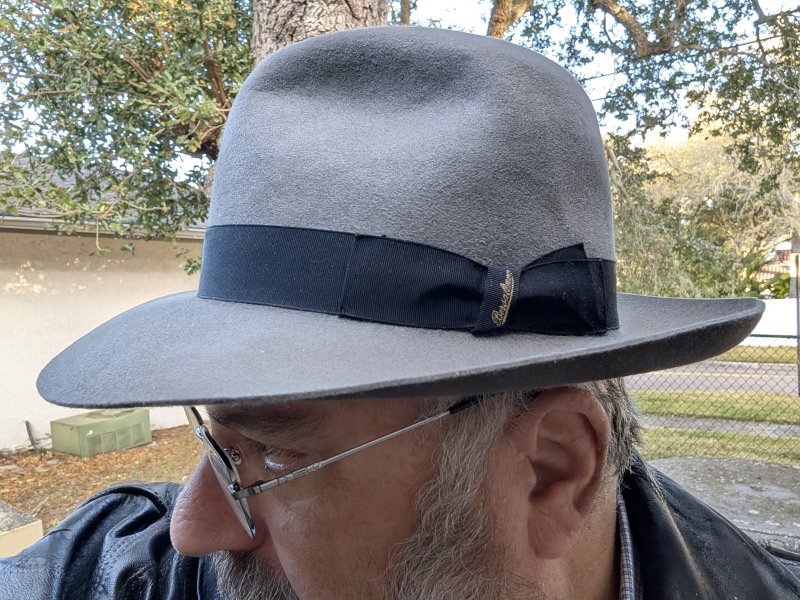
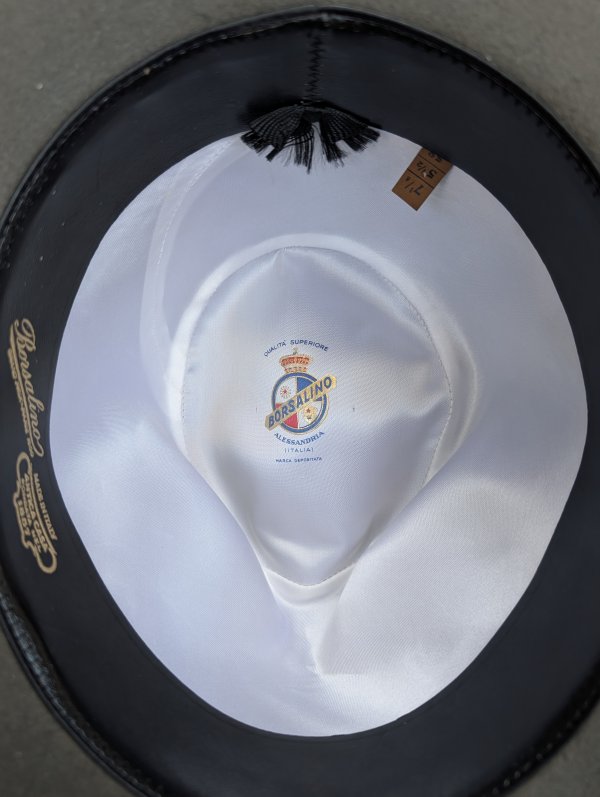
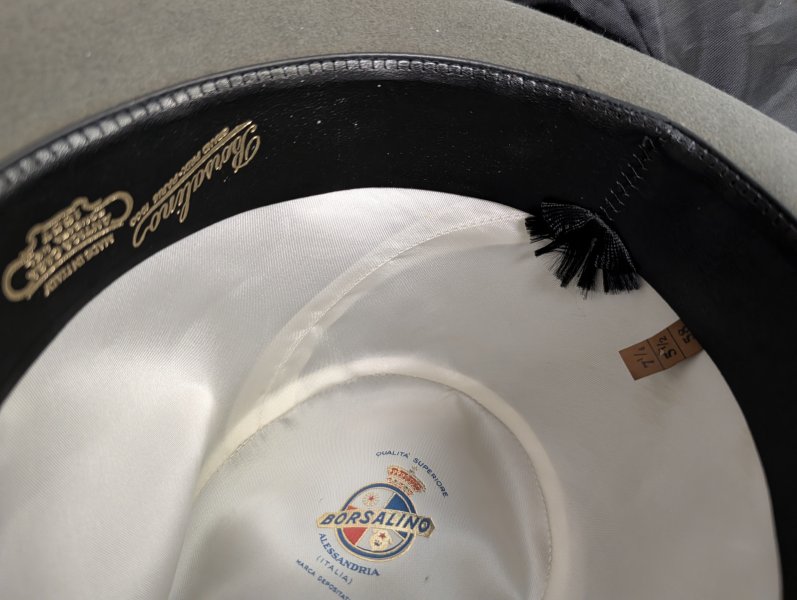
A late 80's (I believe) Borsalino in gray for today. I say late 80's because the hat band already had the logo on it, but the liner and the size tag are unusual in my experience for 1990's and later hats. With the size tag, I might have assumed it was US made, but it does specifically say "Made in Italy" unlike the 90's Bollman licensed hats. Interesting. I should also point out that the felt is definitely Borsalino.


RickP
My Mail is Forwarded Here
- Messages
- 3,080
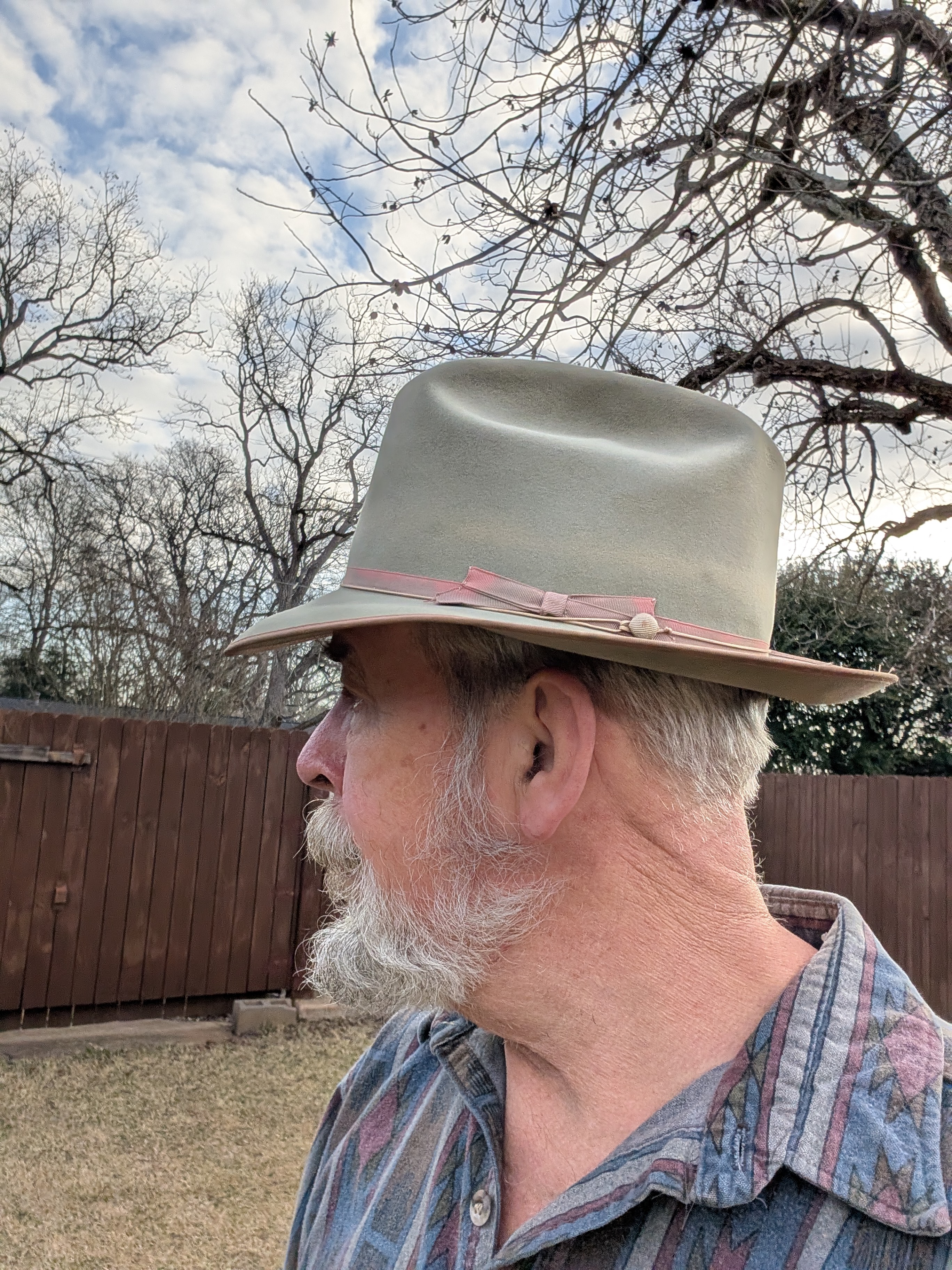
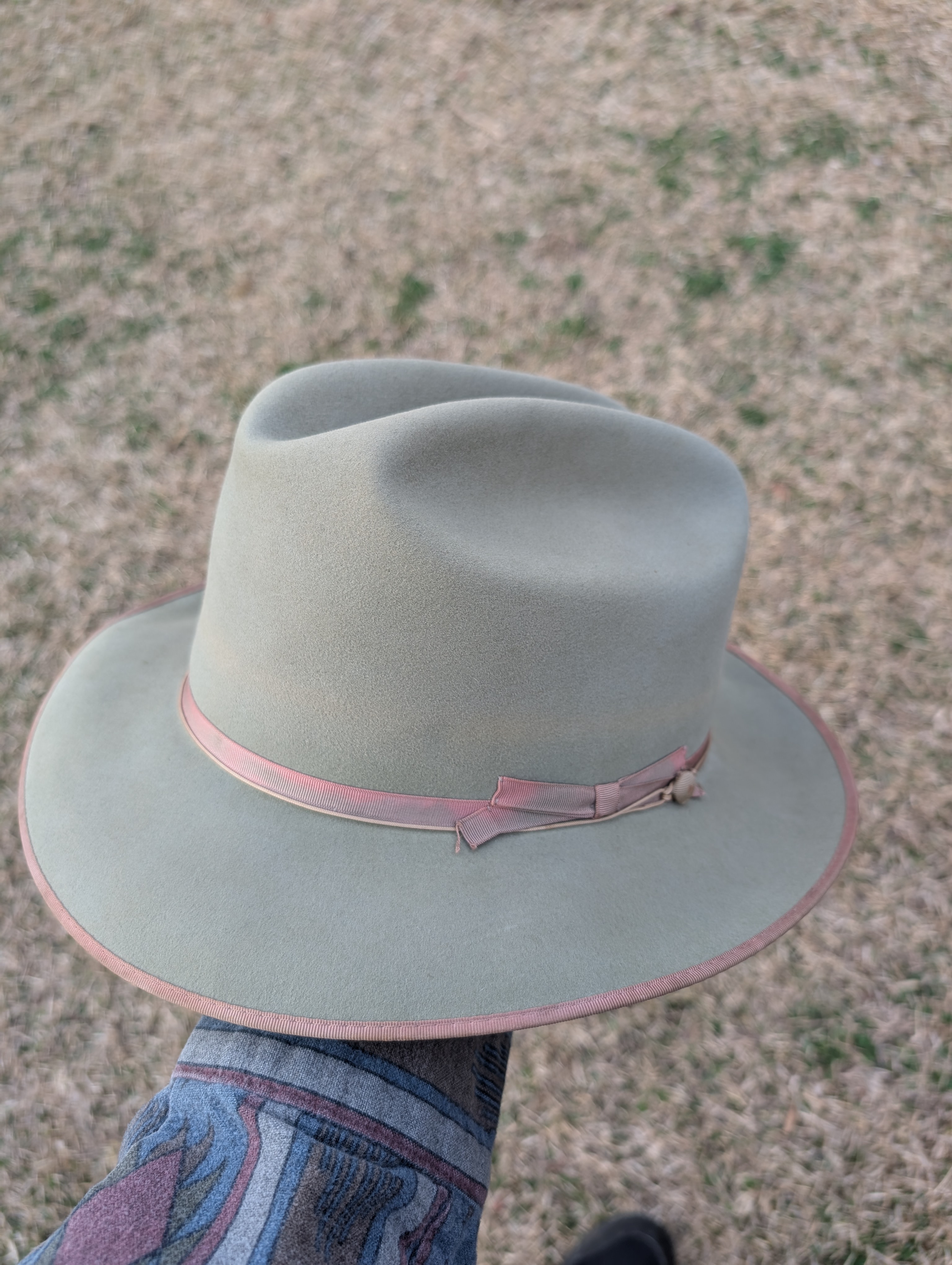
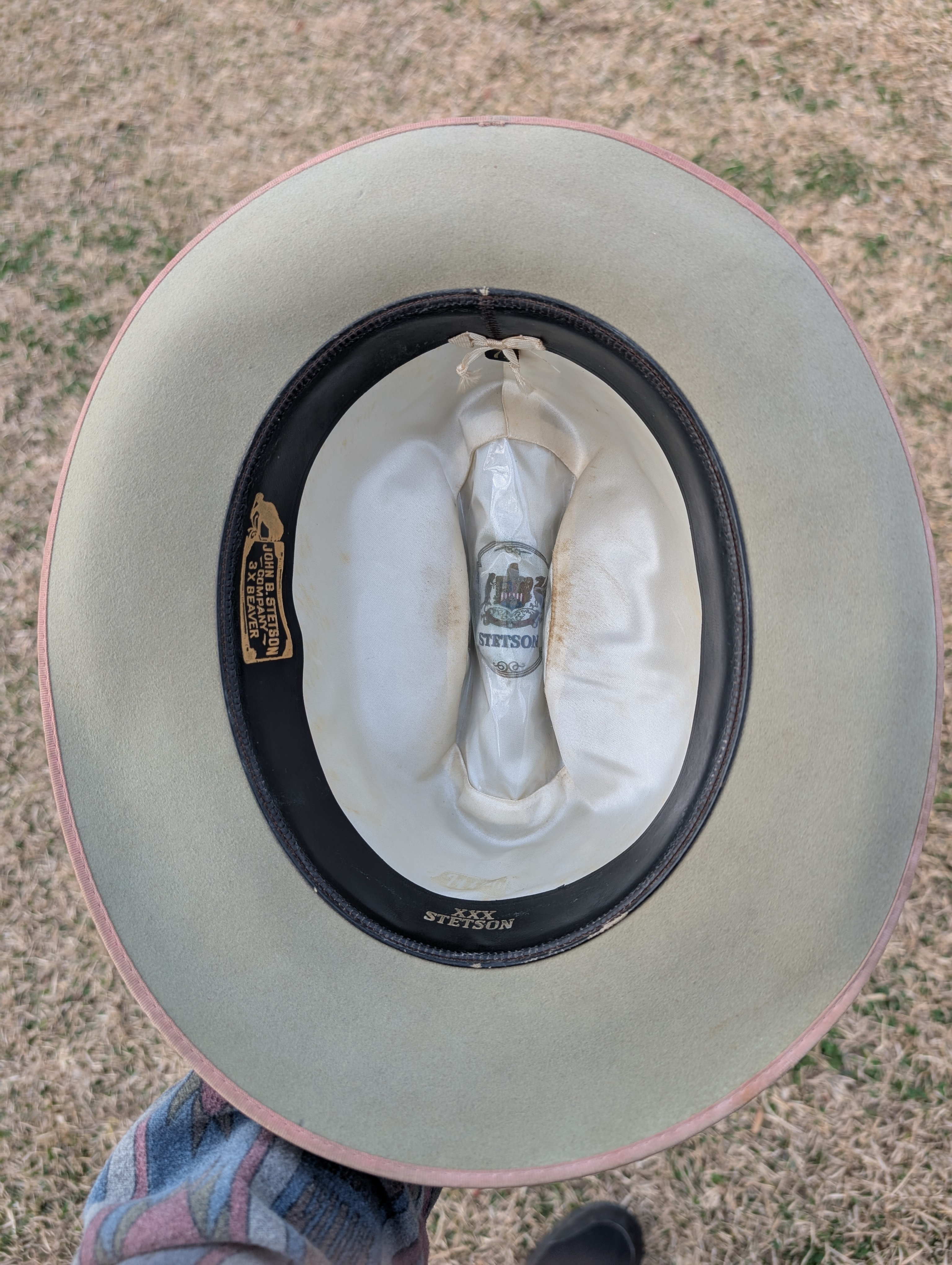
To my kid brain this is one of my all time favorite combos today...hadnt had it out in quite some time. Really smooth 3x stetson long oval in fern green felt with rose colored ribbon and binding. It just floats perfectly into place up top.


Featured products
-
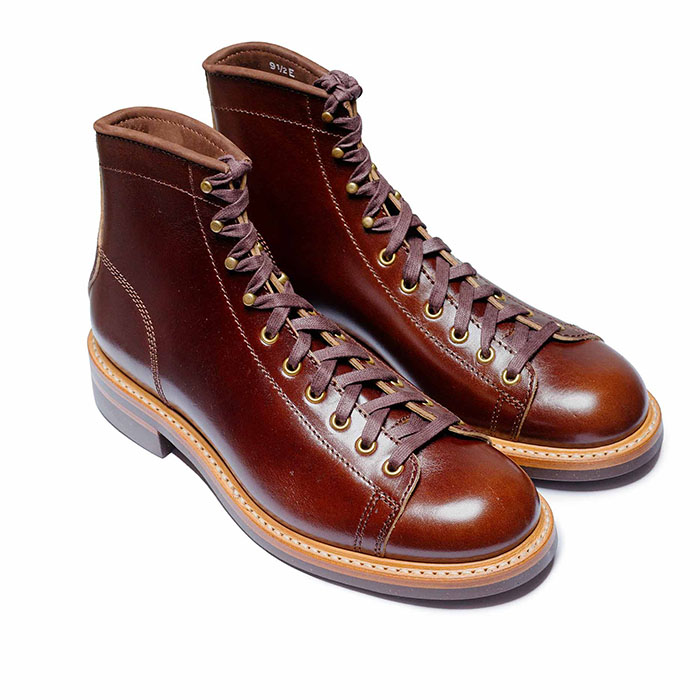 John Lofgren Monkey Boots Shinki Horsebuttt - $1,136 The classic monkey boot silhouette in an incredibly rich Shinki russet horse leather.
 -
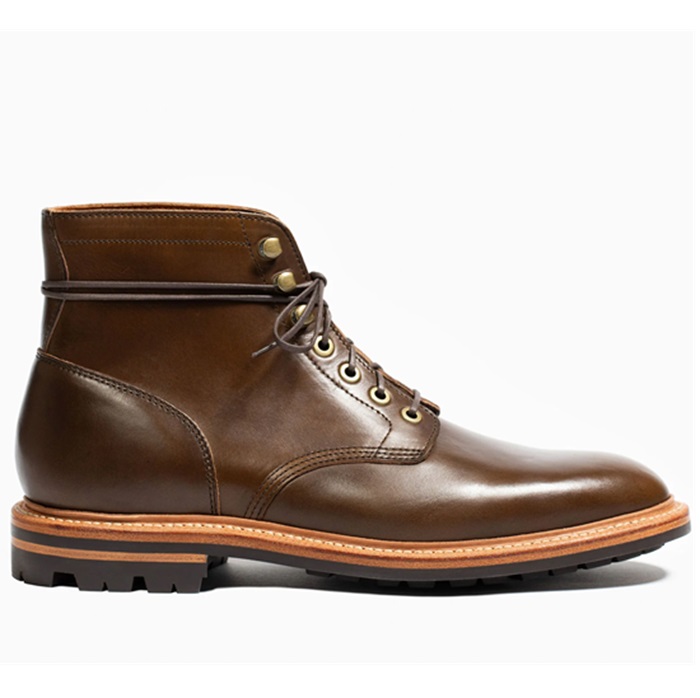 Grant Stone Diesel Boot Dark Olive Chromexcel - $395 Goodyear welted, Horween Chromexcel, classic good looks.
 -
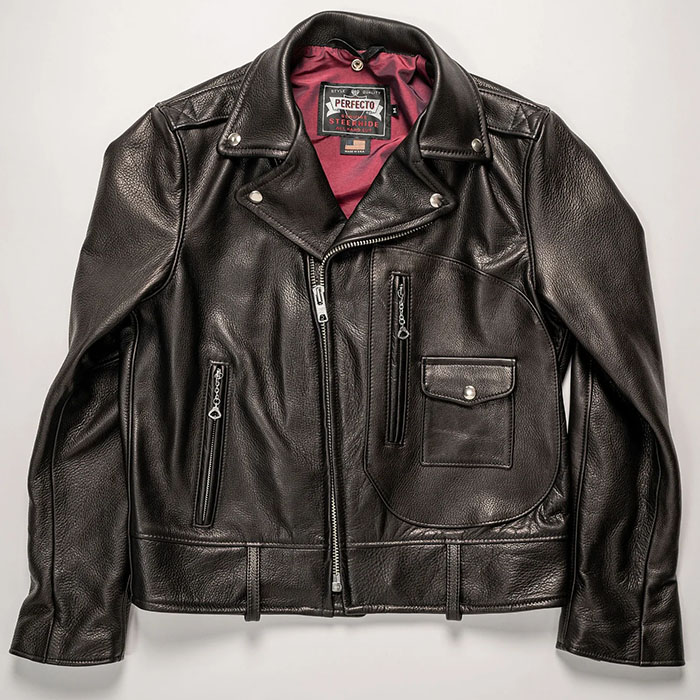 Schott 568 Vandals Jacket - $1,250 The classic Perfecto motorcycle jacket, in a very special limited-edition Schott double rider style.
jeffgarf
One Too Many
- Messages
- 1,728
- Location
- Jerusalem, Israel
An update, with help from @besdor. It has been determined that this hat is from the first years of the Spinetta Marengo factory, where Borsalino relocated from its original Alessandria factory in the late 80's.A late 80's (I believe) Borsalino in gray for today. I say late 80's because the hat band already had the logo on it, but the liner and the size tag are unusual in my experience for 1990's and later hats. With the size tag, I might have assumed it was US made, but it does specifically say "Made in Italy" unlike the 90's Bollman licensed hats. Interesting. I should also point out that the felt is definitely Borsalino.
View attachment 768878 View attachment 768879 View attachment 768880 View attachment 768881

- Messages
- 20,136
- Location
- Funkytown, USA
It’s reproduction, haha. You’re absolutely right to ask that. There’s an interesting piece of history behind this.
Genuine vintage clothing from the Ming Dynasty is extremely rare. One reason is that it dates back more than 400 years. The other reason is a major historical event in Chinese history: the Qing Dynasty — the last feudal imperial dynasty in China — was founded by the Manchu people.
The Manchus were a nomadic and hunting ethnic group. To maintain stable rule, they ordered Han Chinese people to shave their heads and change their clothing. The Manchu hairstyle required a braid less than one centimeter thick; all other hair had to be shaved off (similar to the hairstyle of the Cossacks in Eastern Europe).
By contrast, traditional Han people never shaved any hair. They kept it long and tied it up on top of their heads. In ancient China, people believed that the body, skin, and hair were gifts from one’s parents, so they had to be cherished and not easily damaged. Hair was seen as something dignified and meaningful.
When the Manchu order was issued, it triggered resistance among nearly all Han people. But the Manchus enforced a brutal rule: if you wanted to keep your hair, you would lose your head; if you wanted to keep your head, you had to give up your hair. Millions of people were killed for refusing to change their hairstyle or wear Manchu clothing.
In the end, the resistance was suppressed, and most pre‑Qing clothing was destroyed. That’s why almost no genuine vintage Ming Dynasty clothing survives today.
However, there are countless portraits and unearthed artifacts from the Ming Dynasty. Modern reproductions are mainly based on these portraits and relics.
Photos 1 and 2 show traditional Han hairstyles.
Photo 3 is a Terracotta Warrior from the Qin Dynasty, dating back 2,246 years ago.
Photos 3 and 4 show Ming Dynasty gentlemen and soldiers wearing damao(traditional Ming hats).
Photos 5 and 6 show Qing Dynasty officials and merchants who were forced to wear Manchu clothing and wear Manchu-style braids. View attachment 768844 View attachment 768845 View attachment 768846 View attachment 768847 View attachment 768848 View attachment 768849 View attachment 768850
I figured it was a repro, but had to ask. Thanks for the history lesson, as well.

Fascinating history, thanks for sharing.It’s reproduction, haha. You’re absolutely right to ask that. There’s an interesting piece of history behind this.
Genuine vintage clothing from the Ming Dynasty is extremely rare. One reason is that it dates back more than 400 years. The other reason is a major historical event in Chinese history: the Qing Dynasty — the last feudal imperial dynasty in China — was founded by the Manchu people.
The Manchus were a nomadic and hunting ethnic group. To maintain stable rule, they ordered Han Chinese people to shave their heads and change their clothing. The Manchu hairstyle required a braid less than one centimeter thick; all other hair had to be shaved off (similar to the hairstyle of the Cossacks in Eastern Europe).
By contrast, traditional Han people never shaved any hair. They kept it long and tied it up on top of their heads. In ancient China, people believed that the body, skin, and hair were gifts from one’s parents, so they had to be cherished and not easily damaged. Hair was seen as something dignified and meaningful.
When the Manchu order was issued, it triggered resistance among nearly all Han people. But the Manchus enforced a brutal rule: if you wanted to keep your hair, you would lose your head; if you wanted to keep your head, you had to give up your hair. Millions of people were killed for refusing to change their hairstyle or wear Manchu clothing.
In the end, the resistance was suppressed, and most pre‑Qing clothing was destroyed. That’s why almost no genuine vintage Ming Dynasty clothing survives today.
However, there are countless portraits and unearthed artifacts from the Ming Dynasty. Modern reproductions are mainly based on these portraits and relics.
Photos 1 and 2 show traditional Han hairstyles.
Photo 3 is a Terracotta Warrior from the Qin Dynasty, dating back 2,246 years ago.
Photos 3 and 4 show Ming Dynasty gentlemen and soldiers wearing damao(traditional Ming hats).
Photos 5 and 6 show Qing Dynasty officials and merchants who were forced to wear Manchu clothing and wear Manchu-style braids. View attachment 768844 View attachment 768845 View attachment 768846 View attachment 768847 View attachment 768848 View attachment 768849 View attachment 768850
That's a real beauty, Rick!To my kid brain this is one of my all time favorite combos today...hadnt had it out in quite some time. Really smooth 3x stetson long oval in fern green felt with rose colored ribbon and binding. It just floats perfectly into place up top.
View attachment 768887 View attachment 768886 View attachment 768885 View attachment 768884 View attachment 768883

- Messages
- 19,687
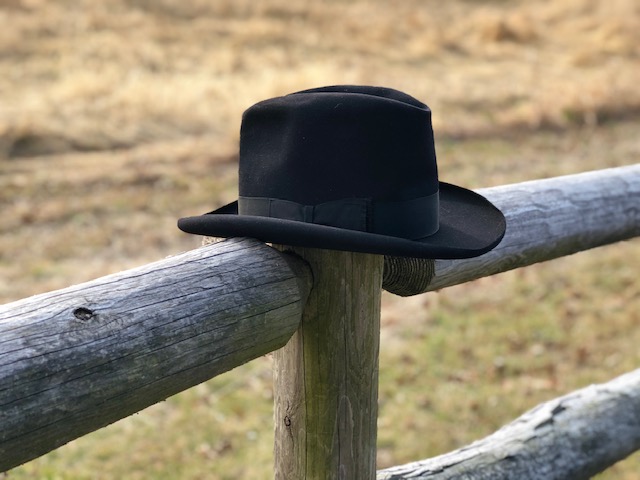
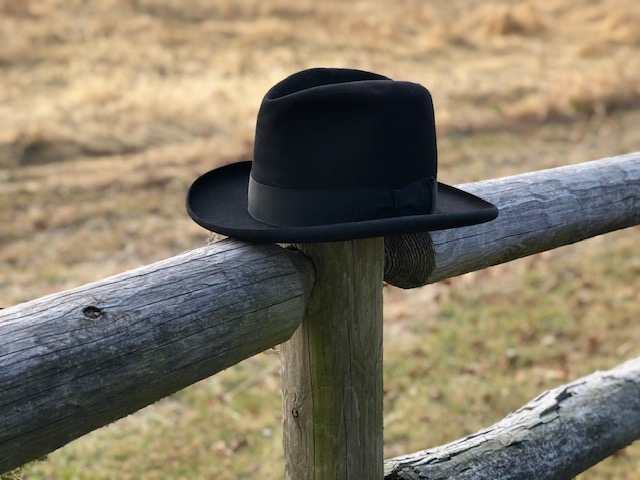
1910’s Stetson BRE with FRAY sweat. HH just got happier!
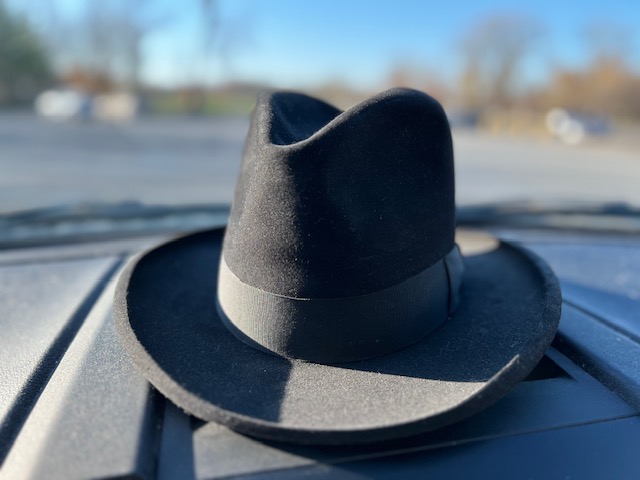
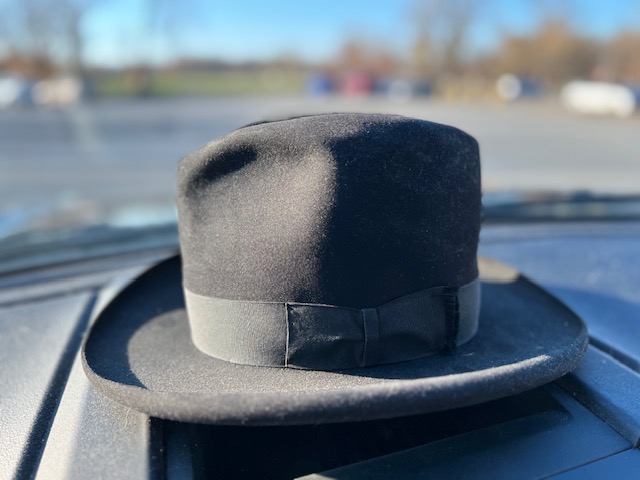
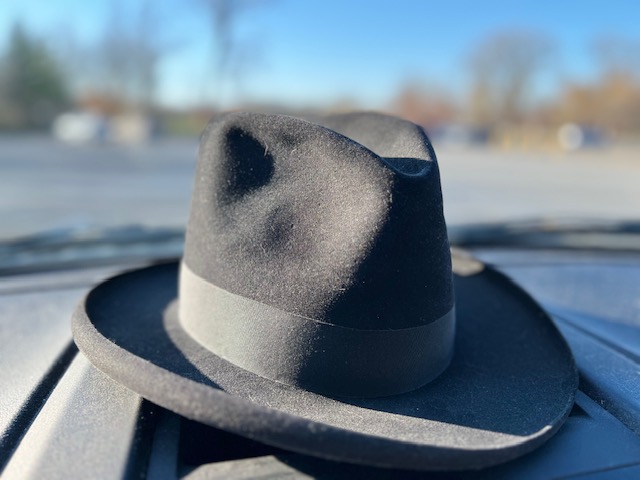

The Lost kansan
One of the Regulars
- Messages
- 161
The curl on that brim…1910’s Stetson BRE with FRAY sweat. HH just got happier!
View attachment 768917
View attachment 768916
View attachment 768915
View attachment 768918
View attachment 768919

- Messages
- 13,673
Joe The Hatter

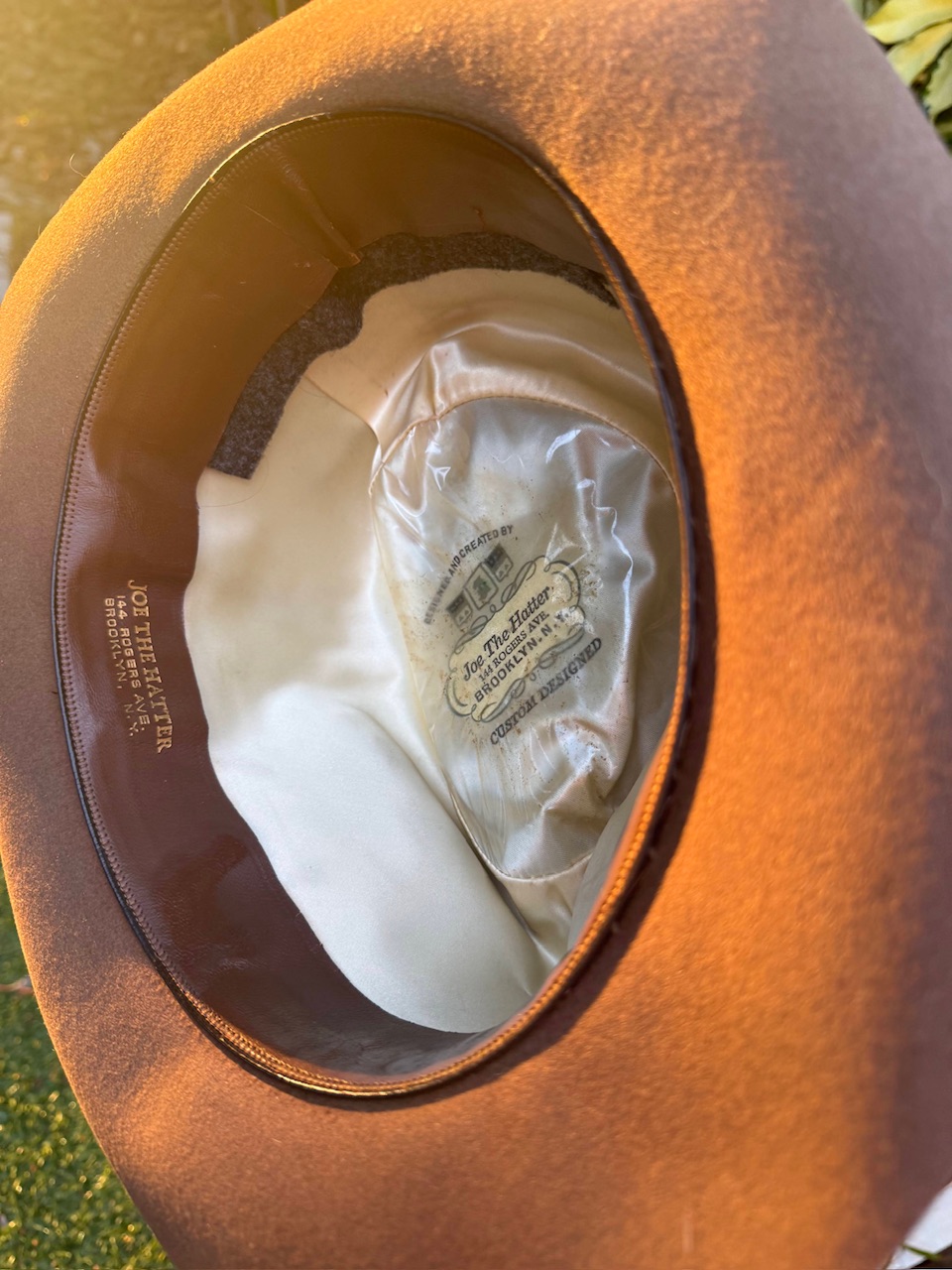
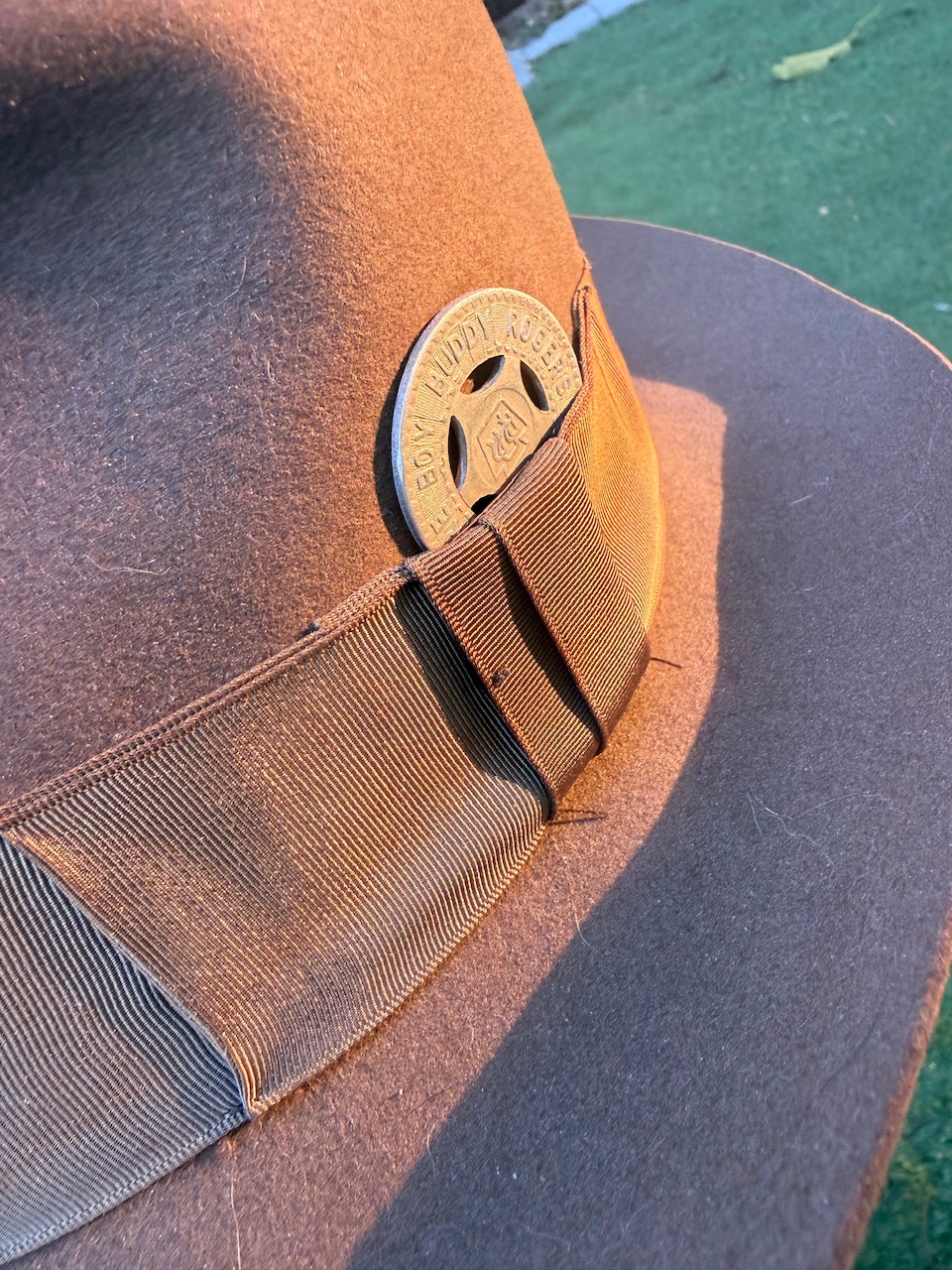
YOWZA!!!!!! Gorgeous, HJ!1910’s Stetson BRE with FRAY sweat. HH just got happier!
View attachment 768917
View attachment 768916
View attachment 768915
View attachment 768918
View attachment 768919
- Messages
- 19,687
The curl on that brim…
Thank you guys. Some repeat pics but favs.YOWZA!!!!!! Gorgeous, HJ!
“I like my pockets full of money
and my whiskey genuine”

- Messages
- 10,843
- Location
- Boston area
The Buddy Rogers token got me out of hibernation… you sure know how to accessorize, Joe!!
jeffgarf
One Too Many
- Messages
- 1,728
- Location
- Jerusalem, Israel
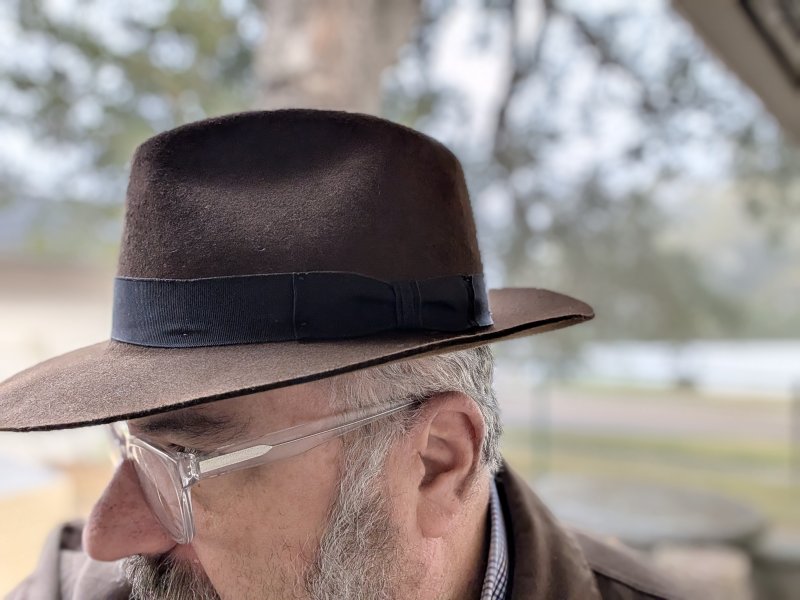
On a pea soup morning, I reached for a modern Stetson Chatham.

RickP
My Mail is Forwarded Here
- Messages
- 3,080
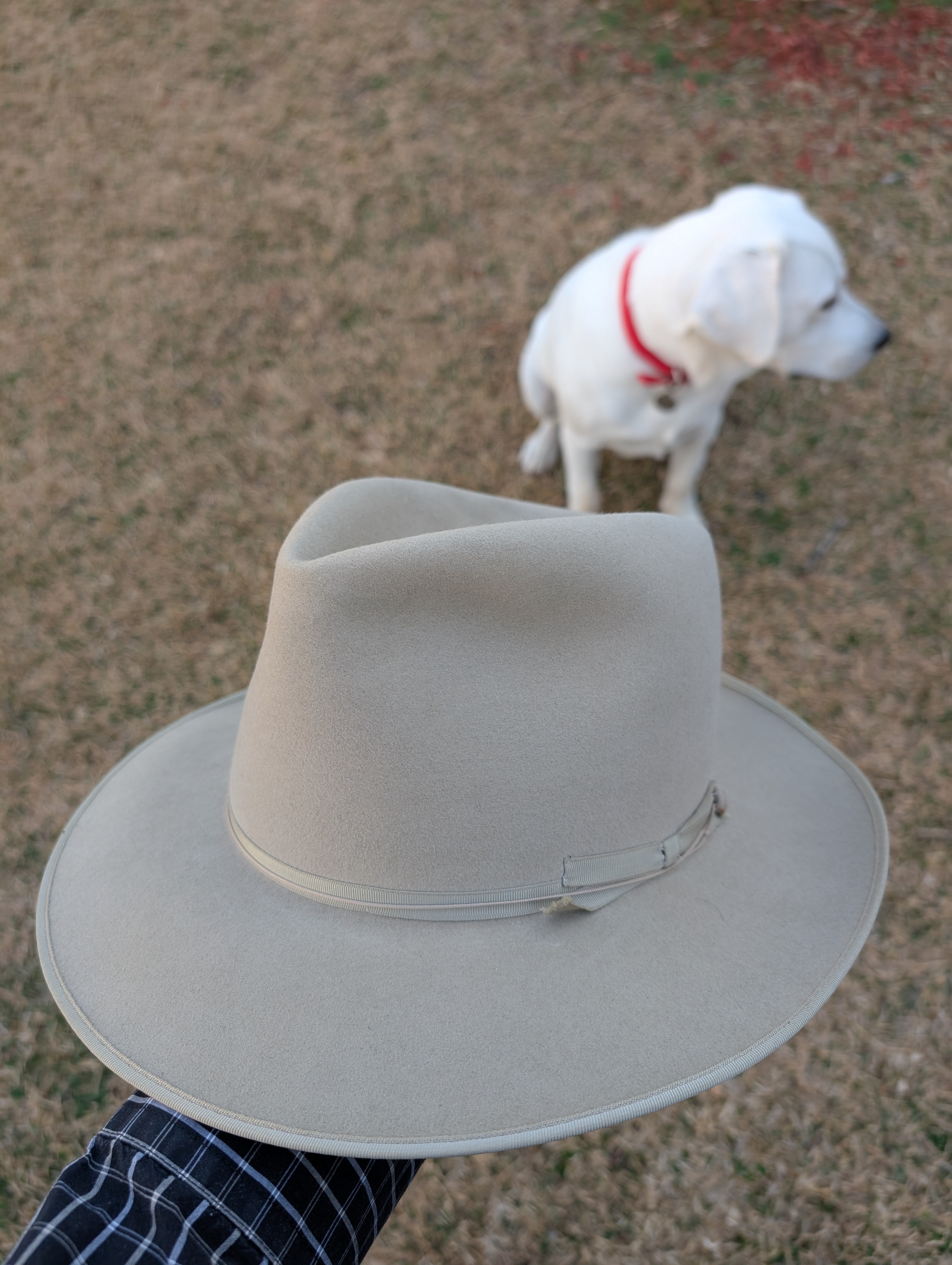
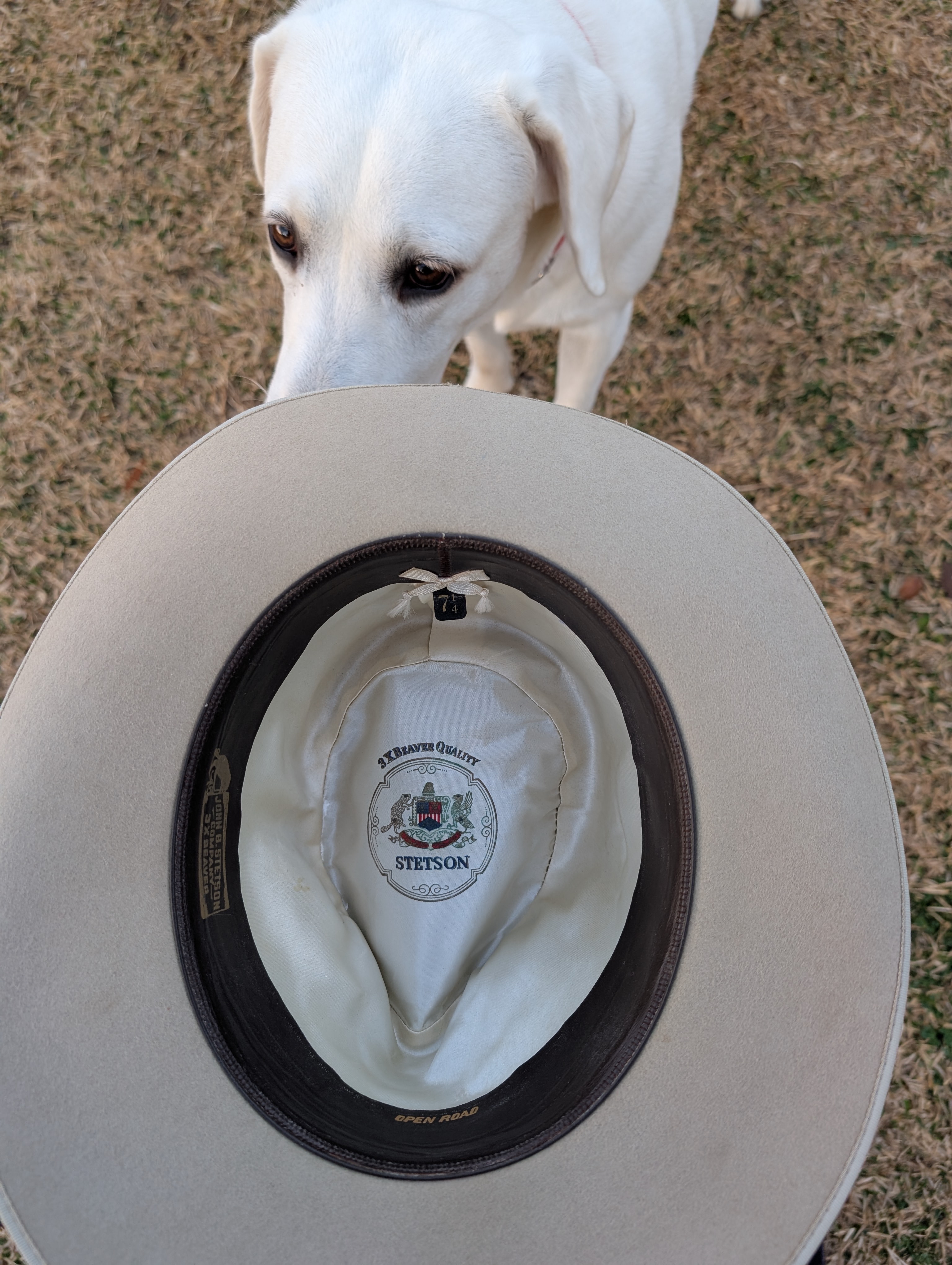
3x Open Road this morning


- Messages
- 19,687
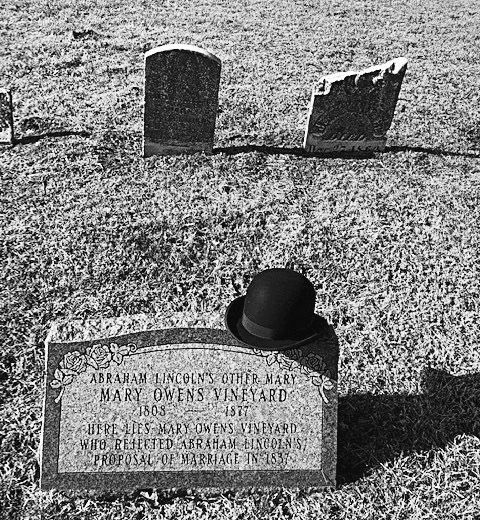
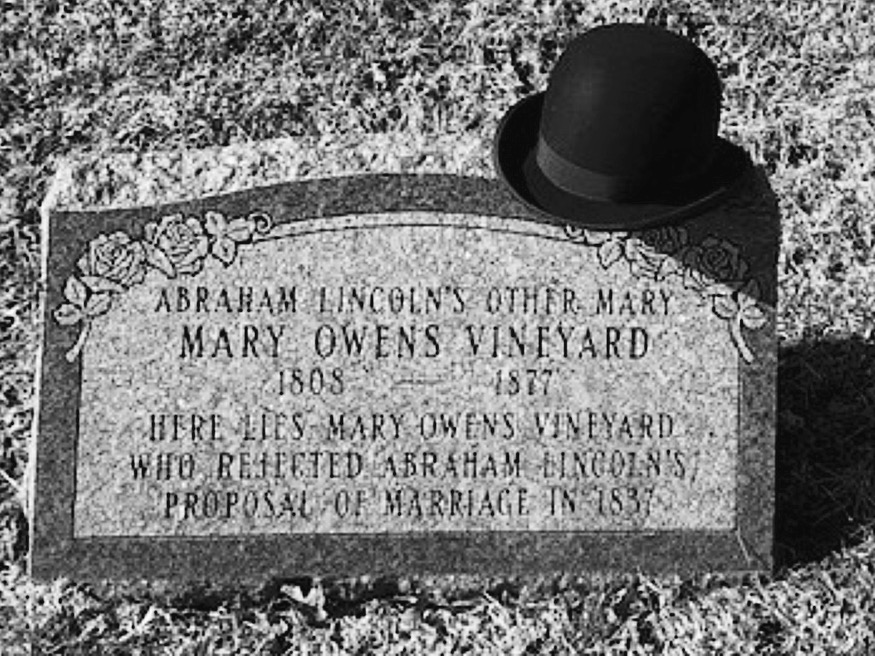
Happy Birthday Mr. Lincoln
Always wanted a topper for this pic.
Decendants of Mary Owens Vineyard are still around living in the area.

Always wanted a topper for this pic.
Decendants of Mary Owens Vineyard are still around living in the area.
Similar threads


- Replies
- 18
- Views
- 20K


