
Makes my knees go all wobbly! Fantastic history to go with it. Thanks, Steve.J. Hückel´s Söhne "Superior" "Paris Grand Prix 1900", possibly mid 1930s, and is in NOS like condition. "Superior" was JHS's highest quality mark. The Light Gray Felt is very dense with a smooth finish, that has a very soft hand, but is Semi Stiff, so possibly worn without side dents. It came from a Bulgarian seller, so probably exported to Bulgaria from the JHS Ratibor factory I found this Semi Stiff Felt back in 2009.


J. Hückel's Söhne Hat Factory Ratibor, Silesia, Germany (1925). I found this rare document back in 2014.

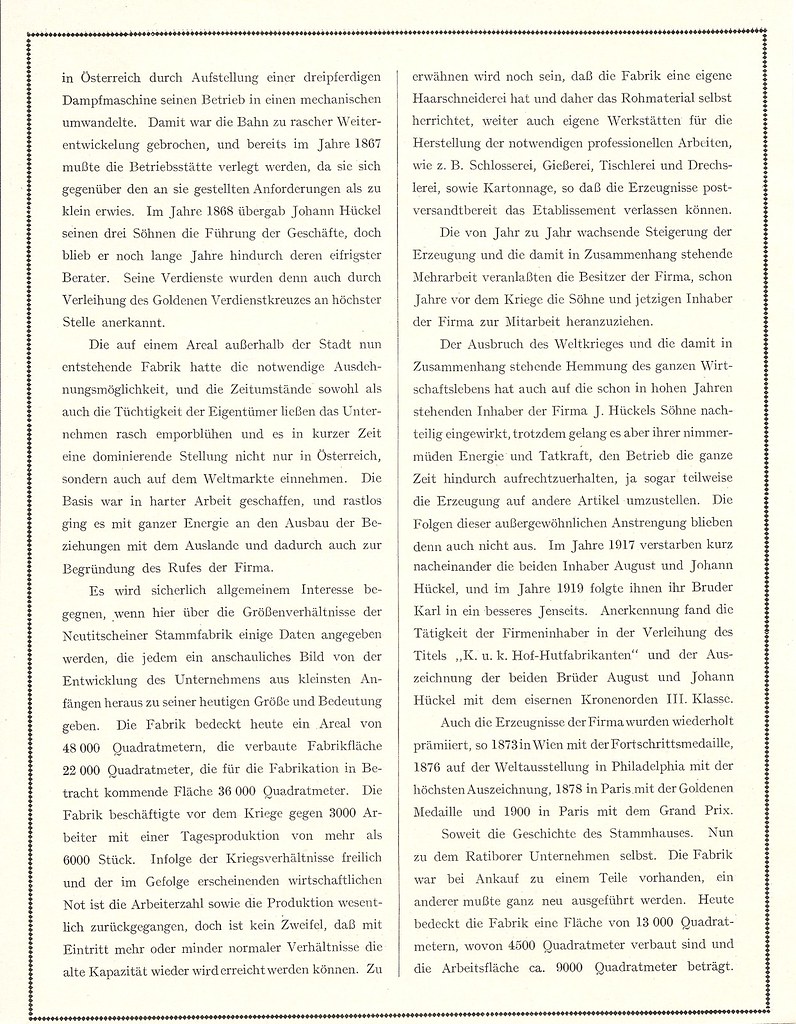
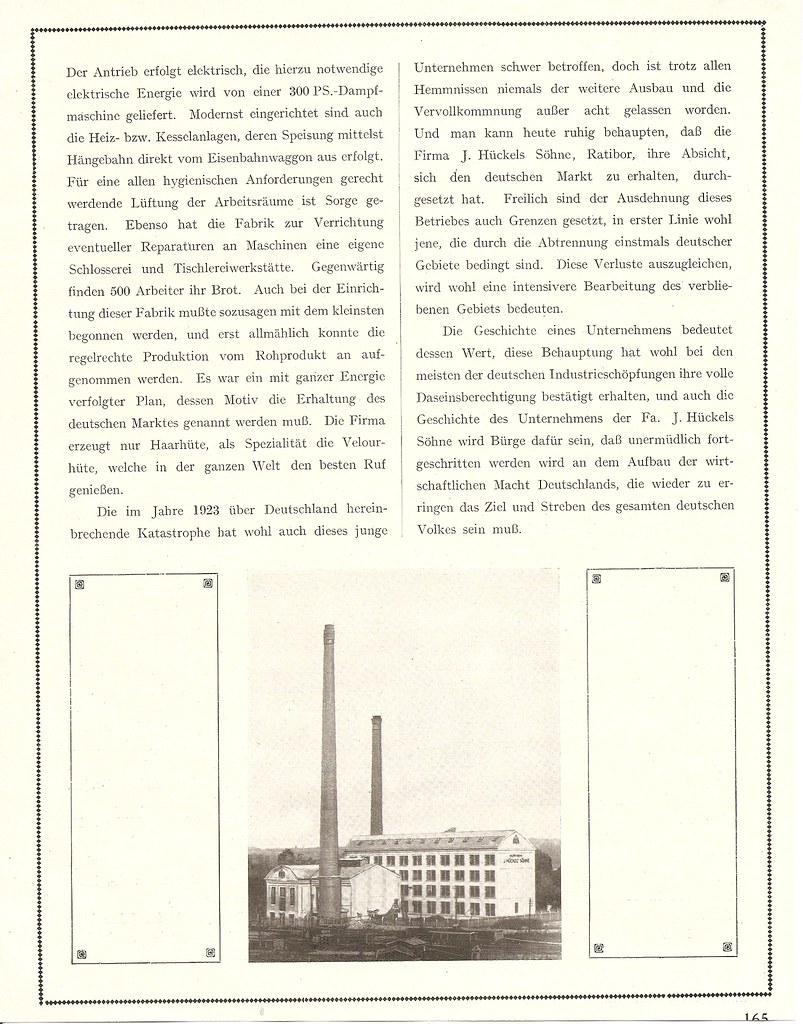
The factory at the top of the document is the main factory in Neutitschein (Novy Jicin, Czechoslovakia, became TONAK after WWII). The factory at the bottom of the document is the Ratibor factory. They also had factories / operations in Skoczów, Poland (PolkaP) and Vienna, Austria.
English Translation (Updated 08/03/2025)
Hat Factory J. Hückels Söhne Ratibor
The hat factory J. Hückels Söhne, Ratibor, was founded by the well-known company J. Hückels Söhne, Neutitschein, Czechoslovakia, which is also well-known on the German market. The reasons that led to the establishment of a factory on German soil are best characterized by the situation of the German market in the post-war period. The import restrictions that arose as a result of the reparations burdens made it almost impossible for the Neutitschein factory to serve its customers who had been loyal for decades, and so only a factory on German soil had to or could offer the guarantee of continuing to play a leading role in the German hat market.
It is probably part of the founding history of the young factory to briefly state the dates that also concern the parent company and its origins.
The Neutitschein company was founded in 1799, when the then hat maker Johann Nepomuk Hückel, a native of Fulnek in Moravia, acquired the master craftsman's license in Neutitschein. In 1811 his brother Augustin followed him to Neutitschein, and now the two brothers each ran the hat-making business separately. Production was based on the old craft traditions. In 1835, Augustin Hückel's son, Johann Hückel, took over his father's business and, in the turbulent year of 1848, also that of his uncle, in order to continue it together under the old form.
The Austrian hat industry, which was just beginning to emerge at the time, was not yet familiar with the practices of the foreign competition that dominated the world market. It was to Johann Hückel's credit that he gradually began to show a keen interest in the issues of expanding his production and technical perfection. His three sons August, Johann and Karl, who had all learned the craft of hat making according to the old custom, were sent out into the world by him to gain experience that would be put to good use in his own business.
The result of this pioneering work was that in 1865 Johann Hückel was the first in Austria to convert his business into a mechanical one by installing a three-horse steam engine. This put an end to the rapid development of the company and in 1867 the company had to be relocated as it proved too small for the demands placed on it. In 1868 Johann Hückel handed over the management of the business to his three sons, but he remained their most keen advisor for many years. His services were recognized at the highest level by the award of the Golden Cross of Merit.
The factory, which was now being built on a site outside the city, had the necessary expansion potential and the circumstances of the time as well as the efficiency of the owners allowed the company to flourish quickly and to quickly take a dominant position not only in Austria but also on the world market. The basis was created through hard work, and the company worked tirelessly and with all its energy to develop its relations abroad and thereby establish its reputation. It will certainly be of general interest if some data is given here about the size of the Neutitschein main factory, which will give everyone a clear picture of the development of the company from its humble beginnings to its current size and importance. The factory now covers an area of 48,000 square meters, the built-up factory area is 22,000 square meters, and the area used for production is 36,000 square meters. Before the war, the factory employed around 3,000 workers with a daily production of more than 6,000 units. As a result of the war conditions and the economic hardship that followed, the number of workers and production have fallen considerably, but there is no doubt that the old capacity can be reached again when more or less normal conditions return.
It should also be mentioned that the factory has its own hairdressing salon and therefore prepares the raw materials itself, as well as its own workshops for the production of the necessary professional work, such as metalworking, foundry, carpentry and wood turning, as well as cardboard production, so that the products can leave the establishment ready for mailing.
The increase in production from year to year and the associated additional work prompted the owners of the company to enlist the help of their sons and current owners of the company years before the war.
The outbreak of the World War and the associated disruption of the entire economic life also had a negative effect on the already elderly owners of the J. Hückels Söhne company, but their tireless energy and drive managed to keep the business going throughout the entire period, and even to partially switch production to other items. The consequences of this extraordinary effort were not long in coming. In 1917, the two owners, August and Johann Hückel, died one after the other, and in 1919 their brother Karl followed them into a better world. The company owners' work was recognized with the award of the title, "K. u. k. Court hat manufacturers" and the award of the Iron Crown Order, Third Class to the two brothers August and Johann Hückel.
The company's products have also been repeatedly awarded prizes, for example in 1873 in Vienna with the Progress Medal, in 1876 at the World Exhibition in Philadelphia with the highest award, in 1878 in Paris with the Gold Medal and in 1900 in Paris with the Grand Prix.
So much for the history of the parent company. Now to the Ratibor company itself. When it was purchased, part of the factory was already there, another part had to be built from scratch. Today the factory covers an area of 13,000 square meters, of which 4,500 square meters are built and the work area is around 9,000 square meters.
The drive is electric, the necessary electrical energy is supplied by a 300 HP steam engine. The heating and boiler systems are also state-of-the-art and are fed by a suspension railway directly from the railway carriage. Ventilation of the work rooms is provided to meet all hygienic requirements. The factory also has its own metalworking and carpentry workshop for carrying out any repairs to machines. At present, 500 workers are employed. When setting up this factory, too, we had to start with the smallest thing, so to speak, and only gradually could regular production from the raw product begin. It was a plan that was pursued with great vigor, the motive of which must be said to be the preservation of the German market. The company only produces hair hats, with a specialty being velour hats, which enjoy the best reputation throughout the world.
The catastrophe that struck Germany in 1923 also had a serious impact on this young company, but despite all the obstacles, further expansion and improvement were never neglected. And today one can safely say that the J. Hückels Söhne company in Ratibor has achieved its intention of retaining the German market. Of course, there are limits to the expansion of this company, primarily those caused by the separation of former German territories. Compensating for these losses will probably mean more intensive cultivation of the remaining territory.
The history of a company represents its value, this claim has been fully confirmed in the case of most German industrial creations, and the history of the J. Hückels Söhne company will also be a guarantee that tireless progress will be made in building up Germany's economic power, which must be the aim and aspiration of the entire German people to regain.
Want to buy or sell something? Check the classifieds
-
The Fedora Lounge is supported in part by commission earning affiliate links sitewide. Please support us by using them. You may learn more here.
You are using an out of date browser. It may not display this or other websites correctly.
You should upgrade or use an alternative browser.
You should upgrade or use an alternative browser.
What Hat Are You Wearing Today ?
- Thread starter AbbaDatDeHat
- Start date

RickP
My Mail is Forwarded Here
- Messages
- 3,080
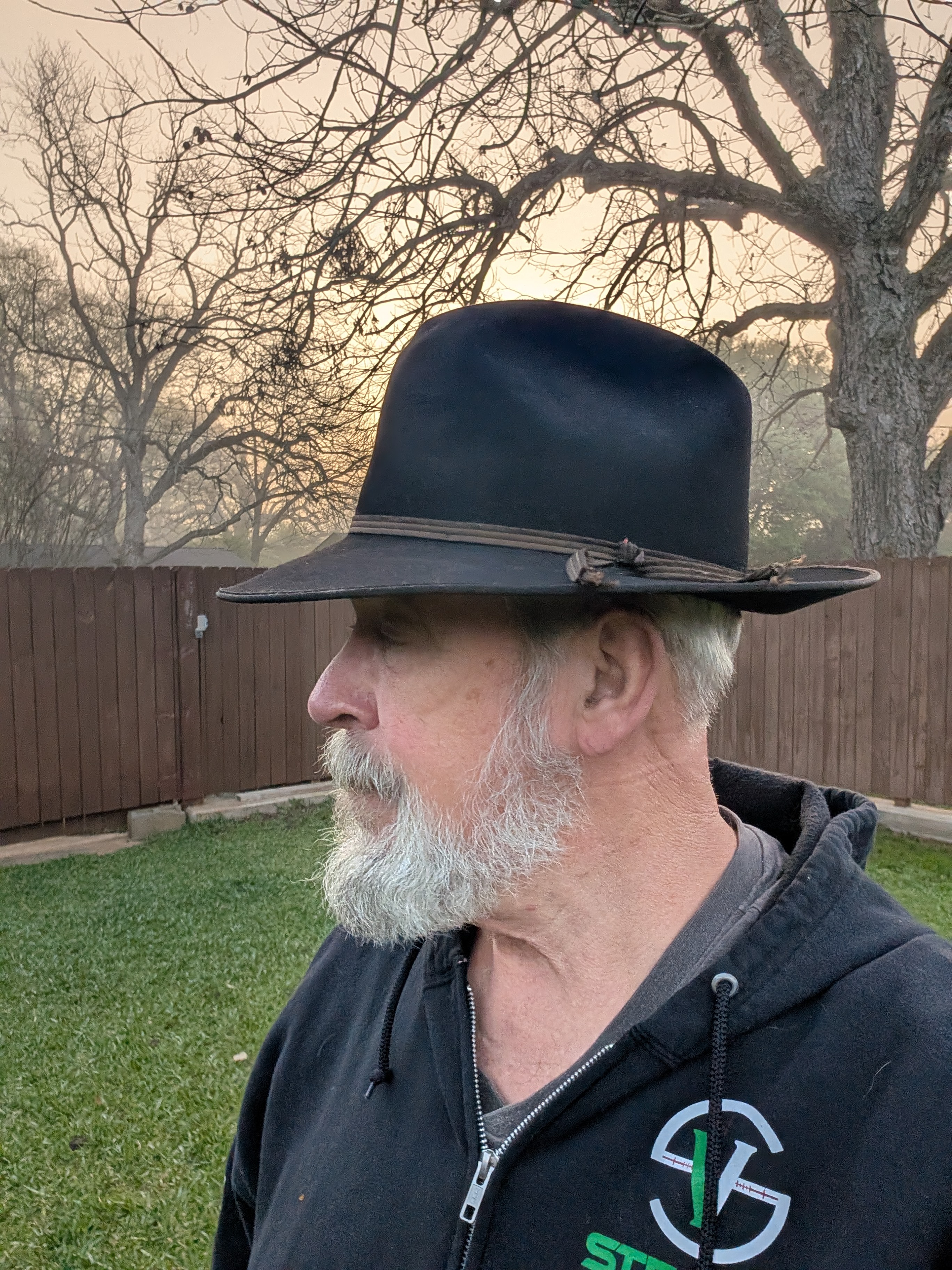
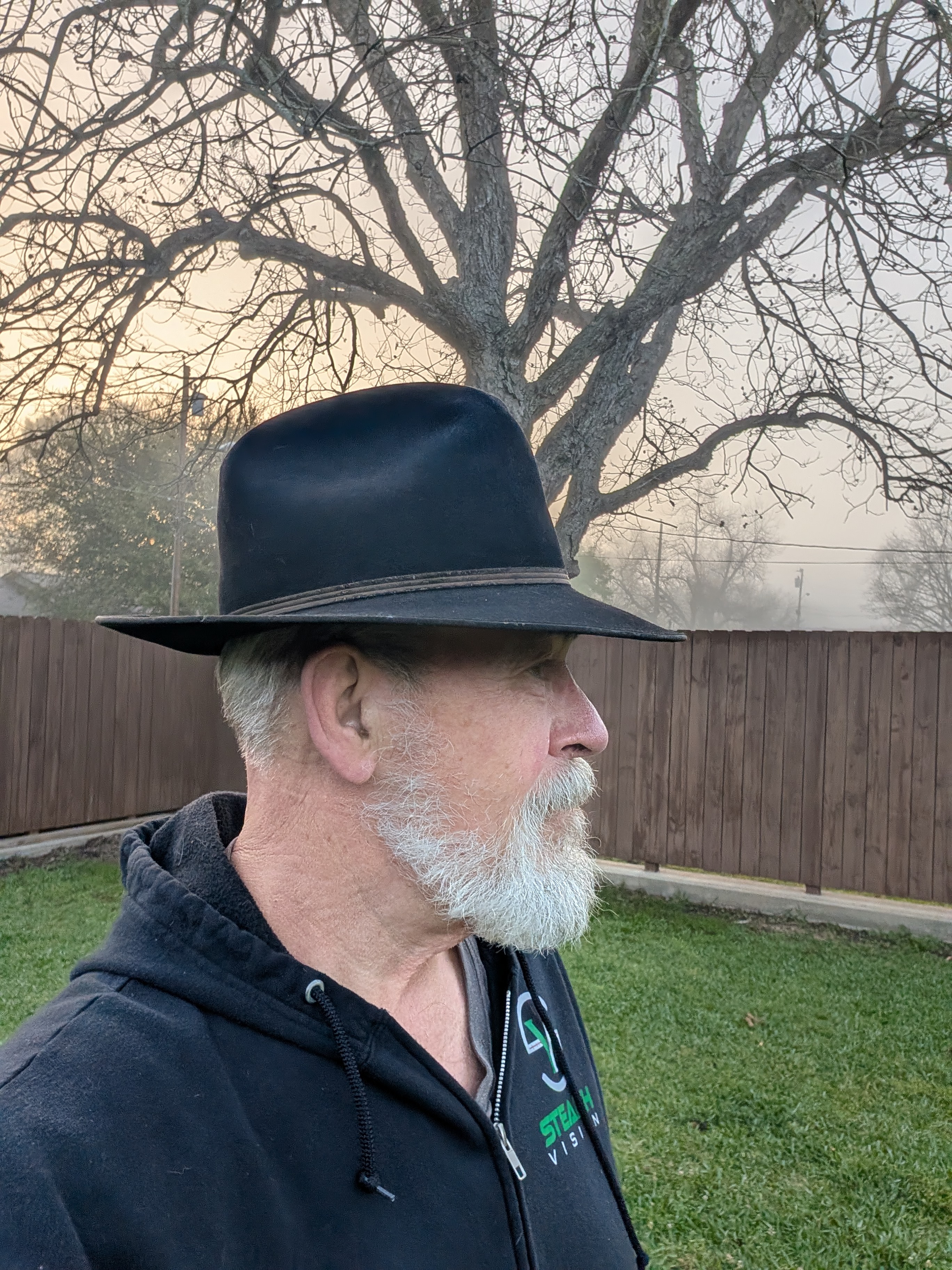
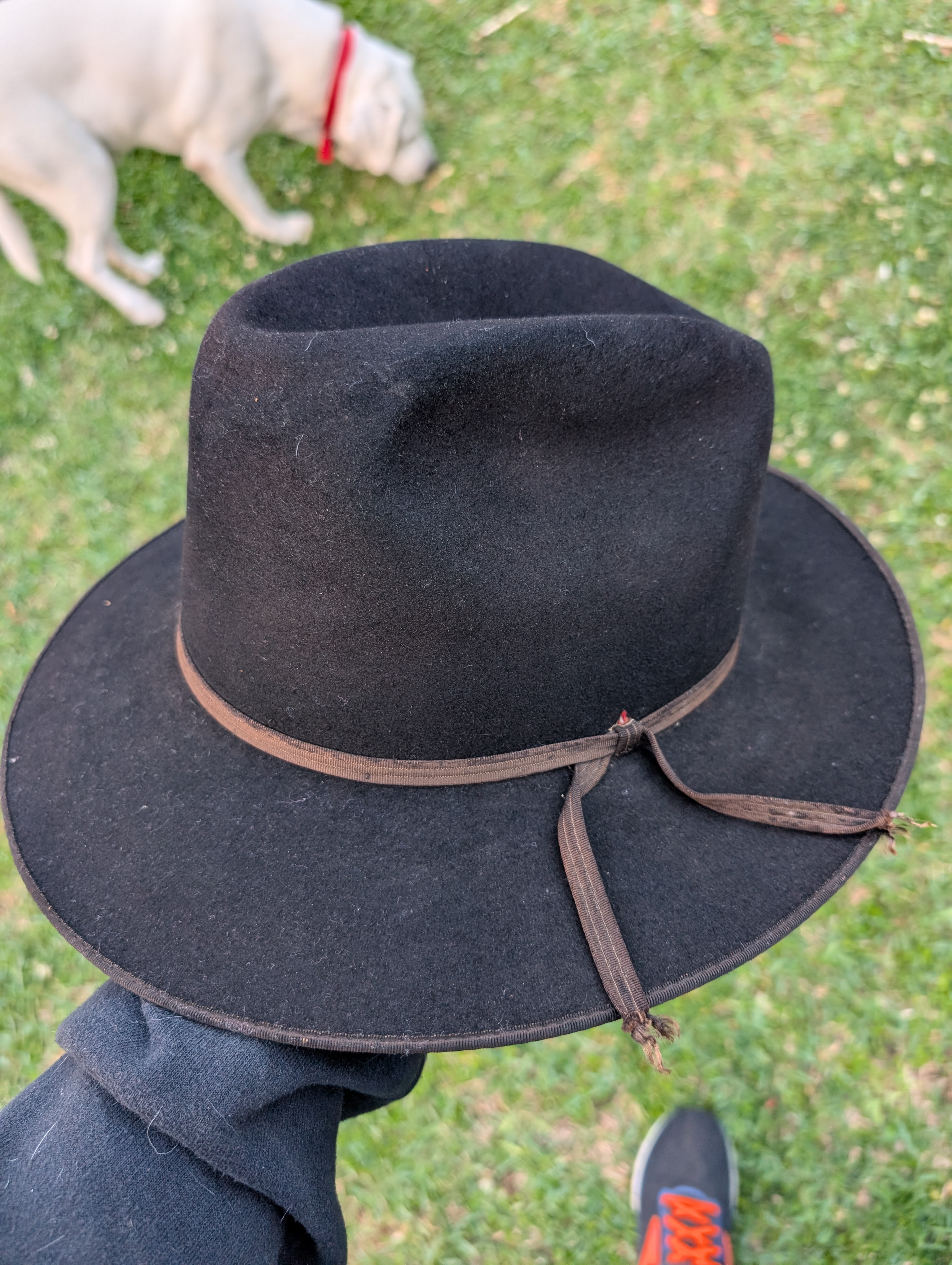
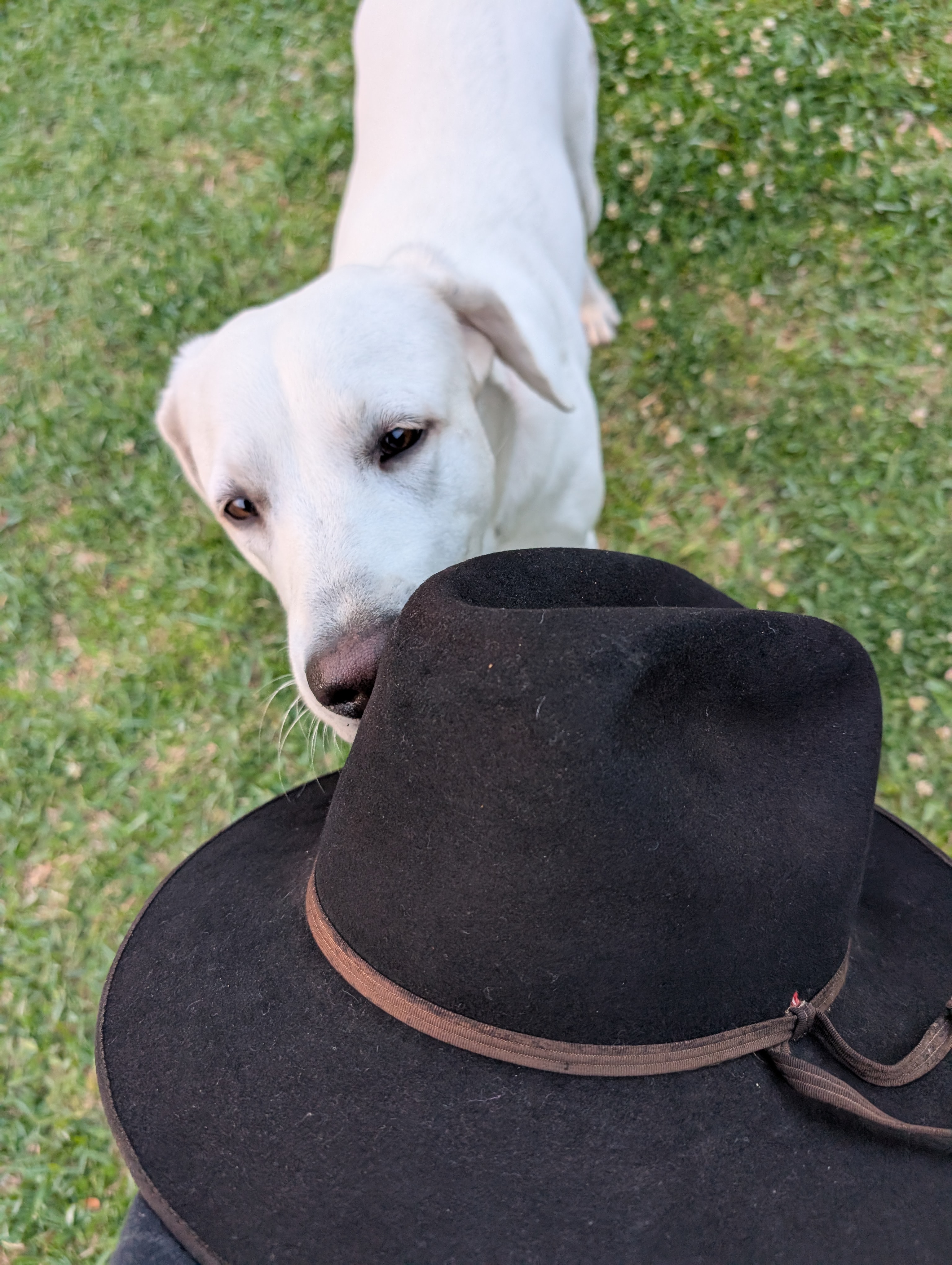
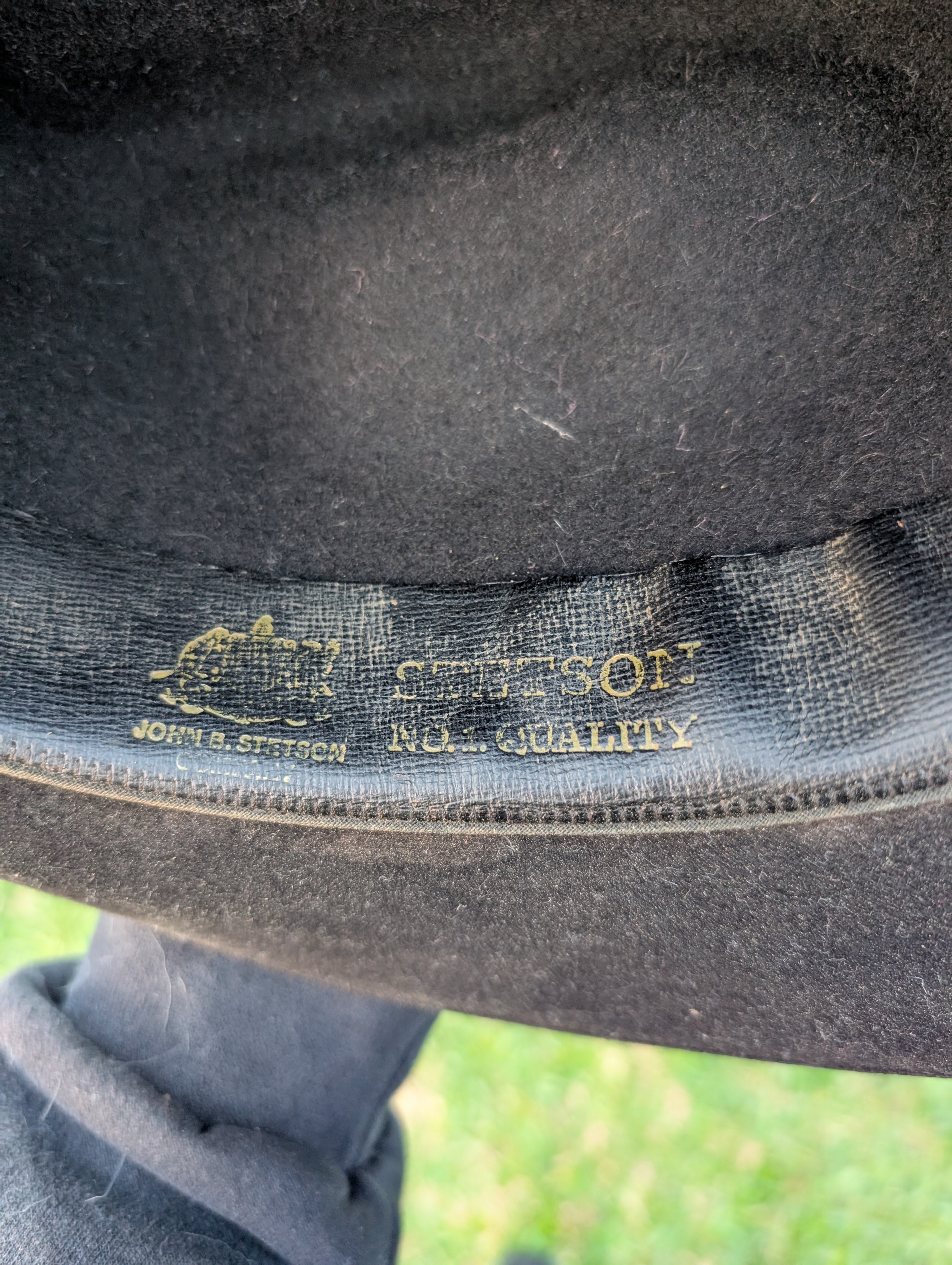
Heading out into the fog under a well traveled Stetson No 1 Quality this morning

- Messages
- 15,855
Another stone-cold heart-stopper, Bob!!
Thanks Mark!

bowlerman
I'll Lock Up
- Messages
- 6,391
- Location
- South Dakota
This is fantastic! And I love that band on it. Very nice!Canyon Road / Kevin O’Farrell (with a ***le Green / Jimmy Begay, Jr. band).
View attachment 776802
View attachment 776803
View attachment 776804
I stopped through O’Farrell hats in Santa Fe over the holidays, and admit I was very tempted to order something, but didn’t want to splurge at that moment. Lots of really nice work on their walls.
bowlerman
I'll Lock Up
- Messages
- 6,391
- Location
- South Dakota
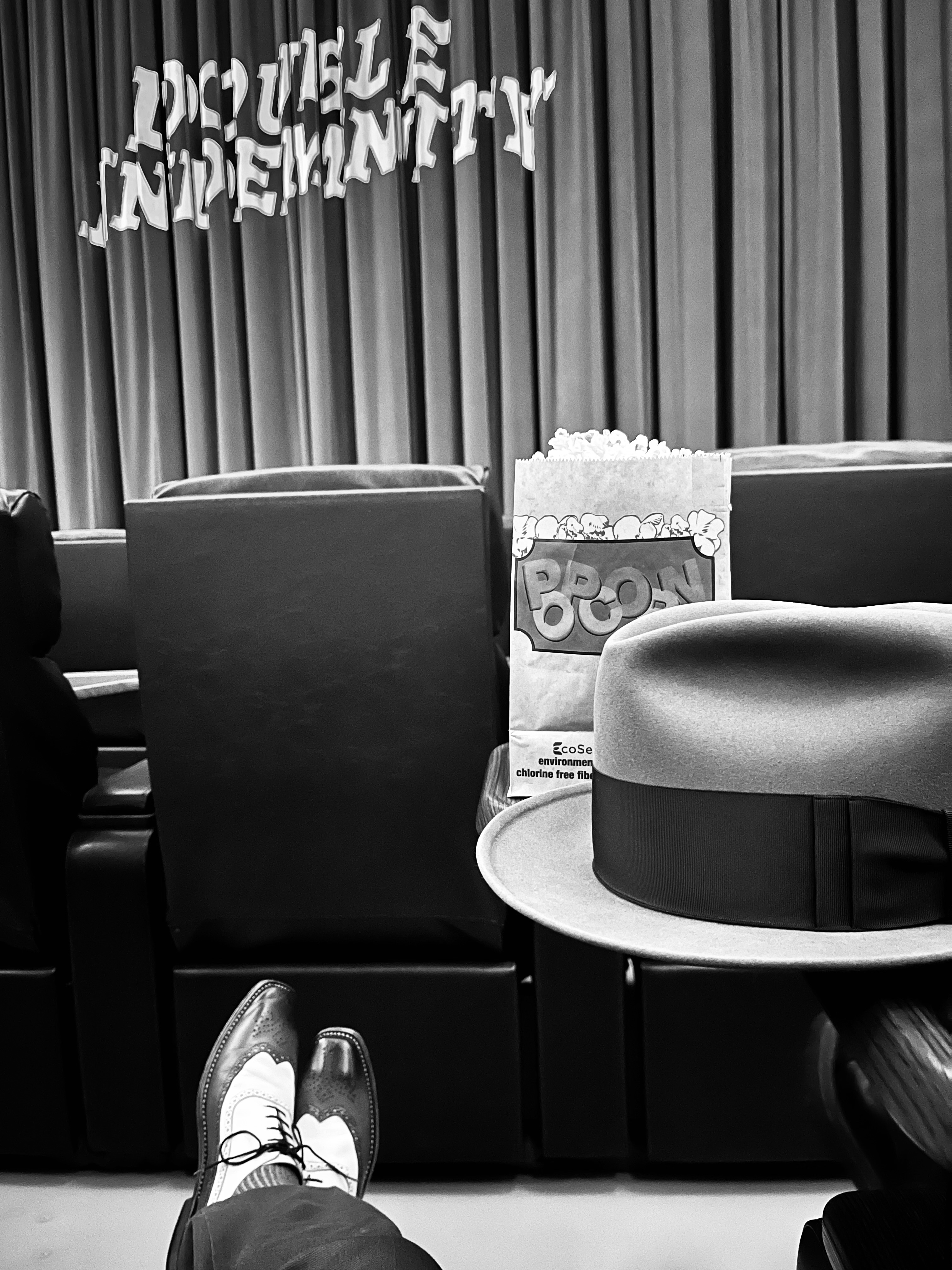
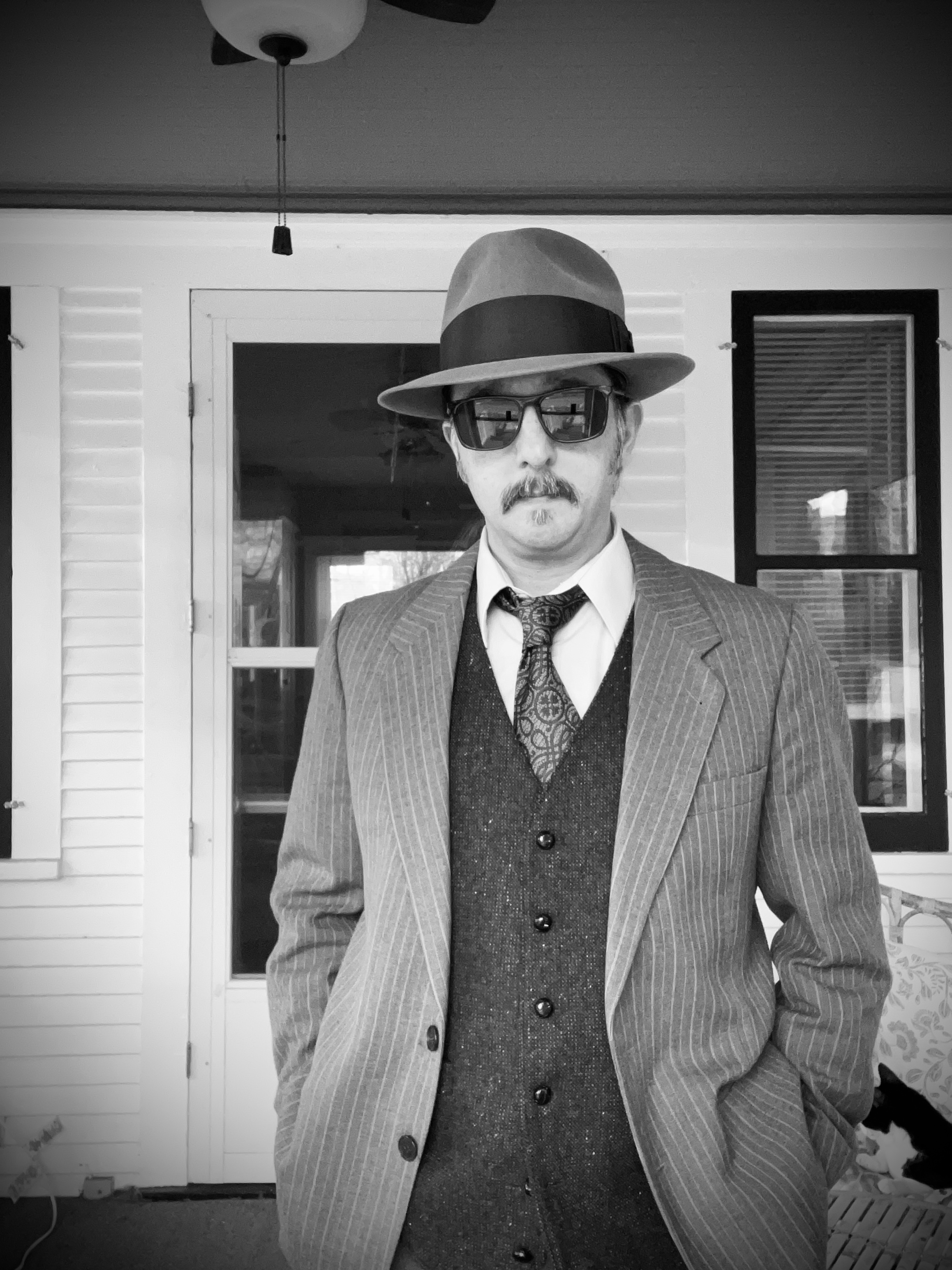
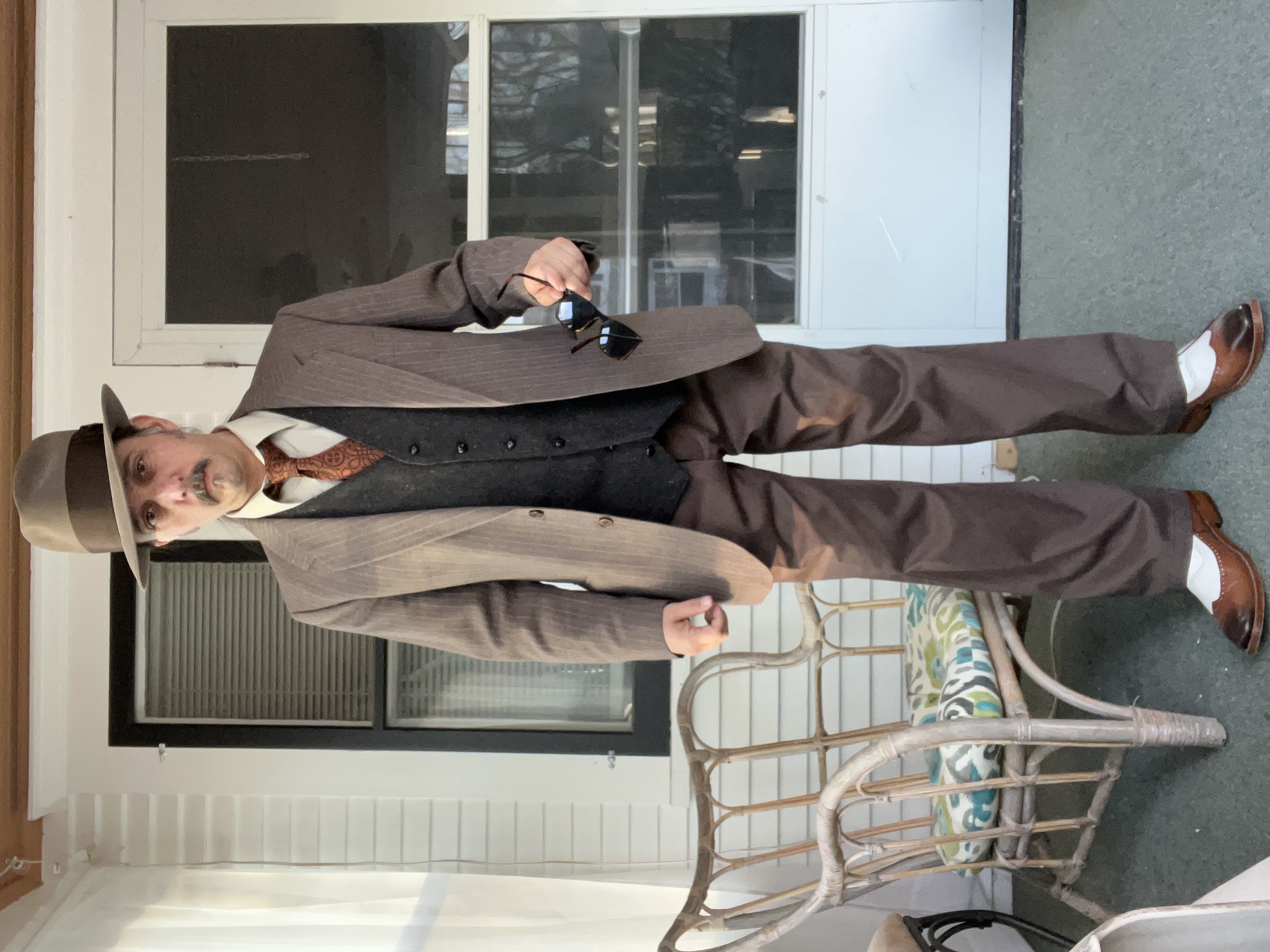
A Resistol Kitten Finish in taupe with a felted edge last night for date night. We went to a restored old theater to watch Double Indemnity, which also showed here during its release in 1944, and I got a little carried away…
- Messages
- 15,855
This is fantastic! And I love that band on it. Very nice!
Thanks Jeff! Always loved your collection — would really like to have a Weather Hat some day.
Same hat, different band today. Another Jimmy Begay, Jr. piece.

DaveProc
I'll Lock Up
- Messages
- 4,519
- Location
- Rhode Island
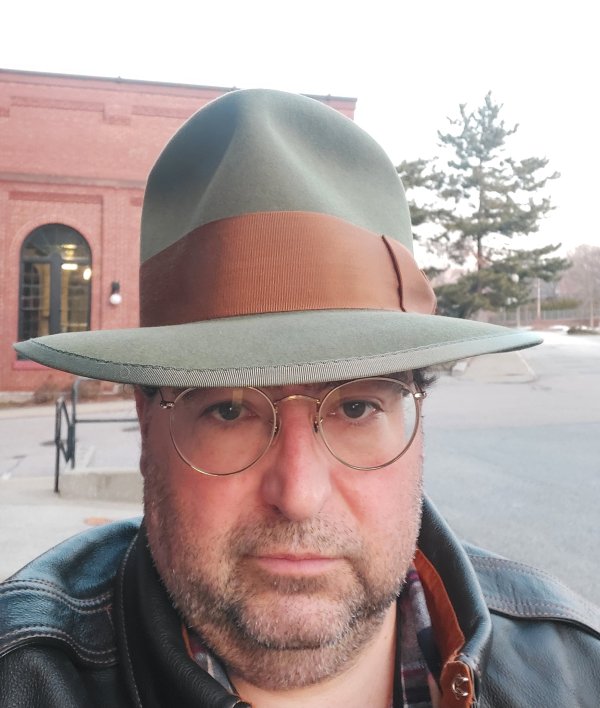
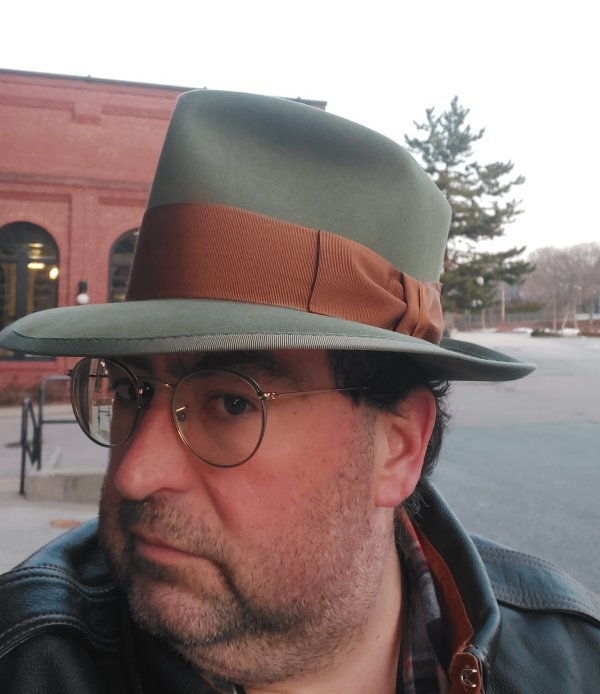
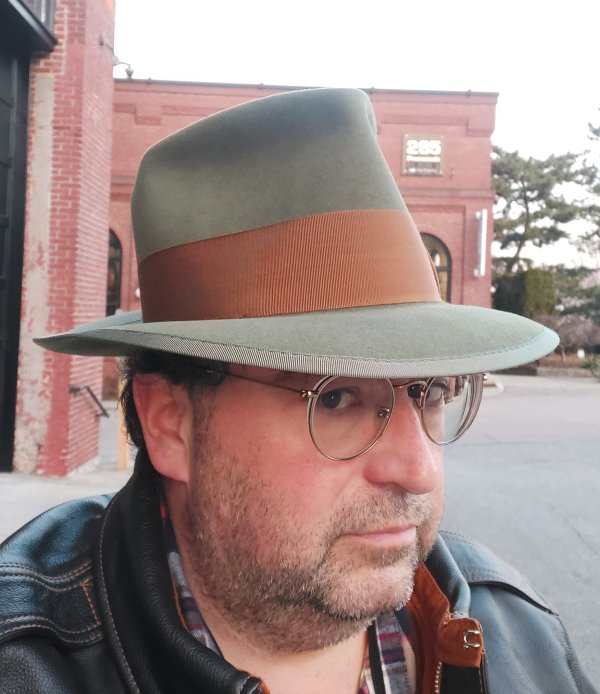
Hufvud 50X beaver

- Messages
- 18,408
- Location
- Maryland
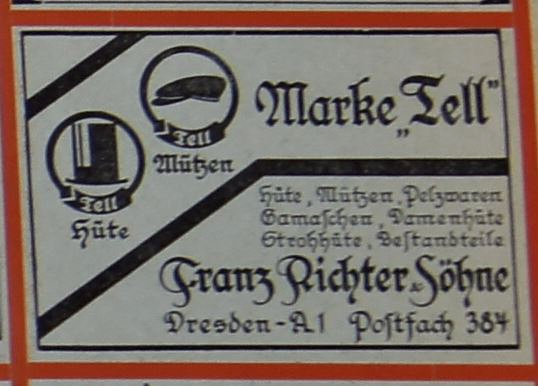
Franz Richter & Söhne Dresden "Tell", Wool, possibly late 1920s early 1930s. This Soft Felt could have been made by one of the German Hat Factories (located in what became East Germany post WWII) that produced Wool Soft and Stiff Felt hats up to WWII. The very light weight liner has some heavy wear but is still intact which is rarely the case with old Wool Soft Felts that received everyday wear. I found this Wool Soft Felt back in 2023.


It's hard to see but the Liner had the same Logo design as the Sweatband


Back in 2023 I found* the that the "Tell" trademark belonged to Franz Richter & Söhne, Dresden.
*Deutsche Hutmacher-Zeitung (German Hat Maker News), December 15, 1936.
It's hard to see but the Liner had the same Logo design as the Sweatband
Back in 2023 I found* the that the "Tell" trademark belonged to Franz Richter & Söhne, Dresden.
*Deutsche Hutmacher-Zeitung (German Hat Maker News), December 15, 1936.
Last edited:
- Messages
- 18,408
- Location
- Maryland
Stefan, Thank you!Makes my knees go all wobbly! Fantastic history to go with it. Thanks, Steve.
bowlerman
I'll Lock Up
- Messages
- 6,391
- Location
- South Dakota
One of my favorite color combinations! Looks great!

Out-freaking-standing, Jeff!A Resistol Kitten Finish in taupe with a felted edge last night for date night. We went to a restored old theater to watch Double Indemnity, which also showed here during its release in 1944, and I got a little carried away… View attachment 776964 View attachment 776965 View attachment 776966
And another winner, Bob!!Thanks Jeff! Always loved your collection — would really like to have a Weather Hat some day.
Same hat, different band today. Another Jimmy Begay, Jr. piece.
View attachment 776967
What a stunner, Dave!
Very kewl, Steve!Franz Richter & Söhne Dresden "Tell", Wool, possibly late 1920s early 1930s. This Soft Felt could have been made by one of the German Hat Factories (located in what became East Germany post WWII) that produced Wool Soft and Stiff Felt hats up to WWII. The very light weight liner has some heavy wear but is still intact which is rarely the case with old Wool Soft Felts that received everyday wear. I found this Wool Soft Felt back in 2023.
It's hard to see but the Liner had the same Logo design as the Sweatband
Back in 2023 I found* the that the "Tell" trademark belonged to Franz Richter & Söhne, Dresden.
*Deutsche Hutmacher-Zeitung (German Hat Maker News), December 15, 1936.

DaveProc
I'll Lock Up
- Messages
- 4,519
- Location
- Rhode Island
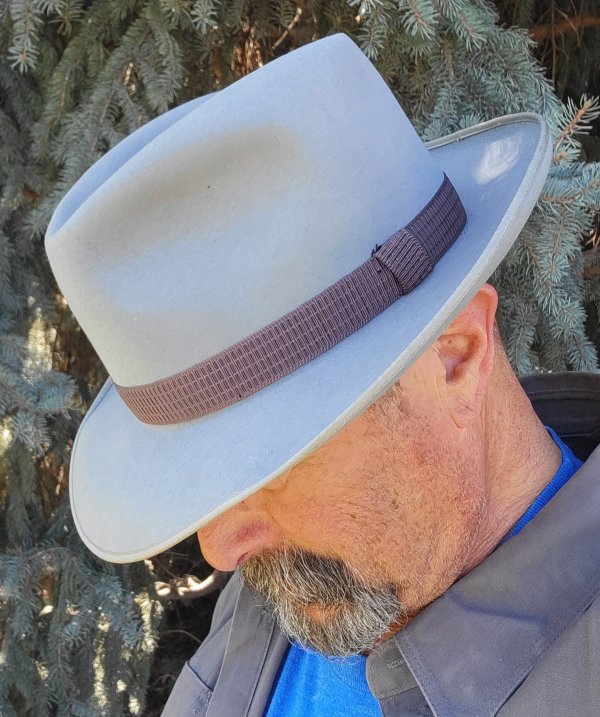
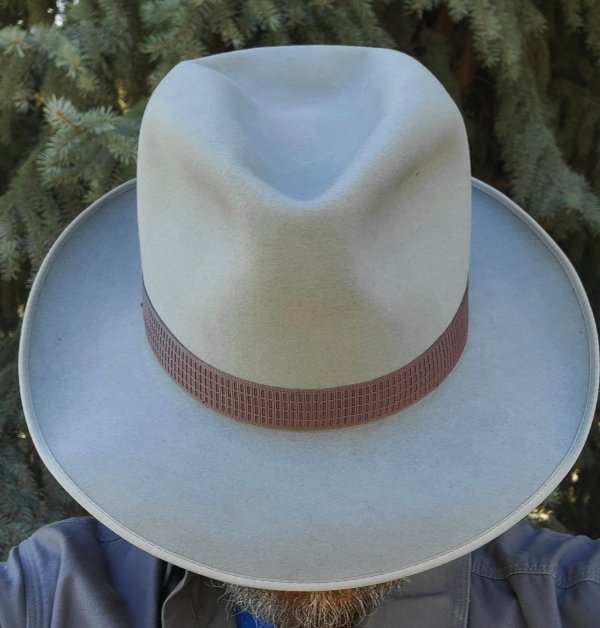
Great hat! The band is fantastic.Hat for the morning dog walk was this early 1950s Royal Stetson in a lovely shade of blue-grey, with an extremely attractive and distinctive (IMO) ribbon.
View attachment 777051 View attachment 777052 View attachment 777053
Thank you, Dave!Great hat! The band is fantastic.
RickP
My Mail is Forwarded Here
- Messages
- 3,080
Good morning for another older Stetson.


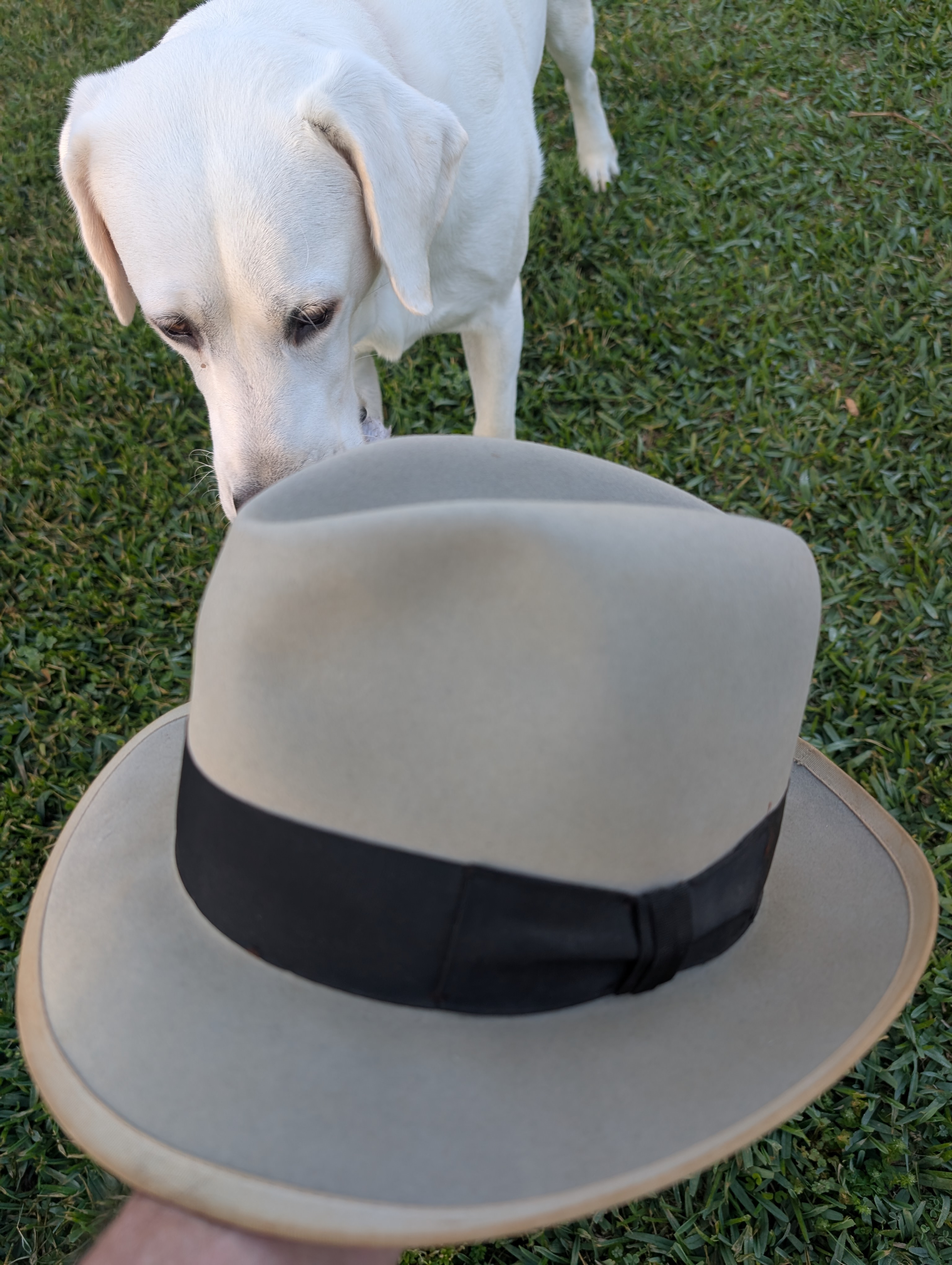
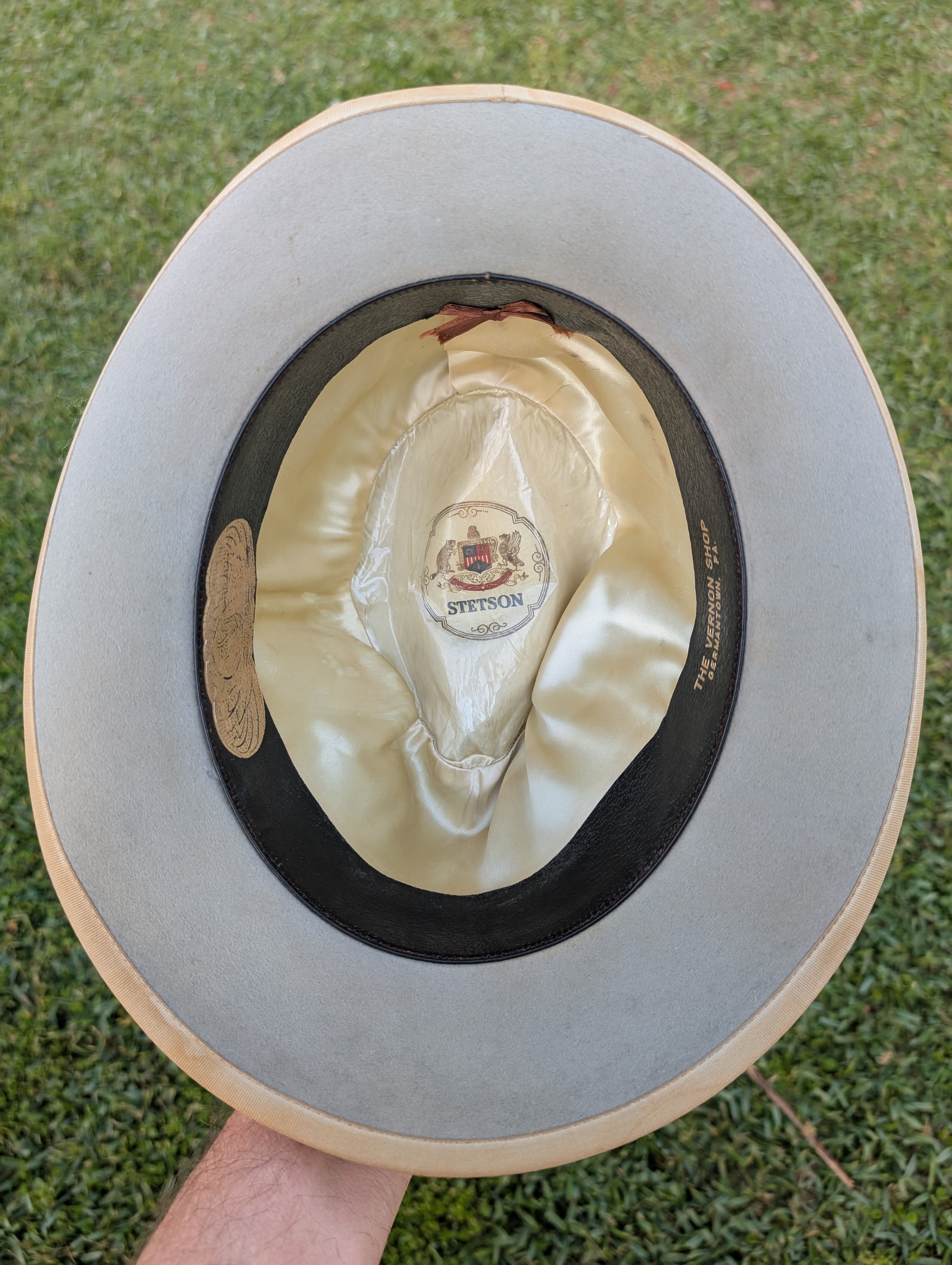
Iv seen pictures of this USA Sweatband gold embossing here before... but did anyone come up with the backstory on this embossing? way more ornate than most
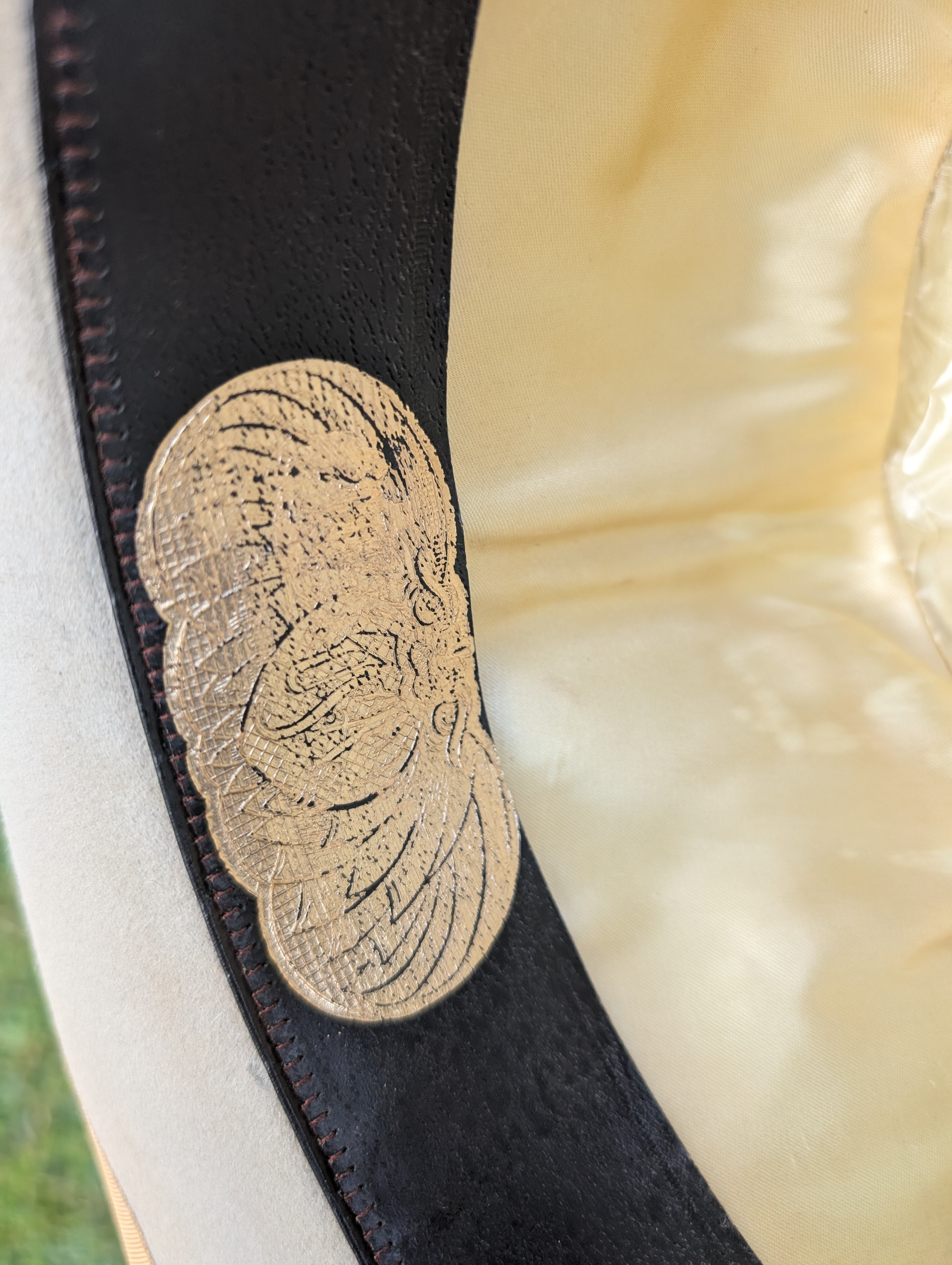
Iv seen pictures of this USA Sweatband gold embossing here before... but did anyone come up with the backstory on this embossing? way more ornate than most
Very nice, Rick!Good morning for another older Stetson.
View attachment 777124 View attachment 777123 View attachment 777122 View attachment 777121
Iv seen pictures of this USA Sweatband gold embossing here before... but did anyone come up with the backstory on this embossing? way more ornate than most
View attachment 777120
- Messages
- 15,855
And another winner, Bob!!
Thanks again Mark!
Featured products
-
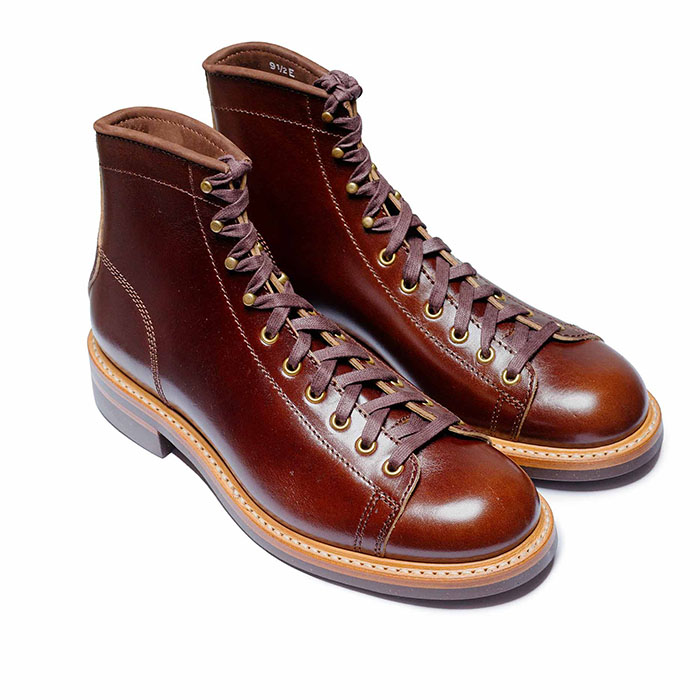 John Lofgren Monkey Boots Shinki Horsebuttt - $1,136 The classic monkey boot silhouette in an incredibly rich Shinki russet horse leather.
 -
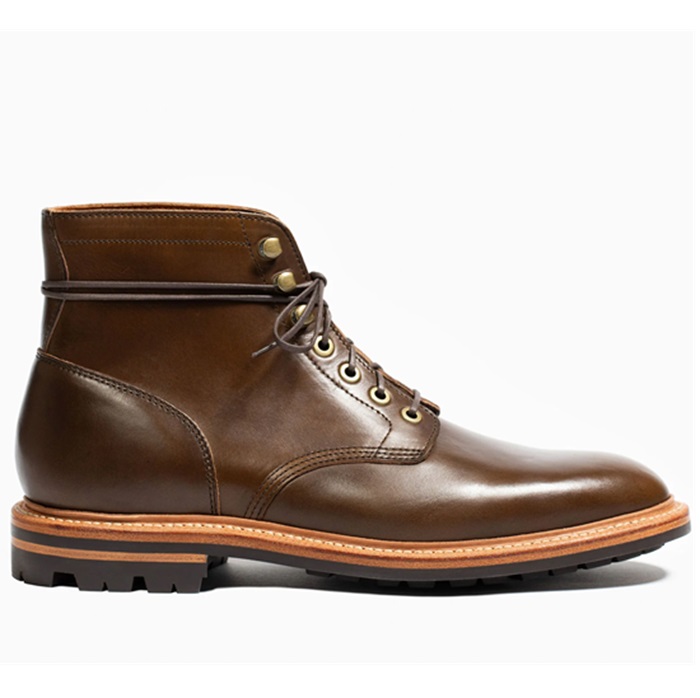 Grant Stone Diesel Boot Dark Olive Chromexcel - $395 Goodyear welted, Horween Chromexcel, classic good looks.
 -
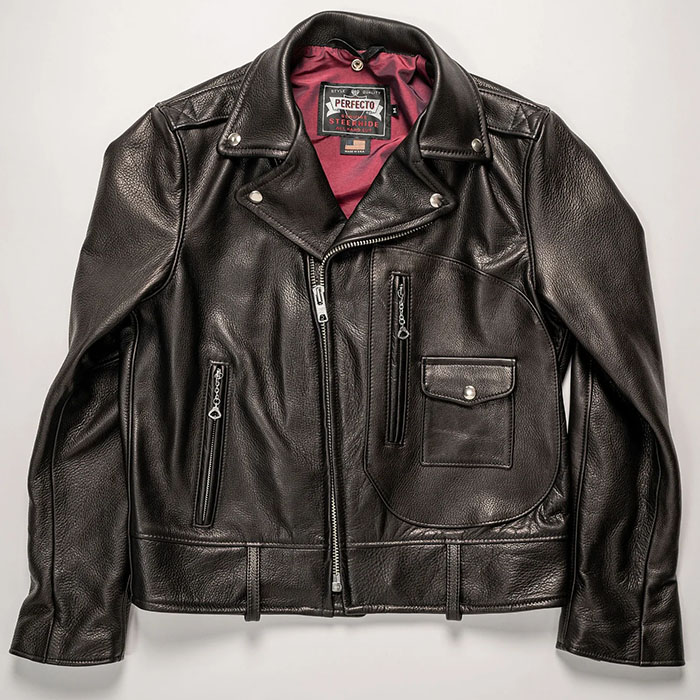 Schott 568 Vandals Jacket - $1,250 The classic Perfecto motorcycle jacket, in a very special limited-edition Schott double rider style.
Similar threads


- Replies
- 18
- Views
- 20K


