Want to buy or sell something? Check the classifieds
  • The Fedora Lounge is supported in part by commission earning affiliate links sitewide. Please support us by using them. You may learn more here.

What Was The Last Movie You Watched?

Messages
18,299
Location
New York City
^ Honorable mention, The Guernsey Literary and Potato Peel Pie Society.

Some years ago, while seated in the waiting lobby for an appointment at Edward Hines VA Hospital,
a volunteer wheeled a ''free books for veterans'' cart towards me and invited my solicit. I had once found
a Kierkegaard, an Alexander Woollcott and a Cicero; also, a University of Illinois ancient Virgil text in these freebies, so I plunged right in, finding The Guernsey Literary and Potato Peel Pie Society. A delightful jewel of a book that takes place on the island of Guernsey during and just after the Second World War. Made into a film
I've yet to see, though its box office did respectable enough. And critics generally gave it a Roger Ebert
'thumb's up.'' Admittedly, a book largely found by chance and not my usual shelf pull, but an extraordinarily lucky find. Definitely a 'cosy'' to read and see.:)

I greatly enjoyed the book and thought the movie was okay to good, but not up there with the book. Still, well worth one watch.
 
Last edited:

Harp

I'll Lock Up
Messages
9,013
Location
Chicago, IL US
Hidden Figures. Costner's in this with a trio of black females portraying NASA mathematicians whom
helped Friendship Seven launch, and, more importantly, reenter Earth's atmosphere without the space
capsule burning like a marsh mellow over a campfire. Analytic geometry and Calculus. Euler's theory.
High school Algebra with Mr Pignatello and Coach Petrak's Analytic Geometry class. Loved this film.
Long time since I tackled any serious math. So, I picked up a classic Algebra by Dolciani, and another
Analytic Geometry and Calculus that weighs a ton but lost somewhere among the shelf clutter, probably hiding from me. Anyway, Hidden Figures is appointment movie viewing. :)
 
Messages
18,299
Location
New York City
MV5BZGM3ZjY5ZTItZTY2Zi00YWJiLWFmYTYtOWFmMDUxM2ExNTMzXkEyXkFqcGc@._V1_.jpg
\
Danger Lights (1930) with Jean Arthur, Louis Wolheim, and Robert Armstrong


There are always several reasons to see any movie – the plot, the actors, the atmosphere, the director, the technology... the what? Yes, the technology, in this case, steam-engine trains during the heyday of transcontinental rail travel in the U.S.

Today, airplanes are the hated buses of the sky that Americans begrudgingly take to get from here to there if driving is too far, but for most of the first half of the twentieth century, trains, mainly steam-powered, served that purpose with a mission zeal lost to modern air travel.

"Railroad men" were proud of the work they did to keep the country "moving." Of course, Hollywood didn't miss this opportunity, making many train-centric movies like Danger Lights, which also stars the lovely Jean Arthur in one of her earlier talking roles.

The movie's basic love-triangle plot centers on a rail hub whose old-school superintendent, played by Louis Wolheim, runs the hub like a gruff dictator with a warm heart that only shows after he's chewed you out. Still, he'll never ask you to do a job he wouldn't do himself.

Wolheim is loosely engaged to his friend's daughter, who is played by Arthur. He took both into his house when his friend was injured and couldn't work. Wolheim is fully in love with Arthur; Arthur's feelings toward him are respect, fondness, and family obligation.

Kicking things off, Wolheim – supervising an emergency repair from a landslide – hires, on the spot, several hobos to do manual labor. He takes a liking to one, played by Robert Armstrong, who was a former railroad engineer fired for insubordination.

Fast forward and young, handsome Armstrong is grudgingly working for older, craggy Wolheim, which proves problematic when Arthur stops by one day and sees – really sees – what a man her age can look like. Uh-oh.

It's a powerful scene when Arthur comes to the railroad to bring Wolheim some handkerchiefs he left at home: she likes and is friendly to him, but when she sees Armstrong, her socks slide down to her ankles. You can't make your feelings do what you want them to do.

From here, the plot becomes how Arthur reconciles herself to her feelings – which feel disloyal to her – and how she then tells Wolheim. It's an off-the-shelf but okay love triangle from precode Hollywood. The climax, too, checks all the formula's boxes, but is fun enough to see in this short film.

All of that, though, is just an excuse for the real story, the story of the hard and smart work that dedicated men put into running a state-of-the-art steam-powered railroad in the day. Railyards, roundhouses, machine shops, and dynamometer cars are all treated with cinematic respect.

The trains themselves, racing down the tracks at over a hundred miles an hour when that was crazy fas,t also get cinematic respect. Finally, there's a last-minute run to Chicago by a train to save a sick man that makes a train barreling down the track visually engaging even now.

Filmed in 70 mm widescreen format, the movie must have been spectacular to see in its day when the country thought of trains the way it would planes a generation later, then space travel a generation after that, and then – well – sadly, cutting-edge speed moved to silicon chips.

Wolheim and Armstrong are actors from the silent era who transitioned well to sound (Wolheim, though, would pass away the following year). The treat here, however, is young Jean Arthur, with her flapper-bobbed hair, always-squeaky voice, and loveliness clearly apparent.

Today, a fan comes to Danger Lights to see trains and Arthur, as steam-power was at its peak and Arthur was on the brink of stardom. It's oddly entertaining – even though it's not great – because you get a railroad documentary, a movie, and Arthur all for the price of one ticket.

danger3.jpg
 
Messages
12,506
Location
Orange County, California
...Today, a fan comes to Danger Lights to see trains and Arthur, as steam-power was at its peak and Arthur was on the brink of stardom. It's oddly entertaining – even though it's not great – because you get a railroad documentary, a movie, and Arthur all for the price of one ticket.

It's okay. In a few years Robert Armstrong will capture King Kong and take him to New York.
 
Messages
18,299
Location
New York City
MV5BMzUzNjQxNTQtZGJmNS00NWNiLTkyZjMtMzcwMWVhYzQxYmNkXkEyXkFqcGc@._V1_.jpg

Vice Squad (1953) with Edward G. Robinson, Paulette Goddard, Porter Hall, and Edward Binns


More a police drama than a noir or even a crime drama, Vice Squad follows a Los Angeles police captain, played by Edward G. Robinson, through a thoroughly exhausting day framed by the hunt for a cop killer. Your one thought when it's over is how can he do this again tomorrow.

After opening with that noted shooting of a cop who came upon some criminals trying to steal a car for a bank heist they have planned for the next day – there is always so much to do the day before a heist – the movie shifts focus to Robinson's enervating day.

While the cop killer is paramount, Robinson also has to deal with his regular day-to-day duties, which include his boss wanting more information and progress than he has, shady informants, reluctant witnesses, the press, a phony count working a marriage ****, and more.

That "more" includes Paulette Goddard playing a "madame" who runs a "legitimate" esc*rt service (bahahaha). Goddard seems to keep her business on Robinson's good side by supplying him with information "her girls" pick up "esc*rting" men. She's his Huggy Bear.

Goddard's few scenes with Robinson show two pros elevating a movie above its material. Had Vice Squad later been turned into a TV show, their chemistry and the complexity of their relationship – there is no such thing as "just an esc*rt service" – could have centered the series.

While Robinson looks for the cop killer, the gang continues prepping for the heist despite the cop shooting having everyone on edge. The gang leader, played by Edward Binns, is working hard to keep his gang focused, proving that leadership is challenging on both sides of the law.

Director Arnold Laven does an excellent job here switching back and forth from Robinson's hectic but legal day to Binns' hectic but very illegal day, as we watch the two leaders play chess with each other despite, of course, never seeing one another or even knowing the other's identity.

Eventually, the heist will go awry leading to a g*n battle, a hostage – played by the super adorable Mary Ellen Kay wearing the cutest hostage outfit, a matching dress-sweater set, of all time – and a hunt for the now splintered gang on the run, including Binns holding Kay.

For the time, there's an honesty to the dirty ball the cops sometimes play with the law, as Robinson manipulates justice to push reluctant witnesses to "help." The version of three card Monte he plays with Porter Hall portraying a reluctant witness could almost be its own movie.

Hall is an honest married man who was simply minding his own business with his mistress when he happened to see the cop being shot as he was leaving said mistress' apartment. He'd like to help and all, but how could he explain to his wife where he was if later he has to testify?

Hall's lawyer, played with pitch-perfect lawyer smarmy confidence by Barry Kelley, deserves some sort of an award for having to pull up the wrong three-card-monte cup time and again, as Robinson shuffles Hall through precincts and procedures with bureaucratic cunning.

It is a "strategy" fans of police procedural TV shows will recognize to this day as it's been used in just about every cop series since. It's those details handled so well by all these recognizable character actors that make Vice Squad engaging despite its small B budget and average plot.

Its on-location shooting in perfect postwar black and white all around mid-century L.A. also contributes to the engaging grittiness of the movie. And for us today, it's an incredible visual time capsule of a long-since-passed era.

Fans of Robinson won't be disappointed as Edward G. is pitch perfect playing the top cop exhausted by a job he'd probably do even if they didn't pay him. The challenge is the reward, with catching the bad guy providing the extra kick. The world needs more cops and men like him.

Vice Squad is not a great movie, but it is a wonderful mid-century police drama that punches well above its weight owing to its quietly impressive cast, intelligent dialogue, and smart directing that has you engrossed from the first scene to the last in a story you know well.

MV5BMmM1OTVjZmEtNjVmMS00NGQ0LWJkMTctYTNkNWQwYmNiZTVhXkEyXkFqcGc@._V1_QL75_UX304_.jpg
 

Harp

I'll Lock Up
Messages
9,013
Location
Chicago, IL US
^ Vignera v New York. A dress shop robbery and interrogation without legal counsel
advisement before Miranda tossed over police apple carts all over the country.
Surprisingly, the US Supreme Court upheld Miranda's conviction.

Robinson had real presence, a genuine charisma that is so innate it's embedded
thespian DNA. Some have it, most don't, and his scenes in The Cincinnati Kid went unrecognized by Oscar---whom I didn't catch last nite. Don't know what films were nominated, or if Goering was eligible this year, so out of touch with current scene I most happily am.... But whatz his name deserved one for the Goering snippets seen YouTube. :)
 
Messages
18,299
Location
New York City
p36992_i_h10_ab.jpg

No Sad Songs for Me (1950) with Margaret Sullavan, Wendell Corey, and Natalie Wood


After no more than ten minutes into No Sad Songs for Me, you'll know that Margaret Sullavan's character – a happily married mother of a young teenage daughter, played by Natalie Wood – is going to die of cancer in a little under a year. Yes, it's a three-hanky weeper, but not really.

The "not really" comes from how well Sullavan and the screenwriters handled this depressing material. Sullavan, after gently bullying the truth out of her doctor – which patients often had to do back then – decides to keep her condition secret from her husband and daughter.

Is this a sacrifice, a noble gesture, or selfishness? Yes, but really no to all three, as Sullavan wants everyone to have as normal a time as possible throughout her decline. Kudos to her for not wanting to be the center of martyrdom, but stepping back, it's the only rational move.

It's the only way to avoid a months-long funeral and to get some moments of regular life and happiness for all of them. The cinematic problem is there's surprisingly not much of a story in a movie that tells us up front this everyday woman is going to die but will keep it a secret.

The modest story arc revolves around a new surveyor Sullavan's husband, an engineer played by Wendell Corey, hires: an atypical-for-the-job-back-then woman, played by Viveca Lindfors. As they work together, Lindfors takes a shine to Corey, which he slightly begins to do as well.

The other story arc is Sullavan herself trying to keep up a brave front and normal appearances as her health deteriorates. You want her and her family to have as much time as possible, but there's only so much tension and story drama to be garnered from her feeling faint, but hiding it.

Today, every ugliness about the disease would be painfully documented for the viewer under the modern cinematic God of "realism," but in 1949, knowing she was sick was enough, so other than several "mother's tired" or "you look pale, dear," we're spared the demoralizing decline.

It also matters that the cultural norm at the time was not to discuss cancer – the word itself was often only whispered in conversation. It was common, as well, to hide really bad news from the patient, but as noted, Sullavan arm-twists that information out of her doctor.

The Lindfors angle is forced, but we all get it: she's a nice woman under her tough, aloof European demeanor who will make Corey a good second wife and Wood a good second mom. Neither she nor Corey seem like the type to flirt with an affair, but movies need drama.

It is a sad movie, but not oppressively so, in part because Sullavan is not only that good but was a smart choice as her low-key, thoughtful approach keeps the histrionics out – histrionics that top actresses of the time like Joan Crawford or Katharine Hepburn couldn't have resisted.

Corey was a smart choice, too, as his nice but not movie-star-handsome looks make him a perfect representation for every man. Here, he's more in a supporting role to Sullavan, but he was born to play a typical postwar American husband and dad.

Thankfully Wood's part wasn't written as the usual too worldly and obnoxiously precocious child, nor does talented Wood try to play it that way. She's a movie child you actually like.

Last up is Lindfors who plays her postwar European import role well. Aloof at first, her two key later scenes with Sullavan – watch for them – are a couple of the best in the movie. Lindfors doesn't know the cards Sullavan is holding, but she slowly susses out that something is up.

Shot in towns near Los Angeles, No Sad Songs for Me captures mid-century America filtered through a Hollywood lens – one-car families, shopping on Main Street, a "girl" who helps with the housework, and evening attire for an adult New Year's Eve dance in the school gymnasium.

No Sad Songs for Me was Sullavan's last movie – she did some Broadway and TV, but no more Hollywood pictures. It's fun today to see this pixie-sized cutie aged just a bit from the adorable mouse she looked like in her successful 1930s films.

Her life had its personal challenges and demons, which is part of the reason she stopped making movies and which eventually led to her passing away at the age of fifty. Oddly, her life seemed much harder than this sad, but in ways, inspiring picture about a woman facing death.
 

Harp

I'll Lock Up
Messages
9,013
Location
Chicago, IL US
It is a sad movie, but not oppressively so, in part because Sullavan is not only that good but was a smart choice as her low-key, thoughtful approach keeps the histrionics out – histrionics that top actresses of the time like Joan Crawford or Katharine Hepburn couldn't have resisted.
Crawford had some depth; perhaps attributable her offscreen complex personality.
However, Katherine Hepburn had, to quote Dorothy Parker's verdict, an acting range
''from A-B.'' I never quite understood her thespian acclaim. And Hollywood pimp purveyor,
Scotty Bowers in his tell-all trash heap memoir, Full Service put the kobash on the Tracy
romance, claiming it a fraudulent studio concoction largely guised a pants suited lesbian.
Not that there is anything wrong about one's personal incline, yet when added to the mix,
the total package leaves question marks galore.

Natalie Wood's questionable demise inevitably leads to her spouse, Robert Wagner.
And Christopher Walken took a career slam afterwards, regrettably so. :confused:
 

graceallen

New in Town
Messages
2
The House On 56th Street is such a classic pick! Kay Francis was truly talented. The last movie I watched was The Godfather and it never gets old no matter how many times you see it. Great thread idea always love discovering what others are watching!
 

Harp

I'll Lock Up
Messages
9,013
Location
Chicago, IL US
The House On 56th Street is such a classic pick! Kay Francis was truly talented. The last movie I watched was The Godfather and it never gets old no matter how many times you see it. Great thread idea always love discovering what others are watching!
I personally oppose capital punishment for several reasons, and wrongful conviction is primary cause.
However, Justice nestles a sword along her right leg, without which she would cease having credibility.
All prisons are required to have law libraries, and occasionally a convict immerses himself in the study of Law to become a quite accomplished practioner. One such man remarked to me that he had written
appeals for three men whom were subsequently denied and executed; however, he believed them innocent.

Whether a capital puunishment case or wrongful long incarceration, the Law is, and never will be perfect. :confused:
 
Messages
18,299
Location
New York City
MV5BNTY1NTA4YjktOWI5Zi00Nzk4LWJhYmYtOWVhMmE3NGI5OGM2XkEyXkFqcGc@._V1_.jpg

The Flirting Widow (1930) with Dorothy Mackaill and Basil Rathbone


Many of the early talkies, especially in the first year or two of that new medium, were often just glorified stage plays on film. Hollywood was still learning how to "do" talkies with the theater being the closest facsimile – but boy does that miss a point.

Stage plays are limited by the size of the theater and the demands of a live performance; movies give the directors and actors so much more to work with. Yet early in the talkie era, Tinseltown was still figuring all that out, as can be seen in the very stagey The Flirting Widow.

Lacking a soundtrack, with little camera or actor motion, and mostly shot on one set, even to a fan of "old movies," this one feels static. That sense is not mitigated by its too "cute" playwright type of plot. You can see the entire construction of the story without trying too hard.

What works though, what saves the effort and makes it worth watching are its leads: Dorothy Mackaill and Basil Rathbone. They are both engaging personalities on their own and here they show that most valuable of all motion-picture quality: screen chemistry.

Mackaill plays the eldest of three daughters of a wealthy old-school English widower who doesn't want to let his youngest daughter marry until the eldest has. He broke his rule for daughter number two, but is determined not to let that happen a second time.

Mackaill, who has taken on the formidable task of running the house now that her mother has passed, and sporting a masculine style of hair and dress, seems unlikely to marry. This frustrates the youngest daughter who is ready to marry, if only dad would give his permission.

To help her sister and get the pressure off herself, Mackaill invents a fake fiancé – an overseas soldier with the common name John Smith. After her sister gets engaged, Mackaill "offs" her fake fiancé with a death notice, but some fake fiancés don't die that easily.

Over in the Mideast, where Mackaill sent a fake love letter that ended up in the hands of a real Colonel John Smith, that very Colonel, played by Rathbone, decides to investigate his surprise fiancée on his next leave to England.

Not only back from the dead but springing to life seemingly from her imagination, Rathbone shows up at Mackaill's family estate claiming to be a friend of her dead Colonel John Smith. Fans of this type of early screwball romcom can probably guess the rest.

It takes Rathbone a bit to unravel what happened, but once he does, he has Mackaill spinning as he could easily expose her silly scheme. The movie hits its stride here as it's the two prettiest people in the movie falling in love as they deny it even to themselves.

To be fair, Leila Hyams, playing the middle sister, is by most standards prettier than Mackaill, but once Mackaill switches from her early-on mannish clothes and style to her "I'm a woman – all woman" dresses, she's the one you're noticing.

One can only wonder if the androgynous look that Mackaill started with is addressed in more detail in the play, as the implication early in the movie is that she's not married because she doesn't like men, but that goes out the window without explanation when Rathbone shows up.

It's only 1930, but fans of Hallmark will appreciate the formula as Mackaill and Rathbone flirt-fight until practically the last scene. It would take some serious writing effort, as no one cares which daughter marries first now, but this film could be reworked into a modern Hallmark movie.

If you can see past the in-need-of-restoration print, the aforementioned staginess, and the silly story, it's a short, entertaining early romcom that works for the same reason any romcom ever works: the two leads have excellent chemistry that has you rooting for them.

Mackaill, a silent-era star, made a brief but successful transition to talkies, yet faded a few years later. Here, though, she shows everything you need: talent, screen presence, an appealing voice, and quirky/pretty looks that the camera likes. It's a shame her career died out so quickly in the 1930s.

Rathbone had a more satisfying career arc from stage actor, to silent film star, to leading man, to noted villain, to lead in B movies, and on in a career that spanned five decades. Here he is wonderfully calm and subtly sarcastic playing opposite Mackaill's more strung-out personality.

The Flirting Widow requires a little understanding of film industry history to be appreciated by a modern viewer, but get past that and the reward is an early peek at a surprisingly modern romcom with two very appealing "early talkies" stars.
 

Harp

I'll Lock Up
Messages
9,013
Location
Chicago, IL US
View attachment 776841
The Flirting Widow (1930) with Dorothy Mackaill and Basil Rathbone


Mackaill, a silent-era star, made a brief but successful transition to talkies, yet faded a few years later. Here, though, she shows everything you need: talent, screen presence, an appealing voice, and quirky/pretty looks that the camera likes. It's a shame her career died out so quickly in the 1930s.

Rathbone had a more satisfying career arc from stage actor, to silent film star, to leading man, to noted villain, to lead in B movies, and on in a career that spanned five decades. Here he is wonderfully calm and subtly sarcastic playing opposite Mackaill's more strung-out personality.

The Flirting Widow requires a little understanding of film industry history to be appreciated by a modern viewer, but get past that and the reward is an early peek at a surprisingly modern romcom with two very appealing "early talkies" stars.
Mackaill definitely floats my boat in the same Joan Blondell cookie cutter cutie mold.

Rathbone has always proved interesting man-and-moment, which for me largely centered his fencing bout with Tyrone Power in The Mask of Zorro, displaying admirable swordsmanship with character and definite
panache. Liked his films with Flynn and his Sherlock Holmes work too. Rathbone had been a premiere fencer in the British Army and translated his skill in Hollywood. Caught a YouTube cemetery video focus Golden Film era grave tours and Rathbone's mausoleum crypt with that of his wife was featured. I always find such clips not macabre but surprising bookends to mature thoughtful adult professionals who understood their craft and lives in such exemplary manner.:)
 
Last edited:
Messages
18,299
Location
New York City
new_ava_header_pandora_257fb220-37ea-4e0d-8ca5-e3f34d403f34.jpg

Pandora and the Flying Dutchman (1951) with Ava Gardner, James Mason, Nigel Patrick, Harold Warrender, and Sheila Sim


There's a lot going on in Pandora and the Flying Dutchman, and really not much at all; it all depends on how seriously you want to take it. Militating against taking it seriously is the large effort it would entail to put all the pieces together for what seems like very little gain.

Riffing on the legend of the Flying Dutchman – something, something 17th-century Dutch ghost ship doomed to sail the seas for all time for something, something reason – a group of American and British expats live in a fictional yet beautiful Spanish port town in the 1930s.

Narrated by some sort of professor/historian of antiquities, played by Harold Warrender, the small expat community does what all expat communities then seemed to do: party too much, sleep around too much, and complain too much about the good lives they lead.

The centripetal force of the group is Pandora, played by Ava Gardner, who attracts men, callously plays with them, and then acts bored as she floats above it all alone in her world of gorgeousness and mild cruelty.

Shot in sumptuous Technicolor in Catalonia, Spain, director and co-writer Albert Lewin made his picture so pretty he hoped you might not notice that very little happens and that what does happen makes very little sense.

Or it makes sense if you buy into the myth of the Flying Dutchman and an awful definition of love: love should be measured by how much you're willing to give up for it. That almost sounds reasonable until men start wrecking things at Gardner/Pandora's whim.

Playing the driver of land-speed-record racing cars, Nigel Patrick pushes his custom racer over a cliff to prove his love (or idiocy) to Gardner. She agreed to marry him in return; all a rational person can think is, thank God, now no normal people will be stuck with either of these two.

After that fateful (stupid) night, Patrick is ecstatic, but Gardner seems dispirited, which leads to Gardner swimming naked out to a mysterious anchored schooner where she meets the Flying Dutchman, played by James Mason.

They connect immediately, but of course, Gardner is engaged, and, well, Mason seems out of another time. Still, what the heck, off and on, Mason hangs out with the useless expats making Gardner excited and Patrick, sometimes, jealous.

Throw in a handsome Spanish matador with a few very loose bolts upstairs who also wants Gardner and a lovely young expat woman, played by Sheila Sim, who genuinely loves Patrick, and most of the pieces are now on the romantic chessboard.

Watch for the scene in which Patrick, with Gardner's permission, having fished his car out of the ocean and after spending endless hours repairing it, attempts to break the land-speed record. Visually, it's everything that was cool about cutting edge land-speed attempts in the 1930s.

Back in the main story, things then get oddly twisted as the Dutchman and Pandora – Mason and Gardner – have a weird night where dreams and reality seem to overlap with murder, fantasy, and love (not that a single one of these people really loves anyone but themselves).

From there it's on to Act Three, which feels deflated before it starts but has a lot of gobbledygook about history, art, poetry, music, and legends that maybe makes some sense if you were overly educated in the classics and retained it all.

The rest of the audience is left with beautiful people – whose beauty is paled by Gardner's atomic beauty – stunning scenery, and a story that you only bother to follow at the high level because doing more would take too much effort for too little return.

Gardner, Mason, Patrick, Sim, Warrender, and the rest of the cast are all quite talented and director/co-writer Lewin clearly believes in whatever he believes in here, so the effort is professional and impassioned even if you wonder at times why you are watching it.

When the final scene of Pandora and the Flying Dutchman at last ties back to the mysterious opening, you'll be quite underwhelmed by a moment that is supposed to be like Heathcliff and Cathy walking hand-in-hand into the great beyond.

At twenty-nine and filmed for the first time in color, many consider this Gardner at peak beauty on film, which might be true if you only count color films, but expand that to all of her movies and The Killers (1946) might have a thing or two to say.

Some movies like Pandora and the Flying Dutchman are interesting misses. They don't work as intended, but there are enough engaging pieces – Gardner's beauty, the stunning Spanish coast, and a cool attempt to break a land-speed record – that they are still worth seeing once.
 

Harp

I'll Lock Up
Messages
9,013
Location
Chicago, IL US
^ Ava's supporting role in Night of The Iguana cast her middle aged vintage perfection opposite
Richard Burton and another woman, Deborah Kerr. Haven't seen Flying Dutchman but this sounds
interesting. :)
 
Messages
18,299
Location
New York City
p1171_i_h10_ab.jpg

Shake Hands with the Devil (1959) with James Cagney, Don Murray, Glynis Johns, Dana Wynter, and Michael Redgrave


The factual record doesn't tick and tie to each scene, but the historical sweep of Shake Hands with the Devil is broadly accurate. It's 1921 in Dublin and the IRA is fighting a guerrilla-style war against the English Black and Tans, with bloodshed on both sides just part of everyday life.

James Cagney plays an IRA section leader while openly teaching medicine at Trinity College by day. This brings him into contact with an American student of Irish descent, played by Don Murray, who wants no part of Ireland's civil war, until events draw him in.

The IRA has to operate underground and mercilessly, as the Black and Tans are equally merciless in their tactics. Right and wrong is for another movie; director Michael Anderson is sympathetic to the Irish side, but he doesn't shy away from showing extremism in both camps.

After the Black and Tans arrest a prominent elderly Irish woman for working with the IRA – they have her dead to rights – the IRA retaliates by taking the daughter of a senior British advisor hostage. The daughter, played by Dana Wynter, is pretty, proper, and very British.

Like most of the action scenes in this action-heavy movie, Wynter's kidnapping is well done and believable. Today, most action movies are so focused on "outdoing" whatever came before that it often feels fake, but here you believe most of what you see could have happened that way.

To the IRA, Wynter represents what they are fighting against; to American Murray, she's a very attractive young woman, especially to a man who has been spending his days and nights holed up with only other men and a local, up-for-grabs barmaid, played with spirit by Glynis Johns.

The plan is to pressure the British to free the elderly woman, but events will eventually overtake the kidnapping. While the big story is part of history, you'll want to see the climax fresh as the movie's fictional threads become intense as history plays out around them.

All along, Cagney and Murray, with others jumping in now and then, argue the philosophical merits and the morality of a violent war against the British. It can be a bit heavy, but it's intelligently written and, of course, applies to many civil wars in many countries, right up to this day.

Cagney, as usual, is the magnetic center of the movie with his intensity feeling like Cody Jarrett from White Heat (1949) has joined the IRA. Staying with the analogy, when a truce is proposed and many of the IRA members are willing to accept the terms, Cagney is not.

Total victory is a worthy, ideal goal until it becomes an obstacle to a reasonable partial victory – a version of the perennial maxim: never let the perfect be the enemy of the good. Cagney, Murray, and Michael Redgrave, the latter playing the IRA's general, will argue this out.

Redgrave and Murray are good, although one can't help thinking that a contemporary like Paul Newman would have brought greater complexity to Murray's role. It is Wynter and Johns, though, who bring, yes, the s*xual frisson, but also the woman's point of view.

Johns also reminds us that it was a time when the men mainly did the fighting and dying and the women the supporting and mourning. It's easy to understand why she sees s*x as a cheap commodity since the men don't live long enough for any of it to matter.

Wynter, on the other hand, is new to this civil war thing as, until she was kidnapped, fancy balls, dates with "gentlemen," and couture dresses were her world. But watch for her scene on the lighthouse catwalk with Murray to see how she's a fast learner (and a strikingly pretty woman).

Shot in beautiful black and white, the film is visually gorgeous, from the glistening rain-soaked cobblestone streets at night to the waves breaking on the jagged rocks along the coast. Ireland looks majestic and threatening at once – the movie's high-level theme encapsulated in its style.

Shake Hands with the Devil is outstanding moviemaking from an era when action-adventure didn't mean CGI or go-for-broke special effects, but rather a movie where the action believably advances the story while also entertaining.

Your opinion of history won't change based on this movie, although you might just slightly see some daylight into the other side's viewpoint that you hadn't before, but you will come away with a good sense of the day-to-day lives of the men and women who fight these civil wars.

You'll also come away impressed with the picture's talented cast and the beautiful cinematography – and with a better appreciation for the individual violence that a civil war brings, literally, right into people's homes.

MV5BMmY0NTNlNDktYTk1YS00YjQzLWE5MzUtZjdiNDNmOTJiZDEzXkEyXkFqcGc@._V1_FMjpg_UX853_.jpg
 

Harp

I'll Lock Up
Messages
9,013
Location
Chicago, IL US
^ When I was a kid, I waited tables in an Irish joint wherein Dublin migrants found employ
and poor Irish boys such as meself were given work. And occasional under table donation to
cause and bold IRA obligatory; however, such was life Chicago Irish Southside. Folk thought I was another
just off boat waiter, and I was often asked where in Ireland I hailed.... :oops:

I've heard of this film, though never seen. Another lookup.:)
 

MK

Founder
Staff member
Bartender
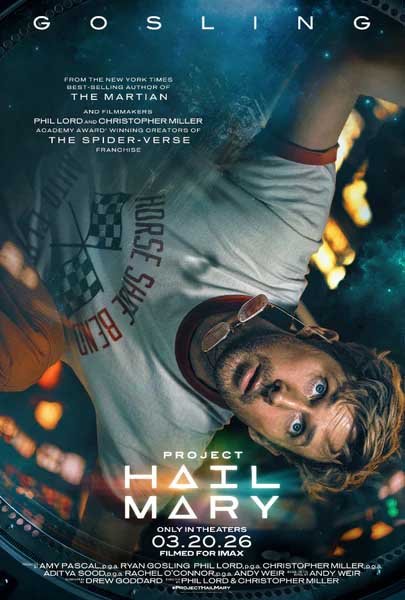
Last night we saw Project Hail Mary. First off, it felt good to be at a movie theater. It had been far too long, and we were happy to have a reason to go. Most of the trailers were very good, which brought joy to my heart and gave me hope for the future of the cinema experience. I know some are content to just stream at home… which reminds me of the man who was so lazy he married a pregnant woman… but that’s a story for another time.

Project Hail Mary is an excellent film. The story reminded me of such great movies as The Martian (same author), Interstellar, and Arrival. Ryan Gosling plays Grace, the main character, who spends half the movie interacting only with an alien—much of the time an elaborate animatronic puppet, with occasional CGI. Speaking of CGI, I was pleased that the filmmakers chose practical effects, sets, and characters whenever possible, and only used computer-generated elements when necessary.

Notably, there’s no profanity, ******, or *** in the film, and only one very slight act of violence. The subject matter and a few minor jump scares merit not bringing young children, but this is a movie you can definitely take teens to.
I’m still thinking about Project Hail Mary the day after, which is a good sign. Check it out in a theater.
 

Attachments

  • project-hail-mary_.jpg
    project-hail-mary_.jpg
    58.1 KB · Views: 49

Worf

I'll Lock Up
Staff member
Bartender
Messages
5,246
Location
Troy, New York, USA
The Wicker Man (73) - Believe it or not. I first saw this movie in a rare afternoon Showing on Channel 9 in NYC back in the 80's or 90's. I was stunned because I'd knew the film was both controversial and contained naughty bits that couldn't be shown on American TV. I guess they hid the bad stuff because I saw the whole film. I'd not seen it since But I must've seen Breaker Morant before seeing the Wicker Man because I recognized the lead actor. Perhaps I was stunned because the remake was out and I confused the two. All I know is that after seeing a retrospective on the Original I had to watch it again... in full as an adult. After watching it, I see where Midsomer got it's roots. Wild movie with a story to tell and an original way of telling it.

Worf
 
Messages
18,299
Location
New York City
MV5BMTM5NTA5MzE1MV5BMl5BanBnXkFtZTcwMzk4OTQyNw@@._V1_.jpg

Over the Edge (1979)


Collectively, the movies of the 1970s tell a dystopian story of a society breaking down. Little did 1970s cinema know that 1980s real life would disprove most of it, but as a body of work, that earlier decade produced an impressive number of intelligent, depressing pictures.

Over the Edge isn't a classic or even that intelligent, but it captures a vibe – the disaffected-suburban-kid-who-lives-in-a-planned-community vibe – pretty darn accurately, right down to the dress, voice, drugs, boredom, and free-range upbringing of modern lore (that was a real thing).

With home prices rising and inner cities collapsing, middle-class America turned to "planned communities" like the fictitious New Granada in Over the Edge, where apartment houses are already becoming slum-like, while the condos and stand-alone houses are holding up.

Built on empty tracts of land, there is a Gertrude Stein "no there, there" feel to these sad-looking attempts at manufacturing real communities, but the adults don't seem to see it, or why would they have bought there? The kids, however, get the emptiness of it all.

The parents go to their jobs, do community work, buy a bunch of cheap-looking stuff to put in their generic homes, and only notice their kids if they don't come home at night. The kids are doing drugs, listening to heavy metal or punk, and wandering aimlessly with nothing to do.

In New Granada, there's a large Quonset hut that serves as a "rec center" for the kids where they play ping pong, video games (stand-alone machines), swap drugs, mock each other, and hang out for community and to fight off boredom. It's not enough.

Some of the kids take their anger out in destructive ways like using airguns to shoot at passing cop cars, doing harder drugs, or beating up on the younger kids. This is no After-School Special movie.

The 1960s idealized youth rebellion gave way to a giant ball of dysfunctional youthful nothingness by the 1970s – still, something had to be done. The problem is that the parents, the teachers, the "community leaders," and most of all the police are ill-equipped to handle it.

A teenage Matt Dillon, in his movie debut, is good as the somewhat tough "I don't give a..." kid because he doesn't play it two-dimensionally. He plays it as a kid who puts up a hard front to survive, but given half a chance, he would be okay.

His best buddy, played by Michael Kramer, is a "better" kid with parents who care but don't really know what to do. His dad's busy running his Cadillac dealership and his mom, who seems genuinely nice, burns most of her energy keeping peace between father and son.

The really stupid adults are the cops, one in particular who thinks that playing a tough-guy law-enforcement officer is somehow going to restore order, but all it does is give the kids a symbolic effigy at which to direct much of their anger.

There is a plot that has the kids' frustration building throughout as the parents lose touch and the police become more antagonistic. Eventually, a few events push the kids over the edge – hence, the title – leading to a pretty good 1970s-style climax that you'll want to see fresh.

Along the way, there's a coming-of-age tale as Kramer begins "dating" his crush, played by Pamela Ludwig, who, like every other kid in this community, is pretty good at putting on a brave front but is confused and scared underneath. Their romance is "sweet" in a broken 1970s way.

What director Jonathan Kaplan got very right is the scenes of the kids hanging: the larger the group, the more bravado for some and turning inward for others, but when there are only two or three in the group, the kids often reveal themselves. It plays very true to life.

Today, the long hair, knee-high gym socks, overalls, long-handled combs, pastels, skateboards, teen s*x in sleeping bags, and denim everything, plus the big, ugly cars, plastic school chairs, and dispiriting strip centers aggregate into a painfully accurate 1970s time capsule.

The acting is mixed, but almost in a good way, as it's not polished, which gives it a somewhat documentary feel. Watch for the poorly run parents' meeting at the school: it looks like they filmed a real parents meeting where no one is genuinely in control or knows what to do.

That is the point: no one knew what to do in the 1970s. Things were getting worse, but there were no obvious answers. Eventually, the 1980s came along with a pretty good set of answers, but no one knew that was on the horizon in the 1970s, when it looked like the ship was sinking.

Over the Edge isn't a great movie, but it is a great capture of a time and place. It's what "free-range" kids were like in "planned communities" back then. The neglectful parenting is so bad it almost makes you feel bad about mocking today's helicopter parents, but not really.
 
Last edited:

Forum statistics

Threads
114,734
Messages
3,181,260
Members
58,581
Latest member
MDz
Top