Want to buy or sell something? Check the classifieds
  • The Fedora Lounge is supported in part by commission earning affiliate links sitewide. Please support us by using them. You may learn more here.

Vegetable vs Chromium Tanning; Understanding the difference

Trouser Bark

Banned
Messages
640
Location
Your Cerebral Cortex
I've read many posts on this forum and several reference differences in veg vs CXL products. Many have stated a preference for one or the other often predicated on garment vs boot, etc. I think it's a little curious that some will point to "rolls" in a boot made from CXL and talk about it as if there's something luscious about the way the leather is aging or how "pull-up" may fascinate some. We all see beauty and value differently.

But I don't see much by way of objective detail on the difference in processes and whether or not one or the other might be better or worse beyond the context of appearance. I was introduced to leather as a young boy that spent many hours wandering through a friend of my parent's tannery. That tannery mostly processed hunter's pelts as opposed to leather (by general definition leather is not hairy) and aside from the stench of a tannery I never gave much thought to effluent, osmosis or what the byproduct of the processes might be until much later.

I'm not an environmentalist and am of an age where changes made today won't impact me in 20 years as I'm statistically unlikely be be around then. Be that as it may, an informed choice is a better choice and I'm going to bring to light an aspect that I haven't seen discussed much prior to today.

In the pic below is the inside of a tannery. The top pic happens to be the Shinki tannery but it doesn't much matter which one it is as they're fairly similar. In the pic below you see ponds which usually indicate that the facility makes vegetable tanned leather. It also shows a few large barrels in the background and those barrels are usually used for the chrome tanning process.

Screenshot 2026-01-02 at 4.29.00 PM.png


iu


Roughly 90% of the leather you encounter is chrome tanned. It's a process invented during the industrial age and during an era where there wasn't much concern for worker's health, safety, or what the company might be doing to the water table in the area. As an example of what industrial age factories introduced you may be familiar with the Cuyahoga River in Ohio. For the 101 year span between 1868 and 1969 the Cuyahoga river caught fire fourteen times as factories in the area had dumped millions of tons of industrial waste directly into the river. Sludge, oil, all manner of toxic waste, etc. Even the City of Cleveland dumped sewage directly into the river. This isn't to vilify industry as you or I would have done the exact same thing at the time; it is the way it was done.

1280px-City_pump_station_discharges_sewage_into_the_Cuyohoga_River_-_NARA_-_550206_%28Corrected%29.jpg


Now things (in the US) are different and all factories including tanneries are expected to operate to a higher standard.

Sometimes it's tough to escape what may have been done long ago. Industrial Age tanning processes were first developed by a British chemist named Sir Humphry Davy in the early 1800's and by the late 1800's the chrome tanning process had been nearly perfected. Where veg tanning had been known to take at least six weeks to produce a salable product, chrome tanning made what appeared to be a superior product that could be salable in two days.

Was there a downside?

That answer is one you'll want to determine for yourself.

Bartender Edit: (Very) small snip here. This is an interesting topic worthy of our consideration - let's try and avid any potential for it to head off in a different, political direction.

Here's a link to a quick overview of the two processes, veg vs chrome:
https://maverickleathercompany.com/...nning-leather-a-deep-dive-for-leatherworkers/

Here's an OSHA link to chromium hexavalent:
https://www.osha.gov/hexavalent-chromium

Here's a link to the US Gov's cancer site:
https://www.cancer.gov/about-cancer/causes-prevention/risk/substances/chromium

More at the Centers for Disease Control:
https://archive.cdc.gov/www_cdc_gov/niosh/topics/hexchrom/default.html

I'm in the US so I think of US regulations first however, cradle to grave responsibility for hazardous compounds is becoming a big deal in Europe as well and with the advent of REACH, or...

Registration, Evaluation, Authorisation and Restriction of Chemicals​

...topics like Cr(VI) will become more common, more regulated and hopefully, eventually less of an issue.

As a PSA note that sewing a garment does not remove remnants of the tanning process and there can easily be residual levels of chromium hexavalent in a leather jacket with the general proviso that the older the jacket the greater the likelihood.

I'm not suggesting you don't wear your older stuff but I do think that an informed decision is a better decision.

I have plenty of chrome in my closet. I think of veg a little more often than I used to though.

Enjoy what you have; few among us are special enough to turn back the clock.
 
Last edited by a moderator:
Messages
10,789
Location
Boston area
It’s been a while since I waved this flag. There was a US Military Specification limiting chromium content in hat sweatbands due to allergic reaction in people like me. (I’m a very sensitive man!) The mil spec is no longer, and so I need to check any new-to-me hats for the chromium myself. It seems to matter most with smaller makers, but not exclusively.

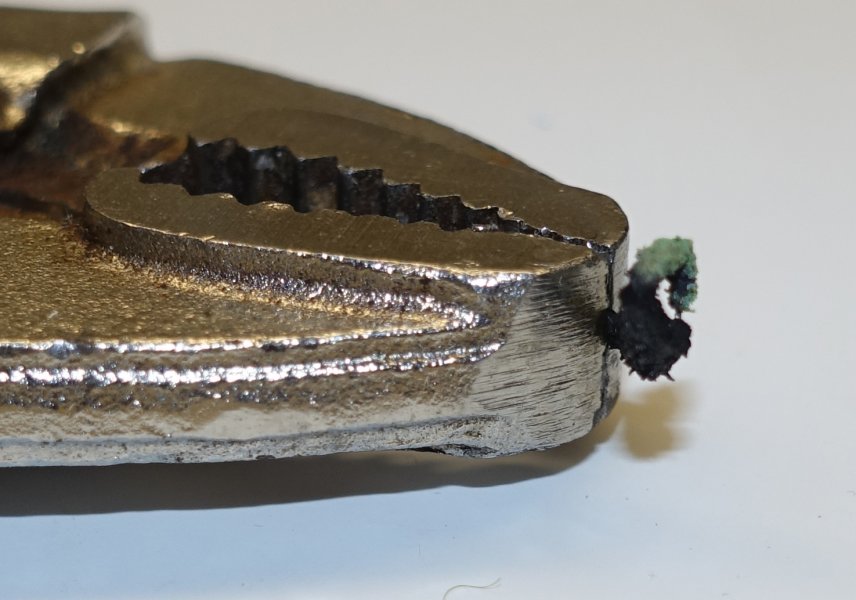
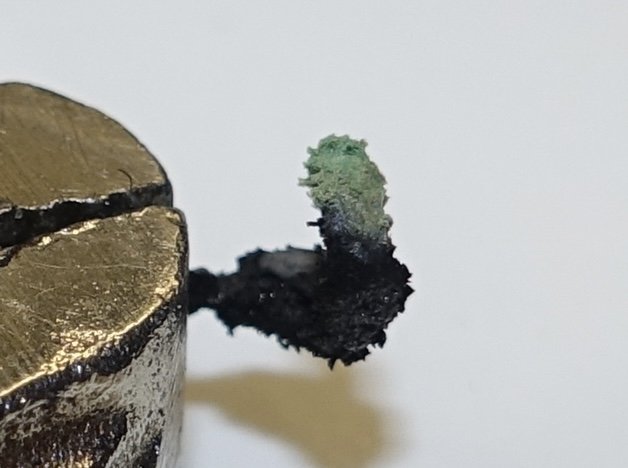
To test for chromium, carefully cut a toothpick.-sized piece of the sweatband from an inconspicuous place on the leather. Burn it over a flame until it’s completely burned to ash. If there is chromium, the ash will have green in it. ANY green means I have the sweatband swapped out.

IMG_5093.jpeg IMG_5094.jpeg
 

Edward

Bartender
Messages
26,271
Location
London, UK
This, presumably, is why my Chippewa engineers (and I think the Red Wings to, if memory serves) came with a 'hazardous chemicals' health warning attached to them? I had a fair idea it was something along these lines (as well as the warning obviously being more about liability management and legal obligation than a significant statistical risk). Interesting to see it parsed out in detail, though. Goes to show it's not only in the fast-fashion business that the environmental impact of how our clothing gets produced is something to consider in the greater balance.
 

Trouser Bark

Banned
Messages
640
Location
Your Cerebral Cortex
We've reviewed the differences in processes and we poked at the reason any newer tanning process might exist. The primary reason for the development of the chromium salts process is the volume of material a tannery could process. If the old school veg tanning method takes a couple months and the new chromium salts method takes a couple days you should theoretically be able to either dramatically shrink the size of your tannery while maintaining production or conversely see a monstrous increase in potential output volume. As a horseback calculation a veg tanning facility should expect a roughly 30x volume increase without increasing the size of the facility if it converted to a CXL process.

That was the primary driving force behind industrial age change; mass production and enhanced margin.

The question now would be, 'is there a fundamental difference in product'? The answer is yes. When I was a kid I could buy a tanning kit at the Northern Commercial store. It later became Nordstrom in my area and it wasn't that different from any other clothing oriented department store but for the fact that I can't imagine seeing a tanning kit on the shelf at Nordstrom. Things were different.

I spent a few hours learning how to home tan my own hides and the process resulted in a hide that was stiff compared to commercially available leathers. The initial process required that I tack the hide to a board or the side of the shed, etc., skin side out. Scrape the layer of fat off the skin, salt it and let it dry out. After that a rabbit hide was as flexible as a paper plate and that's not altogether different from what you'll notice now between vegetable tanned hides and Chromium hides. Your veg tanned leather was placed in a frame and submerged in vegetable derived tannins. My shed was the frame and I didn't have a pool of tannins but I did get the stiff result. I later noticed eskimo native women chewing their home tanned hides to soften them and decided that for me that was a hard no. Yeah, the concept seemed a little gross but that wasn't the deal killer. It was that none of them had teeth. As a kid I didn't know how long it took to get to that point but I was pretty certain that having no teeth and chewing hides must have been directly related. I never considered that their culture at the time wasn't big on tooth brushes.

You're wearing a vegetable tanned product right now.

When you bought your belt it seemed thick and stiff, like somebody may have pulled it out of the hopper too soon. It's more likely though that it was vegetable tanned as veg tanning produces a less flexible product. You know the jackets you've bought that draped well once they had spent a little time on your shoulders. If it draped well reasonably soon it was likely a CXL tanning process as veg leathers remain stiffer and in their original shape for much longer. This isn't to be confused with how a thicker hide like a comp leather breaks in slowly.

Skipping the narrative format note the following:

Vegetable tanned hides:
- are stiffer
- accept dyes readily and with a little practice you can do a nice job of dying veg tanned leather at home.
- will patina

Chromium tanned hides:
- are flexible, heat and water resistant.
- are a trickier to dye and as such normally dyed at the tannery.
- do not patina (brown cxl hides with a thin black over-dye are artificial patina marketed as teacore)

So where might either be used often?
Veg tanned products are common in horse tack, the belt you're wearing, maybe your wallet and a few other accessories. Veg tanned jackets and boots are less common than their CXL alternative.

Chromium tanned products are used where a more supple leather is desired; jackets, boots, purses, chairs and couches.

How do the two processes apply to jackets and boots?
Veg tanned leather is porous and absorbs water more readily. Go for a stroll in the rain wearing a CXL tanned jacket and you're probably going to be fine. Go for a stroll in a veg tanned jacket and you'll probably get some staining and a leather jacket that needs to be conditioned as it will be dryer than normal when the excess moisture has evaporated. If you ignore the conditioning the leather will likely crack. Boots have a tougher life and would fare worse than jackets.

Is there a difference in CXL from one facility to another?
There can be but it's normally pretty small. Aspirin is aspirin no matter what fancy name the manufacturer puts on the bottle and chromium salts are chromium salts; same / same. Time spent in solution, the tanner's type and ratio of fats to oils and other material they 'stuff' the hide with can vary but those differences are often discernible by few and overshadowed by the quality of the hide rather than the process.

Chromium vs Chromium Hexavalent
Chromium salts are an environmental toxin requiring controlled disposal however, chromium salts and chromium hexavalent are not the same thing. Chromium hexavalent is an oxidized variant of chromium and is formed under specific conditions. One would be high heat which accelerates oxidization in almost everything. Another would be the introduction of common chemicals, some of which are in your home today. In one form or another you likely have hydrogen peroxide, nitric acid and potassium permanganate in your bathroom or kitchen pantry. Either of those three will force Cr(VI) oxidization and so can chemicals used in the leather dying process. Chemical oxidization is outside my core competency so there's likely a chemist on this board that could offer a fuller explanation if anyone's interested.

Summary
At its core tanning impedes rot. Vegetable tanning has been around for more than a couple thousand years. Chromium's been around for less than a couple hundred. There are different horses for different courses and both processes offer advantages and disadvantages.

Does anyone have a vegetable tanned jacket that's been in a gully washer? If so please feel free to post a pic of same. I don't have one that's been drenched.

To the editing mod:
Thanks for the slight edit in my prior post. You're right; the statement wasn't important to the document.
 
Last edited:

Trouser Bark

Banned
Messages
640
Location
Your Cerebral Cortex
The term 'vegetable tanning" is a misnomer that evokes a mental image of a big vat w/ heads of lettuce, some carrots and maybe a few onions and such. There's not a vegetable in the vat.

The process uses tannins, not veggies. Think about how if you were to put a chunk of wood in an aquarium the water would turn brown. That brown color is tannins leaching from the wood and the highest concentration of tannins used for the tanning process are usually found in the bark of a few specific types of tree.

The recipe for what we now call vegetable tanning solutions has changed over the years. From roughly a thousand years and more ago the process started with human urine which when stale was primarily ammonia. That ammonia was used to de-hair a hide and soften the fibers. From the middle ages on back any tannery was located downwind and downhill as the stench was fierce and there was no way to make it less so. Nobody takes a whiz in the vat these days but the recipe is far from a vegetable stew. For the uninitiated the odor can cause a you to believe that someone had done that and much more.
 

Pandemic

Call Me a Cab
Messages
2,356
Location
Witless Protection
I feel kinda dumb for not realising that tannins are used to tan leather. Tannin in tea makes me nauseous (but I’m a coffee fiend), but I love my ‘veg-tanned’ jackets and boots!
 
Last edited:

Trouser Bark

Banned
Messages
640
Location
Your Cerebral Cortex
I think using chrome tanned and CXL (assuming this references Chromexcel as 99% of the internet does) interchangably is a very poor practice. Whether it's due to being misinformed or malicious I don't care, but I'm amazed how such a basic difference can escape OP consider the detail into which he/she went in this thread.

You're right; t's a bad habit. CXL is an overused abbreviation and a mistake for me to have used in this context however, it's also neither uninformed nor malicious . CXL is a chrome tanned product. You can do other things to a chrome tanned product in addition but the root process and the non-removeable component remains chromium salts.

Thanks for pointing that out.
 

Trouser Bark

Banned
Messages
640
Location
Your Cerebral Cortex
CXL is a combination tanned leather.

I hate to seem like the pedantic guy but that description is too brief. I made a poor attempt at addressing this prior:

CXL is a chrome tanned product. You can do other things to a chrome tanned product in addition but the root process and the non-removeable component remains chromium salts.

That statement is correct and a tannery can't produce a chrome tanned hide and then do a few other things to it such that it's no longer chrome tanned.

A marketing guy can describe the product as combination tanned (or chrome tanned and more) but their process is largely identical to the process that every tannery uses to produce a chrome tanned hide, which is exactly what Horween produces. At that point most tanneries call it good but Horween then puts the hide through an abbreviated pseudo veg tanning process.

I own boots made from their hides and I like their product however, CXL begins its life as a chrome tanned product. and will remain a chrome tanned product, albeit with a few steps of something else. You cannot remove the hide's prior exposure to chromium salts; that's permanent.

If you are skeptical of my description please review their processes independent of my remarks. I may use a term out of place now and again but I won't intentionally misleading anyone.

That said, I've read plenty of your comments and I would be surprised if you misunderstand their process. Thanks for lending your expertise. You are one of several I've learned from here both now and before you changed your username.
 

Trouser Bark

Banned
Messages
640
Location
Your Cerebral Cortex
Horween says theirs is an 89 step process though I don't recall having ever seen them provide details of what those 89 steps are. In that that's a lot of steps for a simple process I've assumed that at least one of the steps is to go have lunch. Be that as it may, these are their 12 important steps with step number 6 injecting clarity into the explanation above:

  1. Hide Inspection: Incoming hides are carefully inspected for quality before processing.
  2. Dehairing: Hides are treated in cement mixers with a lime solution to remove hair.
  3. Lime Fleshing: The back of the hide is scraped, prepping it for the next steps.
  4. Bating: Enzymatic treatment is applied to further prepare the hide.
  5. Pickling: The hide is treated to help preserve it before tanning.
  6. Chrome Tanning: Hides are submerged in chrome solutions, producing "wet blue" hides.
  7. Sorting: Wet blue hides are sorted based on quality for subsequent processing.
  8. Retanning: Unique blends of natural agents and bark extracts are applied for additional tanning.
  9. Hot Stuffing: Hides are infused with oils, waxes, and greases to impart characteristics like flexibility.
  10. Dyeing: Various dyes are applied during the re-tanning to achieve desired colors.
  11. Finishing: Multiple hand-applied coats of aniline and protective finishes are rubbed into the leather.
  12. Quality Control: Every piece is closely examined for consistency and quality.
 

ABCD

I'll Lock Up
Messages
7,710
A marketing guy can describe the product as combination tanned (or chrome tanned and more) but their process is largely identical to the process that every tannery uses to produce a chrome tanned hide, which is exactly what Horween produces.
True, of course CXL is still chrome tanned. But when comparing the properties of veg tanned leather to chrome tanned leather it is important to realize that CXL shows a combination of both. For instance, and this is something you didn't mention above, but unlike chrome tanned leather, vegetable tanned leather is light sensitive. CXL being combined tanned, as a consequence, will change color over time as the core turns brown after prolonged exposure to UV rays. Think of Aero's CXL midnight blue jackets that turn brown over time.
 

Trouser Bark

Banned
Messages
640
Location
Your Cerebral Cortex
For instance, and this is something you didn't mention above, but unlike chrome tanned leather, vegetable tanned leather is light sensitive.

There are many better qualified to discuss ownership experience, repair, maintenance and more. You, Monitor, Terry, C/Panda, AeroFan, photo2u, Mysteryo and too many more to list.

My intent was hidden in this opening statement:

I don't see much by way of objective detail on the difference in processes and whether or not one or the other might be better or worse beyond the context of appearance.

TFL contains aspects of a pic dump, fitment info, opinion and more but not a lot of objective tutorial. @tmitchell59 wrote outstanding and objective articles on vintage leather and unbeknownst to him, his effort spawned this thread. Add anything you like... this isn't about me and I have no interest in setting myself up as an authority on any subject. I have more than a passing familiarity with tanning processes and don't mind sharing.

You scrunch your new jacket together and press it to your nose. You revel in the intoxicating aroma and it seems glorious - but the facility it came from smells like somebody just rolled up the windows, turned the heat on full blast and defecated in your car. The mental image of you buying a new jacket after having barfed in the tannery is the path of a failed marketing dept and you ain't getting a real tour of a working tannery. I can give you a peek through the keyhole though.

I started writing in hopes that an as yet unknown future enthusiast might better understand some of the background steps that went into the jacket they've had an eye on. Nuanced differences relating to ownership experience are best left to others.

Tag.

You're it.
 

Trouser Bark

Banned
Messages
640
Location
Your Cerebral Cortex
See that second-from-the-left drum? That's not what you'd want if this were your plant. That door will leak over time and for each batch that drum is turning like a car wheel for 24-48 hours. A maintenance intensive door is why you see staining and effluent all over the floor. Old school drums were wooden and leaked very little once the wood had swollen and sealed itself shut (something like the hull of a wooden boat). They had a door in the flange of the drum (the side of the drum) the floor was usually dry and the door didn't leak as the opening was above the level of the wet solution inside. Old school drums were also much narrower than that big and wide steel drum depicted. A worker couldn't effectively load or unload a drum this wide from one side or the other so the door has to be in the middle.

The worker doesn't like that drum either. He or she has to be skinny and to remove the tanned hides they stick their head and shoulders through that door and root around in the dark grabbing wet hides while the wet interior of that drum drips down on the back of their head.

As a horseback estimate of production I would guess that the seven drums you see in the photo process two thousand hides in an average month. Maybe more depending on how efficient their processes are.

iu
 
Last edited:

Trouser Bark

Banned
Messages
640
Location
Your Cerebral Cortex
Here's an example of an old school wooden drum with a load and unloading door in the flange. You'll notice that the door is surprisingly close to the outside circumference of the drum and leaves you with the impression that it must have leaked like a sieve.

It leaked less than you might suspect.

The volume of chemical solution in that drum was enough to keep the hides wet but there were only a couple of inches of water and chromium salts in there at any given time. As the drum tumbled the hides inside stayed wet and flopped around in that solution for at least a day. When they were pulled from the drum they were wet and soft, like a heavy wet blanket that had a slight blue tinge.

The pic below is from the old Sawyer tannery in Napa, CA, now long since closed. Note that the width of the drum was roughly the max reach of the guy loading it.

2000.29.46-Feeding-hide-into-barrel.jpg


You'll note that the tannery had to be near a significant source of water. Water from the river was used in huge quantities to keep the tannery operational and water from that river would have been used to carry away spent tanning solution and other byproducts of the industry. That's the old Sawyer tannery below.

2012.2.98-Sawyer-Tannery-aerial-view.jpg
 
Last edited:

Allin216

New in Town
Messages
14
CXL is a combination tanned leather.

I hate to seem like the pedantic guy but that description is too brief. I made a poor attempt at addressing this prior:


That statement is correct and a tannery can't produce a chrome tanned hide and then do a few other things to it such that it's no longer chrome tanned.

A marketing guy can describe the product as combination tanned (or chrome tanned and more) but their process is largely identical to the process that every tannery uses to produce a chrome tanned hide, which is exactly what Horween produces. At that point most tanneries call it good but Horween then puts the hide through an abbreviated pseudo veg tanning process.

I own boots made from their hides and I like their product however, CXL begins its life as a chrome tanned product. and will remain a chrome tanned product, albeit with a few steps of something else. You cannot remove the hide's prior exposure to chromium salts; that's permanent.

If you are skeptical of my description please review their processes independent of my remarks. I may use a term out of place now and again but I won't intentionally misleading anyone.

That said, I've read plenty of your comments and I would be surprised if you misunderstand their process. Thanks for lending your expertise. You are one of several I've learned from here both now and before you changed your username.

I think there's elements of truth in both viewpoints here. Yes, it does contain Chrome (heck, it's even in the name), but with Chromexcel (CXL) specifically, it's incorrect to lump it into the same as any other chrome tanned leather for any purpose except someone attempting to avoid body contact with leather containing chromium.

It is actually different than other tanneries' chrome tanned leather, as the chrome content is very low; about half of what is typical for fully chrome tanned leathers. This is done to maximize the properties introduced during the 28 day veg retan and hot stuffing processes. While 28 days is a hair shorter than the 30-40 day typical processing time needed for most fully veg tanned leathers, it's probably unfair to characterize it as pseudo veg tan process.

I remember a couple of years ago Nick Horween talked publicly about this specific topic on an episode of the Full Grain Podcast (a show he does with Phil Kalas, who used to work at Horween and founded Ashalnd Leather).
 

Forum statistics

Threads
114,458
Messages
3,175,068
Members
58,306
Latest member
Leather Pick
Top