Want to buy or sell something? Check the classifieds
  • The Fedora Lounge is supported in part by commission earning affiliate links sitewide. Please support us by using them. You may learn more here.

What Was The Last Movie You Watched?

Jon Crow

One Too Many
Messages
1,348
Location
Alcalá De Henares Madrid
Guillermo Del Toro's version is considerably closer to Mary Wollstonecraft Shelley's novel than any other version of the "Frankenstein" story I've seen on film. Not exact, but when Universal Studios made "Frankenstein" they took quite a few liberties that nearly made the story unrecognizable.

I agree, we really enjoyed it
 

Edward

Bartender
Messages
26,355
Location
London, UK
Guillermo Del Toro's version is considerably closer to Mary Wollstonecraft Shelley's novel than any other version of the "Frankenstein" story I've seen on film. Not exact, but when Universal Studios made "Frankenstein" they took quite a few liberties that nearly made the story unrecognizable.


It's always interesting how the liberties taken by certain screen adaptations become oftentimes interpreted as more authentic than the source material. With Frankenstein, we've seen the Universal look of the creature (and, I think, the "monster" appellation applied to him (of course we all know, the real monster was Victor Frankenstein himself...) become seen as a standard. I remember when Branagh's version, considerably more faithful to the book than any previous one I'd seen, came in for much popular criticism over "the monster" looking "wrong" and being articulate... Actually, I think the Branagh version is still unfairly maligned, but hey ho. Hopefully I'll finally have time to sit down with this new one tomorrow (heavy storms predicted here, so unlikely to be out with the dog as originally planned). It's had very mixed reviews in my circles, so I'm intrigued.
 

Jon Crow

One Too Many
Messages
1,348
Location
Alcalá De Henares Madrid
It's always interesting how the liberties taken by certain screen adaptations become oftentimes interpreted as more authentic than the source material. With Frankenstein, we've seen the Universal look of the creature (and, I think, the "monster" appellation applied to him (of course we all know, the real monster was Victor Frankenstein himself...) become seen as a standard. I remember when Branagh's version, considerably more faithful to the book than any previous one I'd seen, came in for much popular criticism over "the monster" looking "wrong" and being articulate... Actually, I think the Branagh version is still unfairly maligned, but hey ho. Hopefully I'll finally have time to sit down with this new one tomorrow (heavy storms predicted here, so unlikely to be out with the dog as originally planned). It's had very mixed reviews in my circles, so I'm intrigued.
Edward without spoiling it, it's very deep, in a soulful moral type of view and yes the creation isn't the monster
 

Doctor Damage

I'll Lock Up
Messages
4,487
Location
Ontario
Hudson Hawk
A cheesy non pretension action comedy movie with a slight propensity to some interesting fashion.
Plus I am familiar with the Jersey area the main character being from Hoboken.
Bruce had an art deco type fashion vibe like a more modern **** Tracy.
This is a fav of mine and until now I had thought only myself and two other people I know liked it. Thanks for the reminder. I think I have a copy here someplace, I'll have to dig it out and re-watch.
 

Doctor Damage

I'll Lock Up
Messages
4,487
Location
Ontario
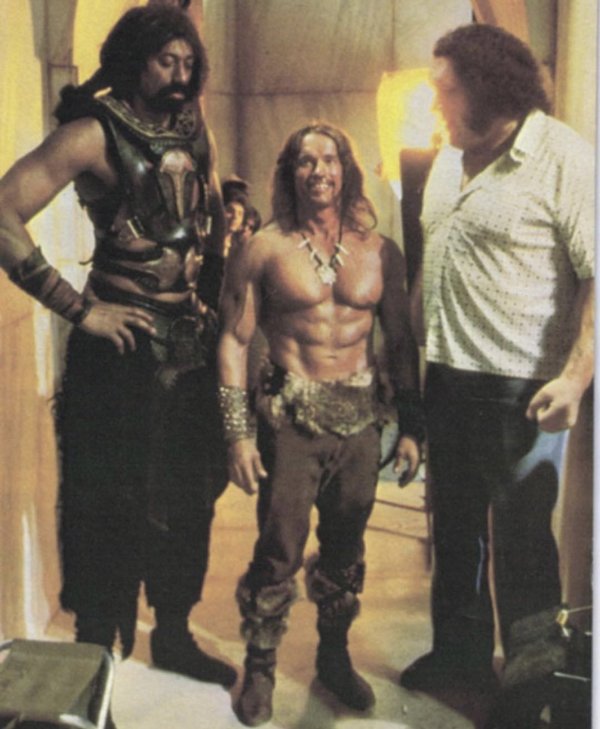
Arnold Schwarzenegger with Wilt Chamberlain and Andre the Giant on the set of Conan the Destro...jpg
 
Messages
18,300
Location
New York City
MV5BZDM5ZjQyZGUtMjVjZC00NzUwLWI5YmQtNjRmNDFhOTRmYzNiXkEyXkFqcGc@._V1_FMjpg_UX1100_.jpg

Secrets of the French Police (1932) with Frank Morgan, Gwili Andre, George Ratoff, and John Warburton


RKO Radio Pictures – like Warner Bros. often did – jammed as much plot and as many movie styles as possible into the fifty-eight-minutes-long Secrets of the French Police. It doesn’t entirely work, but so much happens that at least some of it should entertain almost everyone.

The core story is about a Russian exile – they were all over France in the 1930s after the 1917 Bolshevik Revolution in Russia. This one, played by George Ratoff, is a con man trying to fob off a flower girl he's kidnapped as the only surviving member – Princess Anastasia – of the former Czar's family.

This would give her, and, by proxy, her exiled mastermind, Ratoff, a claim to the former Czar's extensive financial assets still held outside Russia. But the disappearance of the flower girl, played by Gwili Andre, prompts the French police to investigate.

Frank Morgan plays the chief inspector who quickly recruits Andre's boyfriend, played by John Warburton – a known but likable jewel thief – to help with the investigation. An investigation also helped by the surprisingly modern French police crime lab.

Besides identifying the brand of cigarettes a criminal smokes just from its ashes, this lab performs detailed autopsies and chemical analyses on almost anything left at a crime scene. Showing this would become normal in movies by the 1950s, but here it's two decades early.

Most of Act Two is Morgan investigating, with Warburton's freewheeling help, while Ratoff hypnotizes Andre into believing she really is the long lost princess. That would be plenty of plot, especially for a one-hour B picture, but RKO tossed in a mad-scientist story for free.

Ratoff, when he’s not trying to steal the dead Czar’s money, works in the basement lab of his castle – which looks like every mad scientist’s castle of the era (huge dark stones, turrets, winding staircases, secret passages, etc.) – where he murders and entombs women in plaster as statues.

Okay, he's a few meters off the beam, but still, he gets an interview with some high former Czarist officials as he tries to peddle Andre off as Anastasia. To see a full movie version of this story starring Ingrid Bergman and Yul Brynner look for 1956's well-done Anastasia.

Here, though, the tale is tucked inside the movie equivalent of speed-dating, as everything – a car crash caused by a screen projection of an oncoming car, a subterranean break-in, and Ratoff going full Dr. Frankenstein in the gloomy castle – races along to the climax.

This only works if you like early movies and keep an open mind. Morgan, who would later gain fame playing the Wizard of Oz, is excellent as the sophisticated French inspector, helping to establish what would become the Hollywood template of a French police inspector for decades.

Warburton, playing a thief with joie de vivre and no malice, also helps establish another movie template: the essentially “good criminal” who can work “the bad side of the street” for the police, since he’s familiar with the criminal underworld (think Huggy Bear from Starsky and Hutch).

Andre's career would never take off and she'd be out of pictures in a decade, but her performance here is fine if not inspired. Ratoff, though, is firing on all cylinders and chewing up scenery as the mad half Russian trying to cadge the Czar's money amidst other crazy doings.

Shot entirely on studio sets, this B movie is surprisingly visually engaging, with the castle iconically imposing, and the police labs impressively modern looking for 1932. RKO didn't skimp on Andre's wardrobe either as the Dutch beauty looks fantastic in her chic "princess" outfits.

Had it been the 1960s, a good TV series could have been made with Morgan, Warburton, and Andres forming an offbeat crime-fighting team: Morgan the smart detective, Warburton the inside guy in the criminal world, and Andres the flower girl who hears "the street chatter."

In the 1930s, though, these ideas ended up as short B movies and, if lucky, as serials (a handful of movies made with the same characters). Secrets of the French Police was a one-and-done deal as it was no box-office bonanza, but one can see a 1970s TV show lurking inside.

Today, it’s half entertaining as a curio from the early days of talking pictures and half entertaining in the way it was meant to be when released: an offbeat crime drama with international intrigue. With that mindset, it still works as an okay movie.
 

Edward

Bartender
Messages
26,355
Location
London, UK
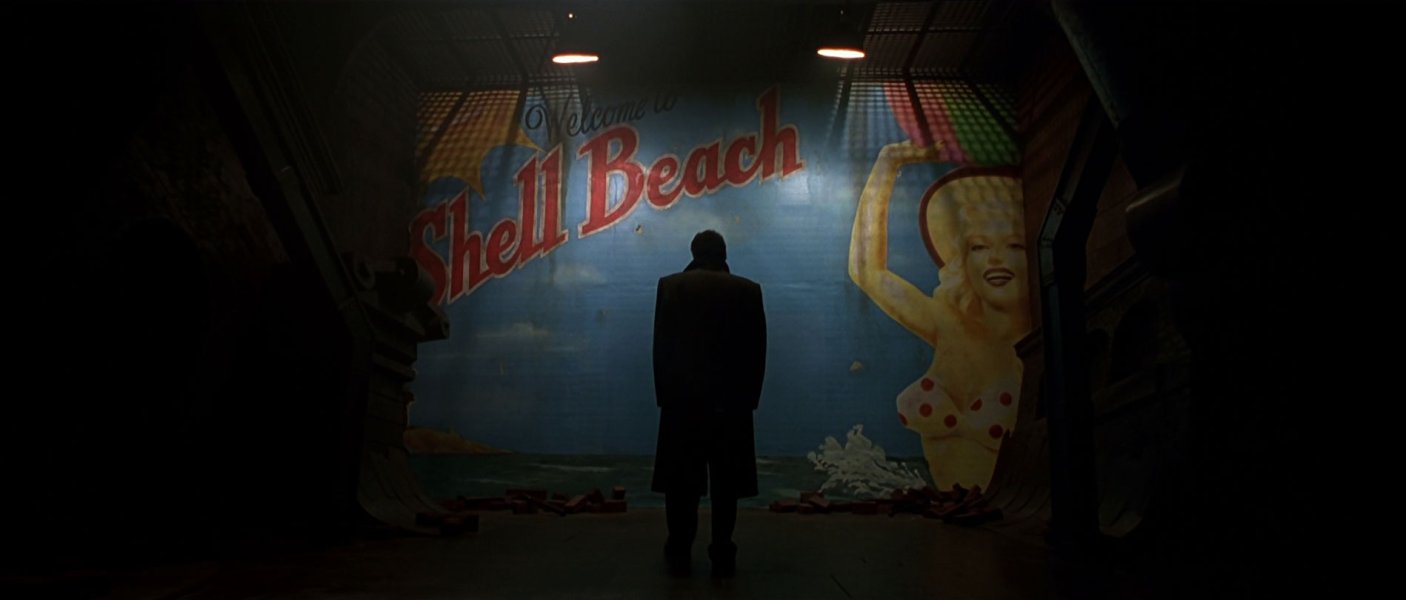
Dark City 1998
Love this film. Really underrated.

I remember a lot of buzz within the Rocky Horror community about that one ahead of release, then it just disappeared. I've yet to actually see it myself - as memory serves, it never arrived in cinemas in Belfast for whatever reason (was that a World Cup year? I remember cinema used to be quite dead for big releases other than anything stereotyped as, as they were known back then, a "chick flick", when there was a soccer world cup on. The commercial success of Titanic the year before also crowded out at least one release I'd wanted to see that the Belfast cinemas didn't take in at the time). I must hunt the streamers to see if I can find it included with subscription... I've gotten bad with films since we got streaming in; I get unreasonably annoyed at paying fifteen quid a month only to be told particular pictures are only available if I pay more on top. No, thanks! The gap between pictures going out of the cinema in the UK and coming to "included with Prime" is getting ever longer. The Bikeriders is now off the big screen for, what, two years? and Amazon still want to charge an additional rental for it. I can wait.


I love how this photo looks so weird. My brain keeps telling me it's been doctored, but as I recognise the other two in the picture I know they haven't shrunk Arnie!
 

Doctor Strange

I'll Lock Up
Messages
5,283
Location
Hudson Valley, NY
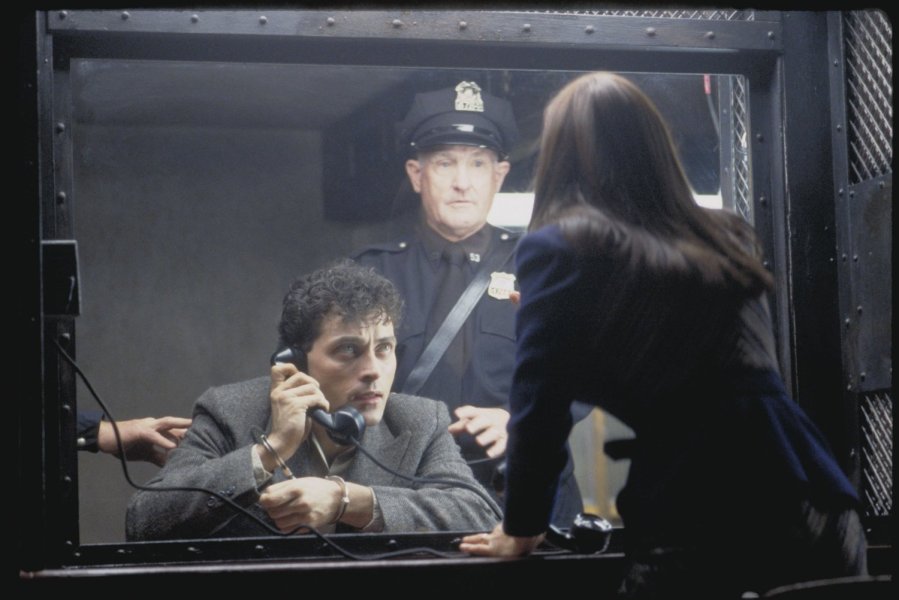
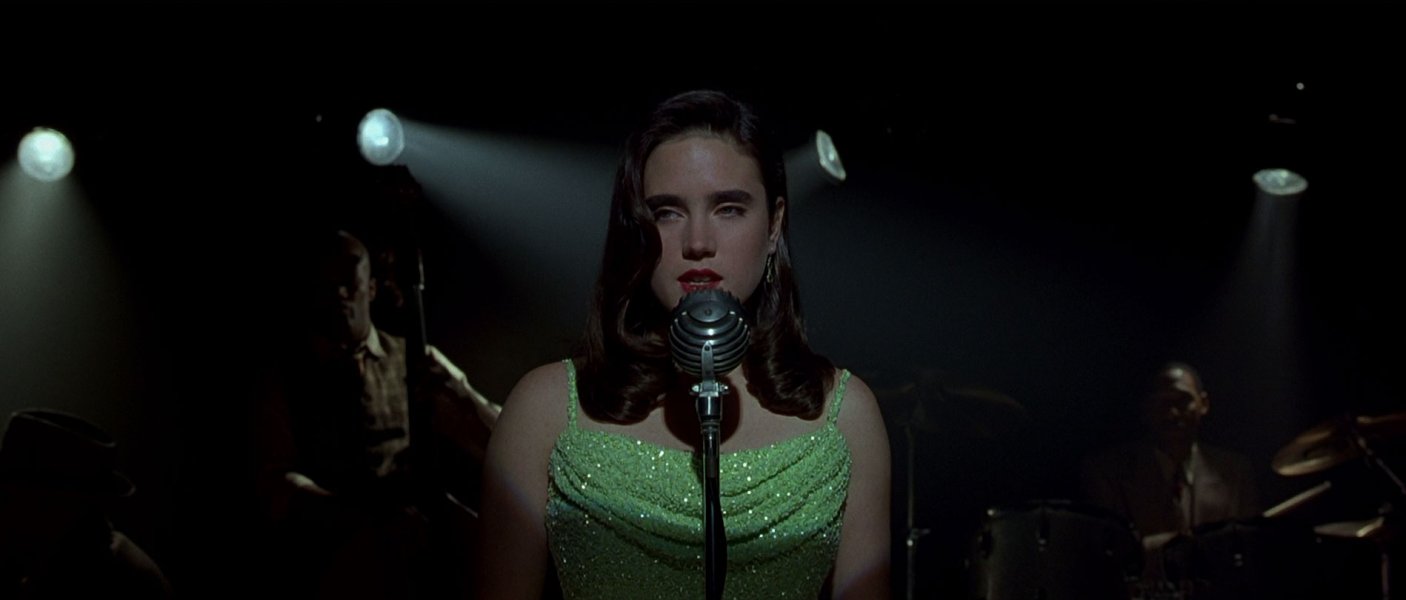
Edward, you should really make a point of checking out Dark City, it's a great little neo-noir SF flick. Suitably mysterious, beautifully production-designed and shot, and well acted by Rufus Sewell (in a rare lead role), Jennifer Connelly, William Hurt, Kiefer Sutherland...

I vastly prefer it to The Matrix, which came out a year later and shares a bunch of plot similarities with Dark City.

Dark_City_59.jpg darkcity_photos_1590.jpg Dark_City_10.jpg
 

tamoko

One of the Regulars
Messages
125
Location
swiss
I think Dark City comparable to the "Brazil" or " Nacked Lunch" Art Cinematic not for mass public understanding. And even Johnny Mnemonic was more interesting then Matrix. More original.
 
Messages
12,792
Location
Northern California
Cry of the City right now. Always entertained while watching. A fan of Victor Mature since childhood. I first enjoyed his performances in Samson and Delilah and The Robe as a kid. It was later, when I discovered noir, in films like Kiss of Death, I Wake Up Screaming, and Cry of the City that became a stop and watch actor for me.
:D
 
Messages
18,300
Location
New York City
ExLady19.png

Ex-Lady from 1933 with Bette Davis, Gene Raymond, Frank McHugh, Claire Dodd, Kay Strozzi, and Monroe Owsley


Precode films (1929-1934) argue that the big social and cultural upheaval of the late 1960s/1970s wasn't new, but a redux of the big social and cultural upheaval of the 1920s/early 1930s.

Captured in one precode after another, young people drank, smoked, did drugs, had casual ***, formed throuples, and attempted open marriages in those earlier years – but all with better style than the 1960s/1970s.

Still, it worked out about as well back then as it did in those later years. In Ex-Lady, Bette Davis plays a proto-feminist with more integrity than most of the Gloria Steinem wannabes to come, perhaps because Davis wasn't trying to fit a mold, but was being honest with herself.

Her character is a successful commercial artist who enjoys her personal, social, and economic freedom, which includes a relationship with full benefits with an advertising executive (a Mad Man, to keep the historical echo going), played by Gene Raymond.

After much pressure from her traditional and judgmental father and from Raymond – who wants to get married – Davis consents reluctantly as she, in several speeches, makes it clear she doesn't want to be part of a couple or make the compromises a genuine marriage requires.

When the inevitable marital stresses come – money and business problems, plus attractive people lustfully circling this very handsome couple – the marriage wobbles prompting Davis to demand it be "opened up."

Out moves Raymond, but they stay married and still sleep together – yet they also sleep with others or are "allowed" to anyway. They each have affairs, but nobody gets jealous, nobody gets possessive, and nobody's feelings get hurt... not!

All those things naturally happen – bringing us to Act Three, which is very real and thus very messy. You want to see the ending fresh, but it's not that important as the important thing here is seeing Davis argue for women's independence and ***ual freedom in the early 1930s.

The other important thing – showing a nice honesty by not just making all "free spirited" ideas easy and fun – is how hard an open marriage is in practice. In the 1970s, you picked a team "traditional" or "modern" and had to be all in, but here, it's not about identity politics.

Warner Bros. chose well with its leads. Even though the head of Warners, Jack Warner, never liked or understood Bette Davis, she is perfect here. She's young, lithe, pretty, and powerfully free spirited. She is a believable – and ***y – full-force independent woman.

She would chew up and spit out a weak man and smash up quickly with an alpha one like Clark Gable usually played, but Raymond is a nuanced actor who is neither run over by Davis nor goes toe to toe with her. Their relationship and on-screen chemistry is thoughtfully complex.

All of this bed hopping and social commentary takes place in an incredible world of huge Art Deco apartments, with men in dinner jackets and women in full-length gowns and gloves sipping champagne at gorgeous nightclubs and hotel restaurants. It's Depression-era eye candy.

There are several fine supporting actors including Frank McHugh, Claire Dodd, Kay Strozzi, and Monroe Owsley because Davis and Raymond need others to be tempted to sleep with, but this is a two-actor movie and the two actors are outstanding in the roles.

The script wobbles a bit and the dialogue becomes pat or cringy in spots; otherwise, this could have been a precode classic up there with all those Norma Shearer and Robert Montgomery "rich, young people bed hopping" precode classics.

Ex-Lady, instead, is an imperfect but important movie arguing that the feminist movement and ***ual revolution of the 1960s/1970s was a hardened echo of the more grassroots one of the 1920s/1930s.

tumblr_nmaklt7cuV1rdfgw4o1_500.gif
 
Messages
18,300
Location
New York City
tumblr_nq0mdgVHET1re1poeo1_1280.jpg

Tomorrow is Forever (1946) with Claudette Colbert, Orson Welles, George Brent, Richard Long, Natalie Wood, and Lucile Watson


Hollywood doesn't make earnest melodramas like Tomorrow is Forever anymore. Produced at the end of WWII, it's a war-time propaganda melodrama that we absolutely don't do now as our inveterate cultural cynicism makes a picture like this all but impossible to sell.

We might not be wrong to be cynical, but watching this one makes you appreciate a time when Hollywood could at least depict patriotism and self-sacrifice on screen with an earnestness portrayed by top stars and a comfort that people would come to see it – which they did.

The public wasn't naive – read the newspapers of the day to be disabused of that notion – but it was also a public that wanted to look up, not down; believe there were better angels out there; and believe there were role models to aspire to, so its art could be inspirational, not cynical.

Tomorrow is Forever is just that: art that is inspirational, propaganda, and popular. Claudette Colbert plays a young wife, whose husband, played by Orson Welles, goes off to fight in WWI. Awaiting his return, a now-pregnant Colbert gets official notice of his being killed in action.

Fortunately, a grieving Colbert has the warm, safe, and wealthy arms of a handsome young man, played by George Brent, to fall into who is also happy to raise her baby as his own. Marriage, another child, and a good life follow for the next twenty years.

Over in Europe, however, a wounded and disfigured Welles, who didn't know his wife was pregnant and not wanting to saddle her with a "cripple," let his death be reported. He subsequently rebuilt his life under a new name and new personality in Austria.

Twenty years later, Act Two brings these two worlds back together when Welles – with a limp and with his face having been rebuilt but looking different – comes to America. Now a prominent engineer, he is hired as a consultant by Brent's armaments firm as it gears up for WWII.

It took all that to get to the crux of the story: with war clouds gathering in Europe again, Colbert comes face to face with her WWI tragedy just as her son (the one she had with Welles, but raised as if he's Brent's son – the boy believes he's Brent's child) could be heading off to war.

Welles is so changed that Colbert does not recognize him, but he of course recognizes her – the wife of the man for whom he's consulting. Math, genetics, and intuition all have Welles tracking the path of Colbert's son, played by Richard Long, back to himself.

Welles also has a young child, played by Natalie Wood, with him. As a child of Europe, she has already lost her mother to the Germany's WWII-era leaderships, a stark contrast to Colbert’s sheltered American children. It’s Wood’s film premiere, but she already shows smart acting instincts.

The final piece of the puzzle, however, is when war does break out in Europe and Long wants to join the RAF. Mother Colbert is adamantly against it, but in a few months, Long will be old enough to decide on his own.

That's the story's arc, but the power of the movie is in the performances and nuances. It's Welles coming face to face with his former wife and the son, now a young man, he never knew he had. Look for the scene of Welles "fathering" the boy in the train station for acting at its best.

It's also Colbert thinking – knowing in her heart, even when she's unsure in her head – that this strange man is really her first husband. Look for the few times she tries to force the truth out of Welles, but he doesn't crack: once again, it's acting elevating a movie above its material.

As Colbert struggles and Welles experiences emotional turmoil that he keeps tightly wrapped inside, poor George Brent has to watch his wife reminisce in real time about the man who was her "perfect" husband because he died before real-life could change a young bride's perception.

Away from the romance, there are several good but obvious "what are we fighting for" speeches that even weave in the Founding Fathers. Propaganda is a punchline today, but in the 1940s, tying an imperfect country's war effort to its core ideals was uplifting – not embarrassing.

It's told here as melodrama, but reimagined as a fable, the story could almost be made today if Hallmark was willing to stretch its too safe formula. Even as a real movie, it might work, but it would have to be gorier and have more bad things happen to please whoever decides these things.

The cast, starting with Colbert and Welles, but including Brent, Long, Wood, Lucile Watson and a few others is outstanding. These are professionals who know how to deliver an awkward line or sell a scene.

Is it all wrapped up too neatly? Yes, but this is a propaganda film made when the country was at war. Controversy and questioning one's own country's motives and the value of sacrifice could – and would – come later, but not in 1945/46.

Tomorrow is Forever is a beautiful and imperfect romantic melodrama / wartime propaganda picture from a time when optimistic stories could be told with a straight face. The public wasn't innocent – it was no more innocent than we are – it just expected its art to lift it up, not beat it down.
 

EngProf

Practically Family
Messages
615
Edward, you should really make a point of checking out Dark City, it's a great little neo-noir SF flick. Suitably mysterious, beautifully production-designed and shot, and well acted by Rufus Sewell (in a rare lead role), Jennifer Connelly, William Hurt, Kiefer Sutherland...

I vastly prefer it to The Matrix, which came out a year later and shares a bunch of plot similarities with Dark City.

View attachment 747696 View attachment 747697 View attachment 747698
Another vote for "Dark City"... An excellent SF film and far better than a lot that are more well known.
 
Messages
18,300
Location
New York City
MV5BYTMwMTU4MzgtOTVhNC00MTg0LThhNGYtZDRiYTIwYjIwYThkXkEyXkFqcGc@._V1_.jpg

Hot Saturday from 1932 with Nancy Carroll, Cary Grant (wearing too much make-up), and Randolph Scott


The precode era is rightfully known for its free-wheeling morality, but there was still censorship both from state boards and the studios themselves, which had to balance what their disparate audience – which ran from the very liberal to very conservative – would accept.

That tension is on display in Hot Saturday, where a small-town girl – a "good girl –" is a victim of an unfair and vicious rumor that costs her her job and her reputation. Still, one needs to read between a few lines to figure everything out – including The Graduate-foreshadowing ending.

Nancy Carroll plays the "good girl" who, owing to some bad decisions and some unfortunate coincidences, gives the impression that she "spent the night" with the local rich lothario, played by Cary Grant. She didn't, but the rumor is enough to get her fired from the local bank.

It also gets the tongues wagging in this small town at a time when one's reputation meant almost everything. Still, not everyone is narrow minded. Even in Carroll's family there's a split: her dad supports her, but mom is very willing to believe the worst about her own daughter.

It takes two-thirds of the movie to chop through all the above as director William A. Seiter focuses on how each little nuance, mean moment, and small-minded comment builds to wreck Carroll. One catty girl calling another and saying "did you hear?" is like a bunker-busting bomb.

Today, some young women brag about their s*xual activity on social media, but in a small town in the 1930s, these problems were real. It's good that we can dismiss them now, but Carroll lost her job and won't get another in this town – nor will any of the "respectable" boys date her.

This drops us into Act Three where Carroll tries to throw a Hail Mary by getting engaged to a childhood sweetheart, played by Randolph Scott. He's been away because he's a geologist who works on site. Unaware of the rumors, he's happy to marry the girl he's always loved.

As is usual in these short precodes, all the truths spill out and smash up in the surprising climax that has a slapped-on last-minute, one-line morality "save," but audiences knew that was just a sop to the scolds. The real and obvious ending is a big middle finger to small-town nastiness.

It's an ending that presages The Graduate (1967), which itself could only have been made after the Motion Picture Production Code fell. Carroll's and Grant's concerned expressions at the end portend the two lovers' expressions on the bus at the end of The Graduate.

It's a moment that also speaks to the outstanding cast in Hot Saturday. Nancy Carroll isn't a well-known name today, but she was a big star for Paramount in the 1930s. Watch for her facial expressions in the background as people talk about her – it's nuanced acting at its best.

Nothing really needs to be said about Cary Grant who would go on to major stardom or Randolph Scott who would go on to a long and successful career as these men, like Carroll, bring out more than the words written on the pages of a script.

Despite the salacious subject matter here, there are no s*x scenes, but oddly, there are two "women being stripped" scenes – one is gratuitous, with lesbian overtones. That - reminding us that human nature and titillation doesn't change – is so much the value of precodes.

Precodes like Hot Saturday balanced the desire to show as much as they could with the noted demands of censorship boards and public opinion. This balanced result compares favorably with today's unbridled wantonness that often feels more emotionally dead than inspired.

Hot Saturday isn't a great movie, but it is a good one, with a strong cast, and a time-capsule peek at 1930s morals and hypocrisy in small town America. While the prevailing societal norms are oppressive, even then, as seen in the movie, there were many who fought against them.
 
Last edited:

Edward

Bartender
Messages
26,355
Location
London, UK
Edward without spoiling it, it's very deep, in a soulful moral type of view and yes the creation isn't the monster

So I finally got to it at the start of the week. It's a nicely done piece. I can see why it didn't impress the mainstream horror audience, though really, any "horror" made of the book is a misappropriation anyhow. This version takes some big liberties with the book's plot (Branagh's remains the closest I've seen), but I think on the whole succeeds in staying true to the spirit of the story. I'm not entirely sure of the significance of the choice to time-shift it to the 1850s (in truth, I had to look it up to exactly catch the period), though I'm fine with that as a choice. In some ways it would have been more interesting to shift it further forward to the Great War era (WW2 would be, I suspect, too on the nose for all the obvious, and thus lazy, Mengele comparisons). I liked the portrayal of the creature. The one really bum note for me was the jarring Byron quote at the end. I've seen several articles claiming it to be clever and have a deeper meaning and all that, but I didn't care for it. Byron has stolen the attention once too often, I'd much rather they had let Mary shine on her own there. The creature learning to read from Percy's work was a nice little in-joke, though, that did feel appropriate as the sort of thing she might have written in.

I think Dark City comparable to the "Brazil" or " Nacked Lunch" Art Cinematic not for mass public understanding. And even Johnny Mnemonic was more interesting then Matrix. More original.

The clips I've seen very much brought Brazil to mind.
 

Forum statistics

Threads
114,744
Messages
3,181,402
Members
58,581
Latest member
MDz
Top