
- Messages
- 18,454
- Location
- New York City
Another look at Summer of '42 starring absolutely hauntingly beautiful Jennifer O'Neill.
...
Agreed, but surprisingly, she didn't have the career you would have expected her to have had.
Last edited:
Another look at Summer of '42 starring absolutely hauntingly beautiful Jennifer O'Neill.
...
Now that you mention it, this is true; although her luminous elegiac beauty so eloquently displayed in Summer of '42 uniquely affected me to such extent that this film defines Jennifer for me. Raucher's book initially grabbed my heartstrings but a later look in college revealed its literary flaws. Yet the film holds exceptionally well.Agreed, but surprisingly, she didn't have the career you would have expected her to have had.


One review of this film called it "nightmare fuel" and I totally agree. I much prefer this version to the one recently done via streaming. This film was/is RAW, it pulls no punches and the back and forth scene between the French and German trenches is a masterpiece, a word I don't throw around lightly! My biggest gripe with the remake is that it doesn't follow the kid back to his hometown on his furlough and the classroom scene where he tears his old teacher a new one is completely missing. One of the greatest films ever made.... pure and simple!View attachment 705849
All Quiet on the Western Front from 1930
All Quiet on the Western Front (1930) is one of the most powerful anti-war movies ever made. Its stark contrast between Germany's pre-war rah-rah patriotism – it enthusiastically sent its young boys off to fight – and the horror and death of trench warfare is chilling to this day.
Based on a German novel, director Lewis Milestone imbued his picture not with an "our side versus yours" perspective, but with an every-soldier feel. You often forget it is German soldiers you're following as they just become any group of young men living and dying awful lives.
It starts in the classroom in Germany where a jingoistic teacher encourages his class of all high-school-aged boys to enlist voluntarily for the glory of fighting for "The Fatherland." While almost every country has done this to some extent, the ferver feels distinctly German at this moment.
Young, handsome boys, a bit scared, are whipped into a frenzy of patriotism and heroism, and, amidst peer pressure, march off to war en masse, with brass bands playing nationalistic songs as crowds cheer (to be fair, the latter could also have come right out of WWI-era America).
From boot camp on, though, war quickly loses its allure for the boys, but even after enduring the stereotypical near-*****tic drill sergeant, they head off to the front still clinging to the belief that glory awaits.
Optimism takes another blow when they meet the "veteran" soldiers – men and boys just like them who have been fighting for months or years and find they aren't talking about heroism or their country, but cynically about the awfulness of fighting, their fears, and their hunger.
With their confidence and idealism in full retreat now, the only hope left is the fighting itself, which proves to be the horrible hell we today all know it is. Milestone brilliantly captures that horror – the fear, filth, maiming, and death – with one vivid sequence after another.
Over the course of this two-plus-hour movie, Milestone shows appendages being blown off or amputated in the "surgery" by doctors too weary to remember how many amputations they've performed that day. Bombs fall, men scream, men duck, men die, and on it goes.
Men, ordered to take a piece of land that looks like every other crater-pocked piece of land, charge out of their trenches to be bombarded with artillery and, if they make it through that, run into a wall of ***fire – it's slaughter, not a battle.
It's also all confused orders, no food, filth, more trenches, sickness, and brief furloughs where the men try to shove in as much living – food, drink, ***, sunshine – as they can before it's back to the confused orders, no food....
Lew Ayres – in the lead playing one of the boys who, pumped up on patriotism, enlists – gives a career performance as we slowly see his idealism diminish to where, as many soldiers say happens, he's only fighting for the men around him – everything else is long-lost idealism.
Look for the scenes where he goes home on furlough and meets his former teacher and a bunch of older men who tell him what needs to be done to win the war. Milestone and Ayers understood the power of less being more.
Written today, Ayers' character would give bloviating anti-war speeches that were really the screenwriters' virtue signaling. Instead, he says very little, which only serves to make the teacher and the old men look smug and small. It's brilliant, powerful and effective filmmaking.
The final scene in All Quiet on the Western Front is a classic you'll want to see fresh, but like everything in this thoughtfully done movie, it shows more than it tells.
Somehow, in 1930, in the early years of "talkies," when Hollywood was still trying to master the new technology, it made an anti-war movie that has stood the test of time.
N.B. Lew Ayers was a conscientious objector in WWII who pushed to serve as a medic in combat zones. One can only wonder if this early anti-war role affected him or if he chose it because it aligned with his already-existing beliefs.
View attachment 705852
View attachment 705850

One review of this film called it "nightmare fuel" and I totally agree. I much prefer this version to the one recently done via streaming. This film was/is RAW, it pulls no punches and the back and forth scene between the French and German trenches is a masterpiece, a word I don't throw around lightly! My biggest gripe with the remake is that it doesn't follow the kid back to his hometown on his furlough and the classroom scene where he tears his old teacher a new one is completely missing. One of the greatest films ever made.... pure and simple!
Worf

 John Lofgren Monkey Boots Shinki Horsebuttt - $1,136 The classic monkey boot silhouette in an incredibly rich Shinki russet horse leather.
  Grant Stone Diesel Boot Dark Olive Chromexcel - $395 Goodyear welted, Horween Chromexcel, classic good looks.
 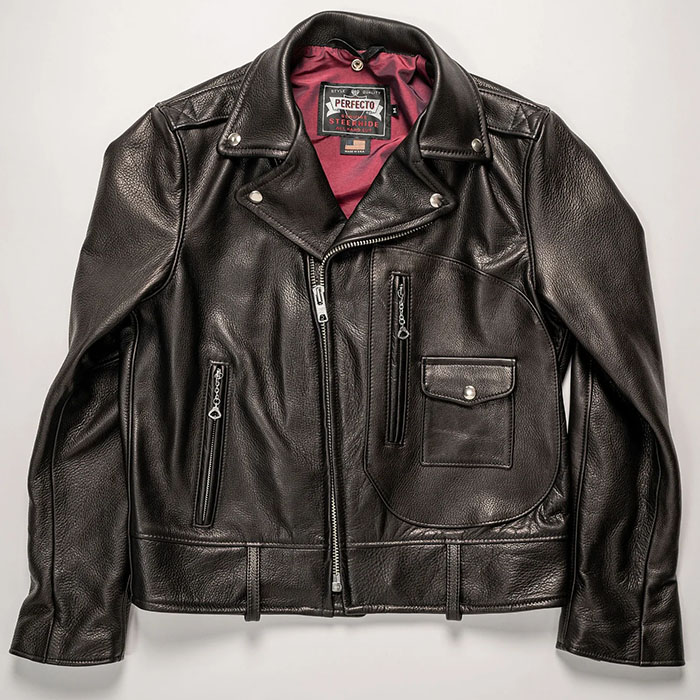 Schott 568 Vandals Jacket - $1,250 The classic Perfecto motorcycle jacket, in a very special limited-edition Schott double rider style.
 Jimmy Durante's oddball T-agent may be taking a bit from the real world's "Izzy and Moe":View attachment 707424
The Wet Parade from 1932 with Dorothy Jordan, Robert Young, Neil Hamilton, Lewis Stone, Walter Huston, and Jimmy Durante
"They got good liquor then. They didn't have to dodge machine-*** ******s when they went walking on Sunday." – An observation made during Prohibition on the benefits of pre-Prohibition life.
The Wet Parade is not like our present era of virtue-signaling moviemaking where few films have the courage and confidence to present a balanced viewpoint. Instead, The Wet Parade examines Prohibition, warts and all, in a movie that says it is a well-intentioned idea that is failing fatally.
Prohibition was the law when The Wet Parade was made, giving it a peek-into-history feel, as Prohibition would soon end – but nobody, at the time, knew that for sure. The movie starts in 1916 showing how drink ruined a man, played by Lewis Stone, and his family in the south.
It then shifts to a northern family, where the patriarch, played by Walter Huston, is also succumbing to drink. He steals, cheats, lies, and eventually ruins his family, too – in a dramatic way – all from alcohol.
These seemingly disparate stories are tied together when the drunkard son of the southern family, played by Neil Hamilton, visits his old college friend, the teetotaling son of the northern one, played by Robert Young.
Hamilton's sister, played by Dorothy Jordan – another teetotaler – then comes looking for her brother. She and Young click in part because they are both non-drinkers whose families have been rocked by alcohol abuse.
Prohibition follows, but the country keeps drinking in speakeasies and elsewhere, on plentiful bootleg liquor. Worse, the banned booze generates a flow of illegal money that funds mobsters. Crime and alcohol consumption both increase under Prohibition – so much for good intentions.
Young, a true believer in abstinence – now married to Jordan – joins the Treasury Department as a Prohibition agent, partnered with a spirited oddball agent played by Jimmy Durante. From here it's the story we know well of mobsters outgunning and outnumbering T-men.
Toss in a lot of violence, Hamilton being blinded by bootleg booze (sadly, a real danger at the time from denatured alcohol), Durante risking his life to save Young from mobsters, Jordan and Young having a child, and The Wet Parade wraps up about two hours after it started.
From a casting perspective, it's a fantastic collection of 1930s talent, starting with Stone and Huston giving outstanding performances playing patriarchs who fail their families owing to drink. Hamilton is equally impressive as a "good-time Charlie" undone by booze.
Young manages to be a pro-abstinence figure without coming off as sanctimonious. It's a much more nuanced performance and character portrayal than Kevin Costner gave five-plus decades later in a similar role in 1987's The Untouchables.
Jordan, too, plays the pro-Prohibition role well – especially since we see it destroy both her father and brother.
A note is owed to Durante, who always seems to be playing himself – but somehow it works, as it does here. You'll respect his sincere – if slightly off-the-wall – portrayal of a T-man.
Director Victor Fleming, shepherding a complex story and large cast, showed in this early effort why he would go on to become one of Hollywood's top directors of the era.
The Wet Parade feels modern, with its multiple overlapping storylines and laundry list of characters who come, go, and often return later. Fleming skillfully corralled all these parts into a cohesive narrative that engages you with its ripped-from-the-headline plot.
In a lesson of balance to modern filmmakers, Fleming also honestly portrays Prohibition's great contradiction: yes, alcohol destroys many lives, but prohibiting it brings its own set of life-destroying problems. Prohibition fit the cliché of the cure being worse than the disease.
Today, The Wet Parade's real-time depiction of Prohibition has historical value. It helps us better understand how 1932 America saw both sides of the issue and why the effort ultimately failed. That's a pretty good achievement for a nearly a hundred-year-old film.

A scene between Olivier and Curtis within a bath where Crassus made a pass at the slave who declined is often cut. And another scene with Jean Simmons bathing **** trimmed.Say what you want. A cast, as it would never happen again. + Charles Laughton.
And could you imagine any other in the role of Crassus as Sir Laurence Olivier??


I've just finished reading the ERA initial section story about the deceased infant whom had been abducted by two little girls to play with.
This looks an intriguing production but I need a time out and some coffee.
No, this is the flicker. The deceased child connected and no coffee.No big deal, but I think you might have meant to post this in the Day by Day thread.


